


Payroll fraud highlighted


YOLANDE SCHOÜLTZ Payroll fraud can damage the bottom-line of many South African businesses



Payroll is one of the biggest expenses in any small or medium-sized enterprise (SME), yet it is also one of the areas most likely to be neglected in terms of risk management, according to multinational enterprise software company Sage.
As a result, payroll fraud can damage the bottom line at many South African businesses.
This white-collar crime is affecting SMEs most in South Africa, says Sage VIP risk and fraud management division manager Yolande Schoültz.
“According to research conducted by financial and risk services company Alexander Forbes in 2011, payroll fraud cost South African business more than cash-in-transit heists,” she notes, adding that the growing number of clients asking Sage VIP for help with forensic investigations after falling prey to payroll fraud suggests that the crime is increasing.
She explains that payroll fraud occurs mostly in businesses with fewer than 100 employees, takes about 18 months to detect and is usually uncovered by accident. “By that time, a business could have lost a vast amount of money. Yet we do not have accurate statistics because so few businesses prosecute employees for this crime.”
Payroll fraud can be committed through a payroll manager paying himself or herself through a ghost employee or by adjusting over-time or leave for other employees in exchange for a kickback. A more recent trend involves employees selling payslips to criminals for use in identify theft.
How It Happens
Three components form the classic fraud triangle – motivation, opportunity and rationalisation – which come together in the SME’s payroll to create enormous risks for smaller businesses, says Schoültz.
Motivation drives the employee to defraud the employer because the person might, for example, need the money to feed a gambling or drug habit, or to pay school fees or medical expenses, she suggests.
“Even when an organisation carefully screens employees to avoid hiring those with poor credit histories or criminal records, it cannot be certain that employees will not have a motive to commit fraud,” she says.
Once people have been tempted to commit payroll fraud, they can usually rationalise their behaviour, for example, by telling themselves that they are underpaid or that they will pay the money back when they can, adds Schoültz.
For these reasons, she advises that SMEs assume that anyone working with money requires oversight, adding that people’s motivations and rationalisations for payroll fraud cannot be eliminated, but that another form of auditing can significantly reduce opportunities to commit the crime.
Small businesses often do not have the controls in place to reduce opportunities “Risk management is often low on an SME’s list of priorities because an SME is usually preoccupied with other aspects, such as improving sales, product development and customer service.”
However, she says, safeguarding a business from payroll fraud is relatively simple and would not necessarily cost a lot of money.
A Simple Solution
The most important thing to do, argues Schoültz, is to enforce the segregation of duties in the payroll department.
For instance, a clerk could capture payroll data, while a payroll manager could manage access to the system and add or remove employees from the payroll. Then, a financial auditor could be tasked with checking that the numbers correlate, she illustrates.
“Even a small business should be able to assign the responsibilities of processing the payroll and signing it off to different people.”
Payroll software can also help reduce the risk of fraud by providing managers with better visibility over transactions, thereby providing an audit trail and a set of controls and checks, Schoültz adds.
Article Enquiry
Email Article
Save Article
Feedback
To advertise email advertising@creamermedia.co.za or click here
Research Reports

Projects


Latest Multimedia


Latest News


Showroom

As a reticulator, Egoli Gas provides natural gas to homes and businesses via underground pipes.
VISIT SHOWROOM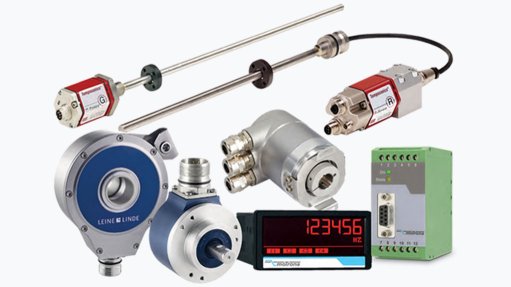
ATI systems comprises five divisions: electrical assemblies, drives and controls, feedback sensors, enclosures, and strip guiding.
VISIT SHOWROOM



Press Office
Announcements
What's On
Subscribe to improve your user experience...
Option 1 (equivalent of R125 a month):
Receive a weekly copy of Creamer Media's Engineering News & Mining Weekly magazine
(print copy for those in South Africa and e-magazine for those outside of South Africa)
Receive daily email newsletters
Access to full search results
Access archive of magazine back copies
Access to Projects in Progress
Access to ONE Research Report of your choice in PDF format
Option 2 (equivalent of R375 a month):
All benefits from Option 1
PLUS
Access to Creamer Media's Research Channel Africa for ALL Research Reports, in PDF format, on various industrial and mining sectors
including Electricity; Water; Energy Transition; Hydrogen; Roads, Rail and Ports; Coal; Gold; Platinum; Battery Metals; etc.
Already a subscriber?
Forgotten your password?
Receive weekly copy of Creamer Media's Engineering News & Mining Weekly magazine (print copy for those in South Africa and e-magazine for those outside of South Africa)
➕
Recieve daily email newsletters
➕
Access to full search results
➕
Access archive of magazine back copies
➕
Access to Projects in Progress
➕
Access to ONE Research Report of your choice in PDF format
RESEARCH CHANNEL AFRICA
R4500 (equivalent of R375 a month)
SUBSCRIBEAll benefits from Option 1
➕
Access to Creamer Media's Research Channel Africa for ALL Research Reports on various industrial and mining sectors, in PDF format, including on:
Electricity
➕
Water
➕
Energy Transition
➕
Hydrogen
➕
Roads, Rail and Ports
➕
Coal
➕
Gold
➕
Platinum
➕
Battery Metals
➕
etc.
Receive all benefits from Option 1 or Option 2 delivered to numerous people at your company
➕
Multiple User names and Passwords for simultaneous log-ins
➕
Intranet integration access to all in your organisation
