



Oxford economist uneasy with SA’s rate hikes amid weak growth outlook

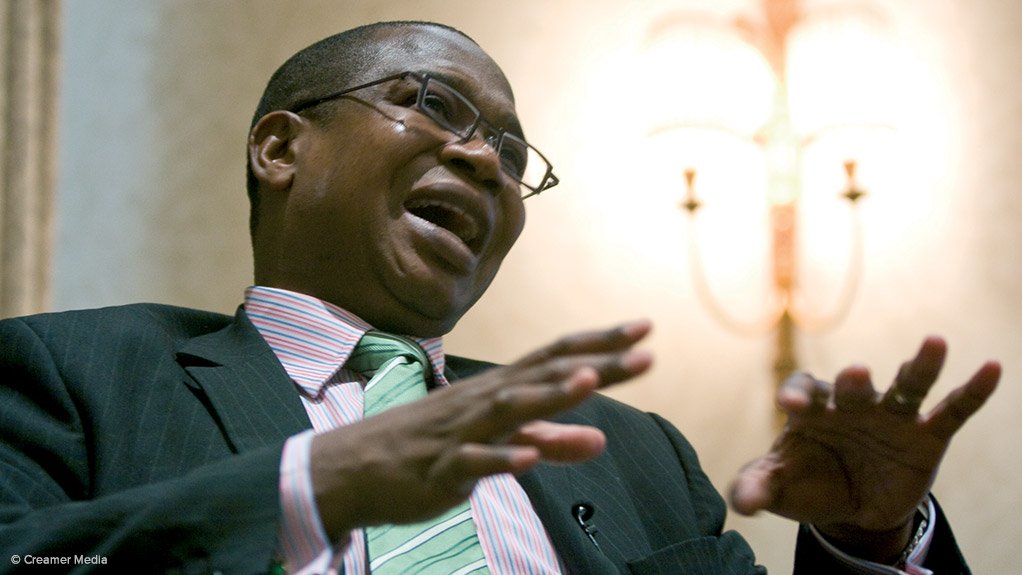



The African Development Bank’s former chief economist Professor Mthuli Ncube has raised questions about South Africa’s current monetary policy approach; warning that recent interest rate hikes could prove ineffectual should the prevailing growth concerns result in lower investment levels and/or the country being downgraded to junk.
Speaking at the Wits Business School in Johannesburg this week, Ncube, who is currently professor of public policy at the University of Oxford’s Blavatnik School of Government, expressed unease with the South African Reserve Bank’s (SARB’s) further tightening stance.
The SARB raised interest rates by 25 basis points to 7% in March, owing primarily to concerns over rising inflation, itself spurred by a weaker rand and higher food prices. Consumer price inflation surged to 7% in February, its highest level since June 2009. However, the rand had also recovered materially since the March interest-rate hike.
Ncube argued that, in setting rates, the authorities needed to take account not only of the inflation and output gaps, but also financial stresses arising from the international environment.
He makes extensive reference to these stresses in his latest book, titled ‘Global Spillovers into South Africa’, in which he outlines which global spillovers have the biggest influence on domestic growth.
The book shows, for instance, that Italy had been a consistent drag on South African growth before and after the 2009 recession, while the UK had been the main contributor to the actual recession. In addition, the US, China and India had a far greater influence on South Africa’s economic performance than did either Russia or Brazil.
However, Ncube also stressed that domestic shocks were as important as global ones and that local factors were currently having a greater influence on the outlook for the country risk premium than the global spillovers.
Ncube said he was unsure that the SARB’s decision to hike rates in March was a correct one in light of “some of the stresses that still persist”, such as the slowdown in China, the fall in commodity prices the threat of a ‘Brexit’ from the European Union. “I think there is still a strong case to keep easy monetary policy,” he asserted.
“The problem is that, when growth slows down quite sharply, it cannot be the type of environment that attracts foreign direct investment or capital. On the contrary, weak growth can lead to an even weaker rand.”
In such a context, interest rate hikes would be unable to stop the rand from sliding, particular when weak growth was couple to other political risks, which had increased in recent months.
“My message for South Africa is to let the rand find its level. Let’s do whatever we can to keep growth going, to make sure there is confidence domestically and for foreign investors.”
Ncube stressed that South Africa’s policy response at the early stages of the global financial crisis – of lower interest rates, a slightly wider Budget deficit – had been convincing.
“I’m less convinced now about the domestic policy response to the shocks, because the shocks are still there globally. But now with domestic shocks, monetary policy is having to accommodate for political shocks and I’m not sure it will be successful.”
The country’s weak growth prospects and its political climate would be central to the upcoming assessments of the ratings agencies. “These things feed into each other, because once there is a further downgrade, then there is less FDI and portfolio flows . . . and the cost of borrowing will also rise.”
Article Enquiry
Email Article
Save Article
Feedback
To advertise email advertising@creamermedia.co.za or click here
Research Reports

Projects


Latest Multimedia

Latest News


Showroom

The Aluminium Federation of South Africa (AFSA), is the voice of the South African aluminium industry.
VISIT SHOWROOM
Rittal is a world leading provider of top-quality integrated systems for enclosures, power distribution, climate control, IT infrastructure and...
VISIT SHOWROOM



Announcements
What's On
Subscribe to improve your user experience...
Option 1 (equivalent of R125 a month):
Receive a weekly copy of Creamer Media's Engineering News & Mining Weekly magazine
(print copy for those in South Africa and e-magazine for those outside of South Africa)
Receive daily email newsletters
Access to full search results
Access archive of magazine back copies
Access to Projects in Progress
Access to ONE Research Report of your choice in PDF format
Option 2 (equivalent of R375 a month):
All benefits from Option 1
PLUS
Access to Creamer Media's Research Channel Africa for ALL Research Reports, in PDF format, on various industrial and mining sectors
including Electricity; Water; Energy Transition; Hydrogen; Roads, Rail and Ports; Coal; Gold; Platinum; Battery Metals; etc.
Already a subscriber?
Forgotten your password?
Receive weekly copy of Creamer Media's Engineering News & Mining Weekly magazine (print copy for those in South Africa and e-magazine for those outside of South Africa)
➕
Recieve daily email newsletters
➕
Access to full search results
➕
Access archive of magazine back copies
➕
Access to Projects in Progress
➕
Access to ONE Research Report of your choice in PDF format
RESEARCH CHANNEL AFRICA
R4500 (equivalent of R375 a month)
SUBSCRIBEAll benefits from Option 1
➕
Access to Creamer Media's Research Channel Africa for ALL Research Reports on various industrial and mining sectors, in PDF format, including on:
Electricity
➕
Water
➕
Energy Transition
➕
Hydrogen
➕
Roads, Rail and Ports
➕
Coal
➕
Gold
➕
Platinum
➕
Battery Metals
➕
etc.
Receive all benefits from Option 1 or Option 2 delivered to numerous people at your company
➕
Multiple User names and Passwords for simultaneous log-ins
➕
Intranet integration access to all in your organisation
