



Oil refinery celebrates start up of new diesel and hydrogen units


Oil and petrochemicals company BP in May announced the successful commissioning of a diesel hydrotreater and hydrogen plant at its 234 000 bl/d Cherry Point refinery located in Blaine, Washington.
“BP is committed to safe operations and providing consumers in the Northwest with cleaner fuels,” says BP’s Northwest fuels value chain president Jeff Pitzer.
The multimillion-dollar project included construction of the new diesel hydrotreater unit, with a production capacity of 25 000 bbl/d, a new hydrogen unit able to generate 44-million standard cubic feet of hydrogen a day and associated infrastructure.
“Not only was the project completed safely, it positions Cherry Point for future opportunities as we continue to deliver on BP’s strategy of operating feedstock-advantaged and technologically advanced refineries tied to strong retail networks,” notes Pitzer.
The new units enhance Cherry Point’s ability to meet regulations calling for lower-sulphur diesel fuel. A diesel hydrotreater creates a chemical reaction that removes sulphur from diesel fuel by using hydrogen to help break the bond between sulphur and the fuel.
“These two units will significantly improve the plant’s effi- ciency and competitiveness. “The new units allow the refinery to make a full slate of ultralow-sulphur diesel fuels and provide hydrogen to other refinery operations,” says refinery manager Stacey McDaniel.
The latest technology for both hydrotreating and hydrogen production was used for the project.
“This recent investment resulted in more than 1 000 skilled tradespeople working over the last two years to ensure a successful and safe completion of these significant new process units. Our workforce and business partners did an outstanding job delivering this project,” notes McDaniel.
The project took place on June 8, 2011 and the construction brought hundreds of well-paying jobs to Whatcom County. Twenty-five contracting companies and more than 1 200 contract workers took part in constructing the units and laying the infrastructure.
Equipment supply came from throughout the US and internationally, including Canada, England, Germany, India, South Korea and Mexico.
Construction involved setting 206 pieces of equipment, driving 1 457 piles, pouring 13 500 cubic yards of concrete, erecting 1 250 t of structural steel, laying 21 miles of pipe and installing 170 000 linear feet of above ground conduit.
Article Enquiry
Email Article
Save Article
Feedback
To advertise email advertising@creamermedia.co.za or click here
Research Reports

Projects


Latest Multimedia

Latest News
Showroom
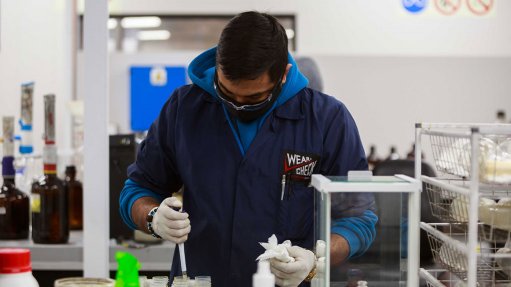
Leading condition monitoring specialists, WearCheck, help boost machinery lifespan and reduce catastrophic component failure through the scientific...
VISIT SHOWROOM



Press Office
Announcements
What's On
Subscribe to improve your user experience...
Option 1 (equivalent of R125 a month):
Receive a weekly copy of Creamer Media's Engineering News & Mining Weekly magazine
(print copy for those in South Africa and e-magazine for those outside of South Africa)
Receive daily email newsletters
Access to full search results
Access archive of magazine back copies
Access to Projects in Progress
Access to ONE Research Report of your choice in PDF format
Option 2 (equivalent of R375 a month):
All benefits from Option 1
PLUS
Access to Creamer Media's Research Channel Africa for ALL Research Reports, in PDF format, on various industrial and mining sectors
including Electricity; Water; Energy Transition; Hydrogen; Roads, Rail and Ports; Coal; Gold; Platinum; Battery Metals; etc.
Already a subscriber?
Forgotten your password?
Receive weekly copy of Creamer Media's Engineering News & Mining Weekly magazine (print copy for those in South Africa and e-magazine for those outside of South Africa)
➕
Recieve daily email newsletters
➕
Access to full search results
➕
Access archive of magazine back copies
➕
Access to Projects in Progress
➕
Access to ONE Research Report of your choice in PDF format
RESEARCH CHANNEL AFRICA
R4500 (equivalent of R375 a month)
SUBSCRIBEAll benefits from Option 1
➕
Access to Creamer Media's Research Channel Africa for ALL Research Reports on various industrial and mining sectors, in PDF format, including on:
Electricity
➕
Water
➕
Energy Transition
➕
Hydrogen
➕
Roads, Rail and Ports
➕
Coal
➕
Gold
➕
Platinum
➕
Battery Metals
➕
etc.
Receive all benefits from Option 1 or Option 2 delivered to numerous people at your company
➕
Multiple User names and Passwords for simultaneous log-ins
➕
Intranet integration access to all in your organisation
