



No great improvement expected for manufacturing in 2014

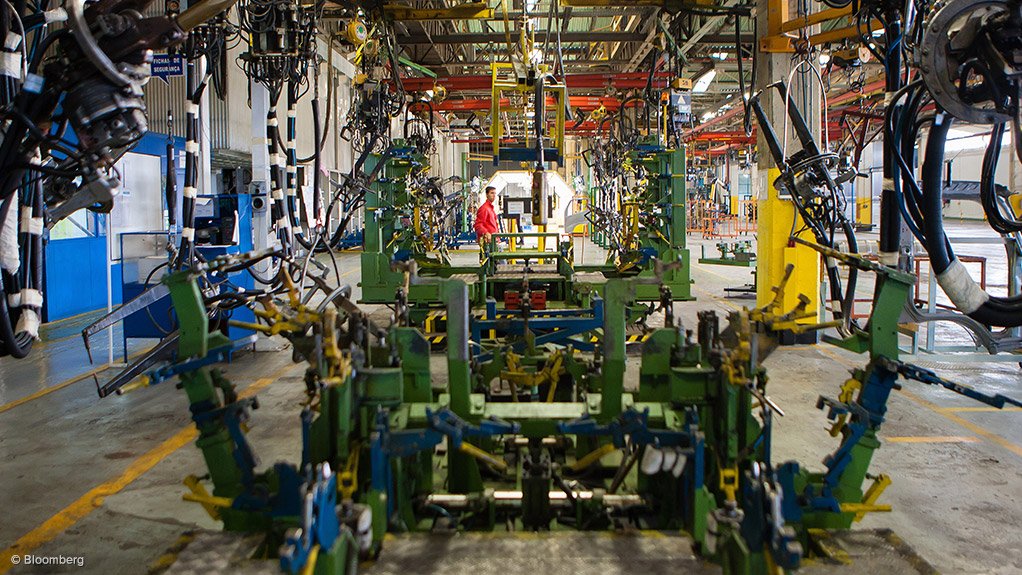


Industry body the Manufacturing Circle (ManCirc) expects a positive posting of manufacturing output in the 2013 fourth quarter to largely be a function of base effects following the prior quarter’s contraction, with manufacturing growth for the year expected to come in below 2%, extending the negative trend in manufacturing production discernible since 2010.
ManCirc reported in its Manufacturing Growth Outlook for 2014 on Tuesday that, while it expected manufacturing growth to consolidate at levels similar to 2013 in the coming year, this would hinge on overall economic stability as well as secure labour relations in the upstream sectors.
The organisation further expected a subdued recovery in overall economic growth in 2014, acknowledging that risks to the outlook were tilted to the downside.
“Industrial relations, though in a better position than a year ago, may yet exhibit further instability in upstream sectors. In addition, the reduction of monetary stimulus in the US is expected to negatively affect emerging market economies, such as South Africa, with large current and fiscal deficits.
“Based on studies prepared for us by Pan African Investment and Research Services, we expect that growth will not likely exceed 2.3% for 2014,” commented ManCirc executive director Coenraad Bezuidenhout.
Notwithstanding the cautionary economic outlook for 2014, he cited “numerous” positive aspects that could drive a recovery in manufacturing, most notably in respect of government efforts.
Among the most prominent of these were National Treasury’s acknowledgement of the negative impact of rand volatility on manufacturing, and a recognition of the importance of manufacturing growth by South African Reserve Bank governor Gill Marcus in each of her monetary policy statements in 2013.
Further indicating government’s support of the sector was the inclusion of ManCirc’s views in the latest iteration of the Industrial Policy Action Plan, said Bezuidenhout.
“In addition, government has made significant progress with local procurement initiatives, with Transnet setting the example for other State-owned enterprises. While challenges remain with line departments and in the local and provincial spheres, enforcement mechanisms have been instituted by the Department of Trade and Industry,” he added.
ManCirc further emphasised that, to ensure long-term growth, the South African manufacturing sector needed to become more competitive, which would be achieved by maintaining cost-competitiveness and increasing production volumes.
“Government has an essential role to play on both these scores. In terms of costs, government has the exclusive power to single-mindedly focus on important cost-drivers such as administered prices, many of which are too high owing to the inefficient funding, financing and recoupment of infrastructure roll-out and maintenance costs,” said Bezuidenhout.
In terms of production, government needed to further drive its local procurement programmes through improved enforcement and roll-out of its R800-billion infrastructure spend.
TROUBLED EMPLOYMENT TREND
While some signs of resurgence in manufacturing employment in the fourth quarter were noted, these too were largely attributed to base and seasonal effects, and were not considered by ManCirc to be “spectacular enough” to arrest the entrenched negative trend in manufacturing employment, which remained under pressure.
The negative employment outlook was further corroborated by the Kagiso Purchasing Managers Index's (PMI’s) employment subindex, which held that any improvement in manufacturing employment would not be significant.
This was further supported by financial services firm HSBC’s PMI for South Africa, which showed that, while purchasing managers had perceived employment pick-ups in manufacturing since September last year, an overall improvement was unlikely to be sustained.
Bezuidenhout added that the final and most concerning data-set to underscore the weak outlook for manufacturing employment in 2014 had emerged from the results of ManCirc’s third-quarter 2013 survey of manufacturing business conditions.
“This revealed that 29% of manufacturers expected to decrease their employment complements over the next 12 months. Of that portion, a quarter expected to do so by more than 15%, indicating that mechanisation may now be part of the competitiveness planning of an increased number of manufacturers,” he held.
Article Enquiry
Email Article
Save Article
Feedback
To advertise email advertising@creamermedia.co.za or click here
Research Reports

Projects


Latest Multimedia


Latest News
Showroom

The Aluminium Federation of South Africa (AFSA), is the voice of the South African aluminium industry.
VISIT SHOWROOM
Leading condition monitoring specialists, WearCheck, help boost machinery lifespan and reduce catastrophic component failure through the scientific...
VISIT SHOWROOM



Press Office
Announcements
What's On
Subscribe to improve your user experience...
Option 1 (equivalent of R125 a month):
Receive a weekly copy of Creamer Media's Engineering News & Mining Weekly magazine
(print copy for those in South Africa and e-magazine for those outside of South Africa)
Receive daily email newsletters
Access to full search results
Access archive of magazine back copies
Access to Projects in Progress
Access to ONE Research Report of your choice in PDF format
Option 2 (equivalent of R375 a month):
All benefits from Option 1
PLUS
Access to Creamer Media's Research Channel Africa for ALL Research Reports, in PDF format, on various industrial and mining sectors
including Electricity; Water; Energy Transition; Hydrogen; Roads, Rail and Ports; Coal; Gold; Platinum; Battery Metals; etc.
Already a subscriber?
Forgotten your password?
Receive weekly copy of Creamer Media's Engineering News & Mining Weekly magazine (print copy for those in South Africa and e-magazine for those outside of South Africa)
➕
Recieve daily email newsletters
➕
Access to full search results
➕
Access archive of magazine back copies
➕
Access to Projects in Progress
➕
Access to ONE Research Report of your choice in PDF format
RESEARCH CHANNEL AFRICA
R4500 (equivalent of R375 a month)
SUBSCRIBEAll benefits from Option 1
➕
Access to Creamer Media's Research Channel Africa for ALL Research Reports on various industrial and mining sectors, in PDF format, including on:
Electricity
➕
Water
➕
Energy Transition
➕
Hydrogen
➕
Roads, Rail and Ports
➕
Coal
➕
Gold
➕
Platinum
➕
Battery Metals
➕
etc.
Receive all benefits from Option 1 or Option 2 delivered to numerous people at your company
➕
Multiple User names and Passwords for simultaneous log-ins
➕
Intranet integration access to all in your organisation
