Multilateral development banks remain relevant, more progress on reforms needed


Multilateral development banks (MDBs) remain highly relevant to their clients, and their relevance has increased over the past five years, although there is a need for further progress on reform of some of their functions.
This was among the findings of the 'Reforming multilateral development banks: perspectives from client countries' report produced by UK-based think tank ODI Global.
The report surveyed 650 government and MDB officials from 125 countries and conducted a further 250 interviews for 12 country case studies.
MDBs continue to play an essential role in supporting long-term socioeconomic development in their client countries, the report showed.
Three-quarters of respondents view MDBs’ functions, including financing at better-than-market terms, policy advice and technical assistance, knowledge generation and convening, as 'very relevant' or 'extremely relevant' to their countries’ development trajectories.
Additionally, the relevance of these institutions had increased since the first report in 2021, said ODI Global principal research fellow and report co-author Annalisa Prizzon on June 23.
MDBs have a unique combination of functions, which support the socioeconomic development of their client countries and help address regional and global challenges.
Government respondents said the value that MDBs offered lay in the combination of functions, as financing iwas necessary but not sufficient, and the technical assistance and strong convening influence MDBs had were viewed as equally valuable, she said.
Respondents saw MDBs not only as financial institutions, but as partners providing technical assistance and knowledge, she added.
Since the first MDB client survey in 2021, successive Group of 20 presidencies, shareholders and MDBs have launched reform initiatives to increase their financial capacity and strengthen their operational effectiveness, individually and as a system.
However, issues have also re-emerged in the MDB reform agenda in recent years, particularly on boosting the operational effectiveness of MDBs. These include how MDBs collaborate on the ground, how they support building high-quality project pipelines and how they streamline the project cycle.
During a webinar hosted by public policy think tank the South African Institute of International Affairs (SAIIA) on June 23, global organisation World Bank Group Africa Group 1 Constituency executive director Dr Zarau Kibwe said client countries' perspectives were increasingly being considered as change takes place in MDBs.
“Shareholders debated capital adequacy and institutional mandates, and the MDB reform conversation often treated client countries' perspectives as an afterthought; but this is changing.
“The views in the report are important signals that are available for calibrating institutional performance. Development ownership starts with listening and creating spaces for conversations,” he said.
Further, MDBs are not static, with many aligning more closely with national development strategies to improve the depth of support and create more suitable and flexible financial instruments.
“There is also a signal [from the report] of growing institutional appetite to understand and respond to client countries' realities. The fact that the vast majority of respondents surveyed view MDB functions as relevant is a vote of confidence in these institutions,” said Kibwe.
However, relevance alone was not sufficient and client countries said that the machinery of MDBs remained too slow, fragmented and generic in too many cases, he pointed out.
About half of government officials described the project process from concept to first disbursement as lengthy. While this was based on perceptions, delays, compliance requirements and project preparation challenges translated to real costs, he noted.
Further, the feedback from client countries about technical assistance indicated that it was insufficiently tailored to the local context and often focused on diagnosis and not implementation support, Kibwe said.
Similarly, fewer than half of MDBs coordinate at a country level, and this gap imposes transaction costs on governments that are already stretched thin.
“The persistence of these issues is why accelerating reform is important,” he said.
However, reform is a shared responsibility and the responsiveness of MDBs must be matched by responsiveness in government activity, including project preparation and consultation with stakeholders.
Governments must demonstrate leadership and ownership of their development agendas. In addition to asking MDBs to move faster, government must participate, negotiate and shape discussions, and the partnership must work both ways, Kibwe said.
“The case for reforming MDBs is about making them and their client countries work more effectively and responsibly together. The evidence from this report provides a constructive roadmap for reforming MDBs.”
Meanwhile, in terms of what policy advice and technical assistance were most important for long-term development, 80% of respondents said policy advice and technical assistance that was demand-driven, timely and flexible, reflective of the local context and culture, had long-term impact, and was highly specialised, unbiased and impartial was 'extremely important' or 'very important'.
“On these criteria, MDBs appear to be falling short, with only about 20% of respondents saying that policy advice and technical assistance offered by MDBs reflect knowledge of the local context and culture and 25% saying that it is timely and flexible,” the report said.
However, about 60% of respondents think MDBs are either 'good' or 'very good' at providing policy advice and technical assistance that has a long-term impact.
The top three advantages of policy advice and technical assistance provided by MDBs are filling gaps in technical knowledge and expertise, the combination of technical assistance and policy advice with grants and loans, and high specialisation, the report showed.
In terms of perspectives on the development effectiveness and delivery of MDB operations, about 80% of respondents believe it is either 'very important ' or 'extremely important' that MDBs’ operations are aligned with national priorities and owned by the country.
Three-quarters of respondents cited quick delivery of projects and programmes, the use of country systems and targeting the poorest and most vulnerable as their top priorities.
About two-thirds of respondents consider low management burden and reporting requirements as 'very important' or 'extremely important', the report showed.
In terms of how MDBs could help expand project pipelines, 55% of respondents suggested help with strengthening institutional capacity for project preparation and 29% suggested coordinating project preparation with other MDBs active in the country.
Further, 25% of respondents think MDBs should boost resources for project preparation.
Both MDB staff and government officials believe MDBs should prioritise strengthening institutional capacity at the national and subnational levels, though MDB staff placed greater weight on financing pre-project financing facilities, at 44% of MDB staff respondents, as opposed to 16% of government official respondents.
Additionally, when government officials were asked where in energy generation and distribution they expect MDBs to be active in the future, the majority indicated that they see MDBs being active in supporting renewable-energy resources.
Specifically, 79% of respondents expected MDBs to be more active in the solar power sector, 54% of respondents said they expected them to be more active in hydropower, while 13% of respondents said they expected MDBs to be more active in the gas sector.
The vast majority expect MDBs to support countries in their low-carbon transitions and to support renewable sources of energy, said Prizzon.
Further, demand for technical assistance to borrowers was expected to increase in the next five to ten years, she added.
In terms of addressing the length of time it takes from project concept to first disbursement, government officials viewed this as a responsibility that was shared between MDBs and governments, Prizzon noted.
At the heart of addressing the perceptions of delays was project preparation, which was also where governments were asking for greater capacity support, she pointed out.
The report made a series of recommendations to increase the operational effectiveness of MDBs for client countries, including that MDBs leverage their distinctive and mutually reinforcing combination of functions.
Demand for grants and loans from MDBs remains sustained, even across countries with market access, and MDBs should make use of this headroom, it recommended.
To improve their effectiveness, MDBs should also ensure they have a country presence, including technical staff, to enable greater ownership and alignment with national programmes.
Similarly, MDBs should provide tailor-made technical assistance that reflects the local context and culture, and invest more in project preparation and coordination among MDBs, including on building institutional capacity.
“MDBs have significantly scaled up their reforms and the challenge now is to ensure that resources are deployed effectively and at speed. The cornerstone to achieving this is building sustainable, high-quality project pipelines in countries,” said Prizzon.
Article Enquiry
Email Article
Save Article
Feedback
To advertise email advertising@creamermedia.co.za or click here
Research Reports

Projects


Latest Multimedia
Latest News


Showroom
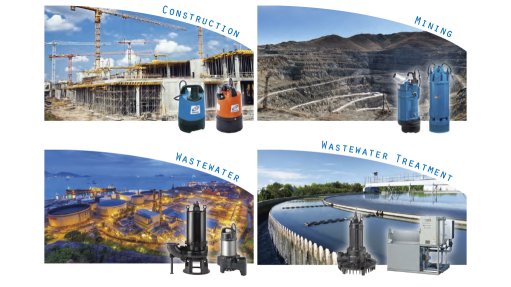
Tsurumi Pumps Africa is a specialist supplier of Japanese-engineered submersible pumping solutions, serving customers across the African continent.
VISIT SHOWROOM
Design, Construction and Maintenance of Site Erected, Welded Bulk Storage Tanks for the Petrochemical, LNG, Ammonia and Sustainable fuel Sectors.
VISIT SHOWROOM


Announcements
What's On
Subscribe to improve your user experience...
Option 1 (equivalent of R125 a month):
Receive a weekly copy of Creamer Media's Engineering News & Mining Weekly magazine
(print copy for those in South Africa and e-magazine for those outside of South Africa)
Receive daily email newsletters
Access to full search results
Access archive of magazine back copies
Access to Projects in Progress
Access to ONE Research Report of your choice in PDF format
Option 2 (equivalent of R375 a month):
All benefits from Option 1
PLUS
Access to Creamer Media's Research Channel Africa for ALL Research Reports, in PDF format, on various industrial and mining sectors
including Electricity; Water; Energy Transition; Hydrogen; Roads, Rail and Ports; Coal; Gold; Platinum; Battery Metals; etc.
Already a subscriber?
Forgotten your password?
Receive weekly copy of Creamer Media's Engineering News & Mining Weekly magazine (print copy for those in South Africa and e-magazine for those outside of South Africa)
➕
Recieve daily email newsletters
➕
Access to full search results
➕
Access archive of magazine back copies
➕
Access to Projects in Progress
➕
Access to ONE Research Report of your choice in PDF format
RESEARCH CHANNEL AFRICA
R4500 (equivalent of R375 a month)
SUBSCRIBEAll benefits from Option 1
➕
Access to Creamer Media's Research Channel Africa for ALL Research Reports on various industrial and mining sectors, in PDF format, including on:
Electricity
➕
Water
➕
Energy Transition
➕
Hydrogen
➕
Roads, Rail and Ports
➕
Coal
➕
Gold
➕
Platinum
➕
Battery Metals
➕
etc.
Receive all benefits from Option 1 or Option 2 delivered to numerous people at your company
➕
Multiple User names and Passwords for simultaneous log-ins
➕
Intranet integration access to all in your organisation