



More financial access needed for female entrepreneurs – Zulu

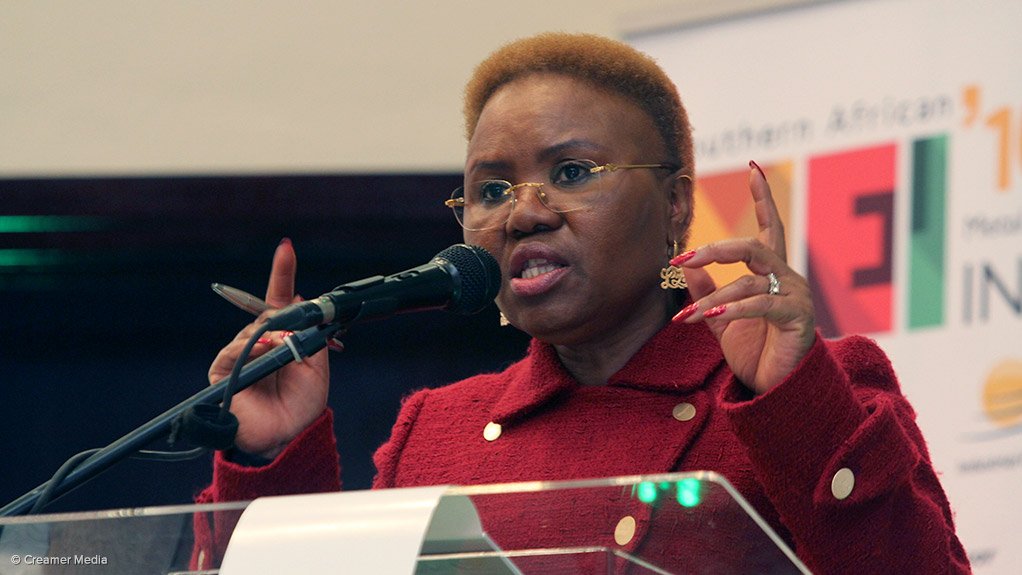


Regulatory frameworks, red tape and a lack of knowledge and understanding of support programmes are major challenges facing small businesses and cooperatives in South Africa, Small Business Development Minister Lindiwe Zulu said on Friday.
She was addressing a delegation of female small business owners at the launch of a United Nations Development Programme- (UNDP-) funded publication entitled ‘Exploring the finance pipeline for women-owned SMME’s in South Africa’, in Pretoria.
The publication reports on a study commissioned by the UNDP in 2012, in partnership with the Department of Small Business Development (DSBD), on challenges facing female entrepreneurs in the country.
It looks at the financing pipeline for women-owned small, medium-sized and microenterprises (SMMEs) and investigates problems underlying access to finance, despite an array of financial institutions and funding vehicles in South Africa.
The study is also aimed at assessing current financial mechanisms to provide recommendations for an alternative approach to financing women-owned SMMEs in South Africa.
Zulu stated that the economic empowerment of women was a human rights and social justice issue that impacted on economic development and the reduction of poverty.
“Women’s economic empowerment is seen today as the single most important factor contributing to equality between men and women,” she said.
She added that promoting women’s economic empowerment facilitated the achievement of other important public policy goals such as economic growth, improved development and reduced violence.
Zulu highlighted that challenges faced by female entrepreneurs in South Africa included the fact that women were regarded as a “homogenous group and that sometimes women lack confidence in the entrepreneurial work space”.
“There [are] a plethora of uncoordinated and competing female-orientated entrepreneurial organisations, a lack of a clear graduating programme for women and limited role models and limited support from communities [that hinder the growth of women-owned businesses in the country],” she said.
She noted that to deal with challenges, all the fundamental barriers to small business development needed to be looked at, noting that access to finance and markets remained critical.
Zulu pointed out that greater access to economic resources such as finance, credit, land and property would give women greater economic security and increase their economic rights.
“We are confronting the challenge of red tape head-on. We remain seized with the task of easing regulatory and compliance burdens on the shoulders of small businesses,” she said.
Zulu added that while compliance with policies, laws and regulations is necessary in any modern society, the DSBD was aware that, in some instances, policies and compliance processes may have the unintended consequences of being a heavy burden that could constrain the growth and development of businesses.
“Together, we must increase business awareness through regular sessions and networking platforms. In this regard, we will ensure regular educational sessions by other government departments on existing procurement opportunities. We want to ensure that women are aware of opportunities and are also empowered to take advantage of them,” she said.
Zulu stated that the DSBD would work with small businesses and cooperatives to improve the quality of products, assist local suppliers to expand production capacity, assist suppliers to reduce input costs, facilitate market access for products locally and internationally and establish and build long-term, effective supplier partnerships.
Also speaking at the event, UNDP gender and HIV manager Dr Nelly Mwaka said gender equality translated into greater economic growth and that women in business were powerful drivers of economic development.
“They, therefore, require more support from the financial sector; however, critical difficulties still exist for female entrepreneurs in accessing finance, as well as . . . adequate financial services,” she said.
Mwaka stated that the UNDP publication examined the reasons financial access for women-owned SMMEs was a persistent problem.
“At the heart of the report, we reviewed the funding from institutions in the public and private sectors that target female SMME owners to understand their mandates, criteria, approval processes, finance charges and results to see how effective they are in providing different types of finance to their intended beneficiaries,” she explained.
Mwaka highlighted that a key issue that came out of the study was a review of the Small Business Act, adding that the DSBD had started the process of reviewing the Act to come up with a more appropriate definition of SMMEs.
“The findings and recommendations will be a major tool in fostering [women's empowerment], and further recommendations will culminate in the promotion and implementation of inclusive gender equitable financing policies and programming for female entrepreneurs,” she said.
Article Enquiry
Email Article
Save Article
Feedback
To advertise email advertising@creamermedia.co.za or click here
Research Reports

Projects

Latest Multimedia
Latest News

Showroom

Established on 1 March, 2000, by Barries Barnard, Advanced Fire Suppression Technologies (AFST) and the Advanced Group stands as Sub-Saharan...
VISIT SHOWROOM
Complete range of security sealing solutions including security seals bags and labels.
VISIT SHOWROOM


Press Office
Announcements
What's On
Subscribe to improve your user experience...
Option 1 (equivalent of R125 a month):
Receive a weekly copy of Creamer Media's Engineering News & Mining Weekly magazine
(print copy for those in South Africa and e-magazine for those outside of South Africa)
Receive daily email newsletters
Access to full search results
Access archive of magazine back copies
Access to Projects in Progress
Access to ONE Research Report of your choice in PDF format
Option 2 (equivalent of R375 a month):
All benefits from Option 1
PLUS
Access to Creamer Media's Research Channel Africa for ALL Research Reports, in PDF format, on various industrial and mining sectors
including Electricity; Water; Energy Transition; Hydrogen; Roads, Rail and Ports; Coal; Gold; Platinum; Battery Metals; etc.
Already a subscriber?
Forgotten your password?
Receive weekly copy of Creamer Media's Engineering News & Mining Weekly magazine (print copy for those in South Africa and e-magazine for those outside of South Africa)
➕
Recieve daily email newsletters
➕
Access to full search results
➕
Access archive of magazine back copies
➕
Access to Projects in Progress
➕
Access to ONE Research Report of your choice in PDF format
RESEARCH CHANNEL AFRICA
R4500 (equivalent of R375 a month)
SUBSCRIBEAll benefits from Option 1
➕
Access to Creamer Media's Research Channel Africa for ALL Research Reports on various industrial and mining sectors, in PDF format, including on:
Electricity
➕
Water
➕
Energy Transition
➕
Hydrogen
➕
Roads, Rail and Ports
➕
Coal
➕
Gold
➕
Platinum
➕
Battery Metals
➕
etc.
Receive all benefits from Option 1 or Option 2 delivered to numerous people at your company
➕
Multiple User names and Passwords for simultaneous log-ins
➕
Intranet integration access to all in your organisation
