



Minister of Public Enterprises Malusi Gigaba on SA's 20 years of democracy

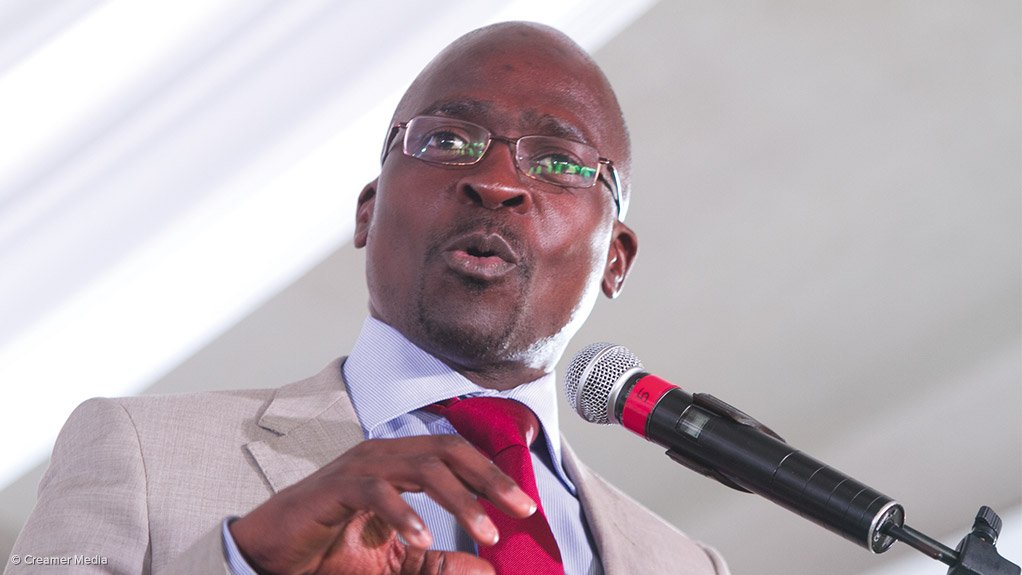


This year, South Africa celebrates its freedom from the apartheid racial regime, whose policies were based on separatism and discrimination against black people and women, who were treated as second-class citizens. Black people were socially excluded in South Africa, with no economic or social rights. The system was designed to extract maximum value out of African labour, with no decent wages attached to their labour. That has perpetually influenced the structure of the labour market and has entrenched wage inequality. Labour exploitation was the norm, including the imposition of forced migration on black people, subjecting African families in particular to dysfunctionality, with children growing up without their fathers or mothers. Or mothers had to raise their children alone while their husbands were working in the mines. The genesis of development discourse and industrial policy sought to destabilise black communities and the centralisation of industrial activities to support the separatism policy in South Africa.
Consequently, black and African families still suffer from the psychological scars from the life they endured during apartheid and the destruction of a social intergenerational support system. The celebration for black people is not only about a democratic dispensation or free association but it’s also about celebrating freedom of movement, freedom to lead a quality of life that recognises humanity and restores our dignity as part of the human race. A price can be placed on the cost of the freedom we enjoy today. We need to be conscious of the fact that this freedom did not come cheap – the cost associated with it – is much bigger.
A well-known fact is that black people were dehumanised, killed by the apartheid regime and lived in squalor, with no proper access to water, electricity or sanitation services.
Today, South Africans can participate in public life, their social and economic rights are protected by the Constitution. The government of South Africa has unambiguously committed itself to economic transformation and ensuring black people don’t only have a stake in the economy but that they also enjoy economic rights through wealth distribution strategies. Our State-owned enterprises have played a critical role in economic transformation and the industralisation of this country owing to the size of their procurement activities as well as their footprint in the economy. Over the last 20 years, government has made exerted efforts, working very hard to engender social cohesion and a national identity that is representative of our diverse culture. The ANC-led government’s main overarching goal was, and remains, the creation of a united, nonracial, nonsexist, prosperous and democratic society. It’s evident that we are a more socially integrated country than we were 20 years ago. Government’s strategic preoccupation has always been to raise the quality of life of all South Africans, Africans in particular and black people in general, especially the poor. That is why, over the last 20 years, the basic task of government’s mission has remained the same – the eradication of poverty, unemployment and social inequality. As such, we have created a strong social safety net for poor households through myraids of interventions, from social protection to public works programmes, as means to address income inequality.
- South Africa has been successful in facilitating access to primary and tertiary education, particularly for the girl child
- South Africa has made progress in improving health infrastructure and access to primary healthcare for all South Africans
Now, together we have travelled a long road to be where we are today. As a consequence of the victories we have registered during our first 20 years of freedom, we are confident that we have laid a firm foundation for the new advances we must and will make during the next two decades, towards a second centenary of certain victory. What we need to do is build trust between the public and private sectors so that we can allocate resources in industries that will rebuild our manufacturing capabilities so that we can create sustainable, decent jobs, tackling poverty, unemployment and social inequality.
Article Enquiry
Email Article
Save Article
Feedback
To advertise email advertising@creamermedia.co.za or click here
Research Reports

Projects


Latest Multimedia


Latest News
Showroom
Established in 1933, EKATO is the world leader in agitation technology, supplying agitators for processes and applications such as chemicals and...
VISIT SHOWROOM
Your global lifecycle technology & service partner for materials & minerals processing equipment for coal, iron ore, copper, manganese & other...
VISIT SHOWROOM



Press Office
Announcements
What's On
Subscribe to improve your user experience...
Option 1 (equivalent of R125 a month):
Receive a weekly copy of Creamer Media's Engineering News & Mining Weekly magazine
(print copy for those in South Africa and e-magazine for those outside of South Africa)
Receive daily email newsletters
Access to full search results
Access archive of magazine back copies
Access to Projects in Progress
Access to ONE Research Report of your choice in PDF format
Option 2 (equivalent of R375 a month):
All benefits from Option 1
PLUS
Access to Creamer Media's Research Channel Africa for ALL Research Reports, in PDF format, on various industrial and mining sectors
including Electricity; Water; Energy Transition; Hydrogen; Roads, Rail and Ports; Coal; Gold; Platinum; Battery Metals; etc.
Already a subscriber?
Forgotten your password?
Receive weekly copy of Creamer Media's Engineering News & Mining Weekly magazine (print copy for those in South Africa and e-magazine for those outside of South Africa)
➕
Recieve daily email newsletters
➕
Access to full search results
➕
Access archive of magazine back copies
➕
Access to Projects in Progress
➕
Access to ONE Research Report of your choice in PDF format
RESEARCH CHANNEL AFRICA
R4500 (equivalent of R375 a month)
SUBSCRIBEAll benefits from Option 1
➕
Access to Creamer Media's Research Channel Africa for ALL Research Reports on various industrial and mining sectors, in PDF format, including on:
Electricity
➕
Water
➕
Energy Transition
➕
Hydrogen
➕
Roads, Rail and Ports
➕
Coal
➕
Gold
➕
Platinum
➕
Battery Metals
➕
etc.
Receive all benefits from Option 1 or Option 2 delivered to numerous people at your company
➕
Multiple User names and Passwords for simultaneous log-ins
➕
Intranet integration access to all in your organisation
