



Mining needs innovation, R&D


JOHANNESBURG (miningweekly.com) – To realise the full potential of South Africa’s competitively advantageous range of minerals and mineral wealth, the country would have to improve innovation and increase its investment in research and development (R&D), Science and Technology Minister Derek Hanekom said on Tuesday.
South Africa’s mineral resources lent the country a comparable advantage; however, R&D investment in the mining sector had been declining over the past few years.
The 2008/9 “peak” collective R&D investment of R21-billion, or 0.92% of the country’s gross domestic product (GDP), had been steadily declining. South Africa had also failed to reach its target of spending 1% of GDP on R&D by 2008, and had yet to achieve this “elusive” percentage.
The mining sector accounted for 10% of total R&D investments in South Africa, compared with 24% in Australia.
Speaking at a KPMG tax incentive breakfast seminar, in Parktown, Hanekom commented that South Africa had not maintained the sector’s competitive advantage and, in many cases, neglected the taken-for-granted industry in many respects, including that of its single biggest asset – human capital.
Further, the importance of the mining sector needed to be recognised, he said, adding that it was not just about beneficiation or value-adding, but also about developing solutions for mining deeper, increasing exploration and easing energy and water constraints.
KPMG partner for the tax division and head of tax services Mohammed Jada added that the mining sector, which was not “in the best health” held many challenges that could be solved or managed through innovation.
He said innovative developments, such as new detection methods, automation, advanced exploration techniques and new leaching technologies, besides others, would mitigate many of the challenges faced by the mining sector, including deepening underground mining operations, lower grades, higher labour costs, fewer mature orebodies and increasing environmental impacts.
South Africa needed to be at the “cutting-edge of technology” and embrace innovation in an environment that supported economic growth.
Hanekom commented that the events at Marikana in August, during which more than 50 people were killed in labour unrest near the Rustenburg-based platinum operations, opened up a series of “complexities” and “changed things”.
This and other events in the sector emphasised the need to develop solutions, “do things better”, innovate more and adapt to and understand South Africa’s constant changing “realities”, which also applied to how the country would position itself in an ever-changing global context to remain competitive.
Jada noted that R&D could be used as a catalyst for value-adding and added that global tax regimes have proved to be successful in stimulating investments.
A US-based study found that increasing tax incentives to 20% from 14%, for instance, added 162 000 jobs, increased the number of patents filed, boosted productivity by 0.5% and contributed an additional $66-billion to the US GDP.
R&D TAX INCENTIVE INTRODUCED
He explained that, to encourage R&D investment, South Africa’s government had introduced an amended tax incentive, which, as of October 2012, expanded the scope for investments under the new regime.
Department of Science and Technology (DST) chief director of investments Godfrey Mashamba said government wanted to encourage small and large local companies to invest in R&D initiatives based in South Africa through the tax incentive.
The DST, the South African Revenue Service and the National Treasury managed the administration of the incentive regime.
Within the first two weeks of October, when the amended version of the incentive was introduced, Mashamba commented that the DST had received more than 100 applications responding to the incentive for R&D investment initiatives. This had doubled by mid-January.
The department, which was currently trying to iron out the challenges in the programme, had reviewed about 20 of those applications to date.
He stated that the programme was expected to face challenges within the first few months, but the DST and its partners were progressing the incentive scheme and working to establish timelines for application turnaround times.
KPMG Australia-based global head for R&D tax incentives David Gelb, who believed the mining sector thrived on innovation, which underpinned development, said South Africa should heed the lessons of international success stories.
Countries such as the US, UK, Canada and Australia have had tax regimes embedded into the industry for the past 15 years.
The tax incentives had has positive effects, inducing R&D activities and growing the host country’s economy.
Other regions such as Brazil and Singapore had also implemented tax incentives and developing countries were increasingly investing in R&D.
Article Enquiry
Email Article
Save Article
Feedback
To advertise email advertising@creamermedia.co.za or click here
Research Reports

Projects


Latest Multimedia


Latest News
Showroom
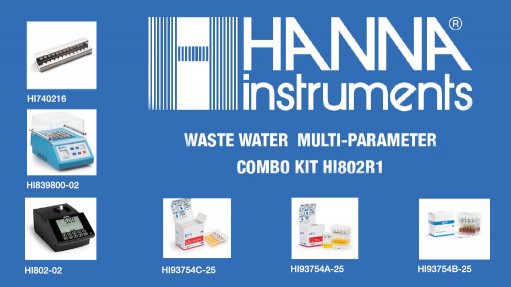
We supply customers with practical affordable solutions for their testing needs. Our products include benchtop, portable, in-line process control...
VISIT SHOWROOM
We at Hawk High Pressure Pumps specialise in industrial pumps and pumping systems. Our high pressure washing equipment is locally manufactured and...
VISIT SHOWROOM



Announcements
What's On
Subscribe to improve your user experience...
Option 1 (equivalent of R125 a month):
Receive a weekly copy of Creamer Media's Engineering News & Mining Weekly magazine
(print copy for those in South Africa and e-magazine for those outside of South Africa)
Receive daily email newsletters
Access to full search results
Access archive of magazine back copies
Access to Projects in Progress
Access to ONE Research Report of your choice in PDF format
Option 2 (equivalent of R375 a month):
All benefits from Option 1
PLUS
Access to Creamer Media's Research Channel Africa for ALL Research Reports, in PDF format, on various industrial and mining sectors
including Electricity; Water; Energy Transition; Hydrogen; Roads, Rail and Ports; Coal; Gold; Platinum; Battery Metals; etc.
Already a subscriber?
Forgotten your password?
Receive weekly copy of Creamer Media's Engineering News & Mining Weekly magazine (print copy for those in South Africa and e-magazine for those outside of South Africa)
➕
Recieve daily email newsletters
➕
Access to full search results
➕
Access archive of magazine back copies
➕
Access to Projects in Progress
➕
Access to ONE Research Report of your choice in PDF format
RESEARCH CHANNEL AFRICA
R4500 (equivalent of R375 a month)
SUBSCRIBEAll benefits from Option 1
➕
Access to Creamer Media's Research Channel Africa for ALL Research Reports on various industrial and mining sectors, in PDF format, including on:
Electricity
➕
Water
➕
Energy Transition
➕
Hydrogen
➕
Roads, Rail and Ports
➕
Coal
➕
Gold
➕
Platinum
➕
Battery Metals
➕
etc.
Receive all benefits from Option 1 or Option 2 delivered to numerous people at your company
➕
Multiple User names and Passwords for simultaneous log-ins
➕
Intranet integration access to all in your organisation
