



Mining majors facing rising impairment costs, waning market caps – PwC


Increasing costs and continued industrial action in the 2013 fiscal period have, in combination with lower production and international demand weakness, driven shrinking margins and R25-billion in impairments for majors in the South African mining sector.
This was revealed last week when professional services firm PwC released its fifth edition of ‘SA Mine’ report, which was compiled using publicly available information on JSE-listed companies boasting a minimum market capitalisation of R200-million.
The report held that a significant decrease in the profitability of the industry had also resulted in a substantial contraction in the market capitalisation of South African mining stocks.
According to the firm, 2013 saw the top 37 mining companies in South Africa shed 28% in market capitalisation, from R833-billion on June 30, 2012, to R597- billion on June 30 this year.
The bulk of the top ten companies, with the exception of Lonmin and Assore, saw their market capitalisation decline.
Gold mining companies were the hardest hit, losing R109.6-billion, or 48%, of their market capitalisation following the decline in the gold price.
After gold, platinum mining companies lost R75.8-billion, or 29%, of their market capitalisation.
The report excluded input from global mining companies Anglo American and BHP Billiton, as PwC believed these organisations did not “reflect trends in the South African mining environment”.
“For some reason, mining companies are getting punished in terms of market capitalisation compared with firms operating in other sectors. There’s a significant gap between how they’re performing and how they’re valued on the JSE,” PwC African Mining Industry leader Hein Boegman said at a media briefing last week.
The decrease of local stocks was, however, aligned with the movement of their international mining counterparts, which were also contending with higher costs and lower prices.
This was despite a weakening rand over the period, which had shielded the local mining industry to a certain degree from the inter- national decline, with rand prices remaining relatively flat.
Diversified players remained dominant in the market over the 2013 fiscal period, with platinum lifting its share of the market to 47%, followed by platinum at 31%, and gold at 20%.
Despite a decrease in price, coal remained the highest earning commodity in South Africa, lifting its share of total mining revenue from 26% in the 2012 financial period to 28% in 2013.
The increase in the rand basket price of platinum, meanwhile, was offset by lower sales volumes, creating 22% of the sector’s total revenue.
The decrease in gold production more than offset the increase in the average gold price achieved for the year, with this commodity contracting marginally to 20% of total revenue for the year.
Iron-ore recorded its first decrease in revenue in the last ten years, which was mainly the result of an average 5% lower iron-ore price and lower sales, despite good production. It contributed 17% of the industry’s total revenue for the 12-month period.
Flat Financials
Boegman pointed out that, despite the challenging year, balance sheets remained strong, with stable liquidity.
However, increased gearing was required as companies had to fund sustaining capital expenditure and in some cases operating losses.
“The R25-billion impairment provisions raised highlights the difficulty [of making] long-term decisions in volatile markets,” he commented.
The analyst added that the financial per-formance of the market over the fiscal year had, predictably, been “disappointing”.
At R332-billion, revenue was largely flat as the rand price-driven increase in gold revenue was offset by lower sales volumes among almost all commodities.
Production had also been “severely” affected by labour strikes that started in the platinum sector but later infiltrated other mining clusters.
Operating expenses rose by 16%, which was in line with the 13% increase of the prior year, materialising despite the sector’s widespread no-work-no-pay strike over the period, as well as the subsequent decrease in production at most operations.
Predictably, labour remained the biggest cost component in the mining industry, with labour-cost percentages varying from above 50% for the deep-level conventional mines to below 30% for those companies that mined predominantly opencast.
“Given the above-inflation increases seen in recent years, and lower productivity, this cost component is likely to remain the biggest for some time,” noted Boegman.
A 64% decrease in the industry’s net profit to R25-billion was a result of the R25-billion impairment, a decrease in the earnings before interest, taxation, depreciation and amortisa-tion margin from 37% to 28.5%, and the effective tax rate of 43%, which was well above the previous year’s rate of 31%.
While, overall, mining companies had been “good” at disclosing the risks that were inher-ent to their industry, Boegman cautioned that the challenge remained the adequate linking of performance and risk management, and putting the necessary measures into practice.
Volatile commodity prices, labour unrest and rising costs were among the most common risks disclosed by the companies included in the analysis, while large impairments as a result of underperforming assets and capital projects also featured prominently.
“These have led companies to implement cost management and cash preservation strat-egies, which have resulted in retrenchments and difficult wage negotiations, but there is resultant uncertainty as to the sustainability of some mines.
“Gone are the days when risks for companies were focused only on health and safety issues. Nowadays, it is imperative that mining com-panies rethink risk and the risk landscape in which they operate,” Boegman said.
Article Enquiry
Email Article
Save Article
Feedback
To advertise email advertising@creamermedia.co.za or click here
Research Reports

Projects


Latest Multimedia

Latest News
Showroom
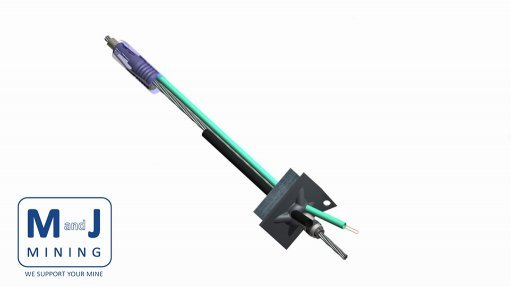
M and J Mining are leading suppliers of physical support systems as used by the underground mining industry. Our selection of products are not...
VISIT SHOWROOM




Announcements
What's On
Subscribe to improve your user experience...
Option 1 (equivalent of R125 a month):
Receive a weekly copy of Creamer Media's Engineering News & Mining Weekly magazine
(print copy for those in South Africa and e-magazine for those outside of South Africa)
Receive daily email newsletters
Access to full search results
Access archive of magazine back copies
Access to Projects in Progress
Access to ONE Research Report of your choice in PDF format
Option 2 (equivalent of R375 a month):
All benefits from Option 1
PLUS
Access to Creamer Media's Research Channel Africa for ALL Research Reports, in PDF format, on various industrial and mining sectors
including Electricity; Water; Energy Transition; Hydrogen; Roads, Rail and Ports; Coal; Gold; Platinum; Battery Metals; etc.
Already a subscriber?
Forgotten your password?
Receive weekly copy of Creamer Media's Engineering News & Mining Weekly magazine (print copy for those in South Africa and e-magazine for those outside of South Africa)
➕
Recieve daily email newsletters
➕
Access to full search results
➕
Access archive of magazine back copies
➕
Access to Projects in Progress
➕
Access to ONE Research Report of your choice in PDF format
RESEARCH CHANNEL AFRICA
R4500 (equivalent of R375 a month)
SUBSCRIBEAll benefits from Option 1
➕
Access to Creamer Media's Research Channel Africa for ALL Research Reports on various industrial and mining sectors, in PDF format, including on:
Electricity
➕
Water
➕
Energy Transition
➕
Hydrogen
➕
Roads, Rail and Ports
➕
Coal
➕
Gold
➕
Platinum
➕
Battery Metals
➕
etc.
Receive all benefits from Option 1 or Option 2 delivered to numerous people at your company
➕
Multiple User names and Passwords for simultaneous log-ins
➕
Intranet integration access to all in your organisation
