



Metals, engineering sector continues to face headwinds


The steel and engineering sector is estimated to have produced output worth R488-billion during 2014 and added value of R117-billion to the economy, Steel and Engineering Industries Federation of Southern Africa (Seifsa) chief economist Henk Langenhoven said last month.
Speaking at the Seifsa Analysis of Anticipated Social, Political, Economic and Labour Trends seminar for 2015, he noted that employment in the sector, where 398 000 people were formally employed, was fairly stable.
“[Last year] was a disappointing year. It was expected that growth would resume after the 2% contraction during 2013 but the hope of continued domestic and international recovery at the beginning of the year faded during 2014,” he commented.
He further pointed out that this meant that production levels were still 25% to 30% lower than the sector’s 2007 peak. Employment and profitability had declined, while capacity use remained below optimum.
“Without demand or the prospects of growth in demand and [with] idle production capacity, profits do not materialise and little investment takes place. There also seems to be more uncertainty around current and prospective economic growth in the global economy than a year ago,” Langenhoven noted.
He explained that, as a result, there was a slowdown in demand and South African exports seemed to have lost market share in international markets during the upheaval in the aftermath of the financial crisis.
Langenhoven further commented that there had been an overload of mixed policy signals around the country’s development changes but that the National Development Plan, along with the elaboration of action plans in the medium-term strategic framework, had the promise of harmony in terms of policy.
The most prominent theme in terms of price movements during 2014 was the downward spiral in commodity prices, producer prices and consumer prices.
He noted that 2014 began with domestic inflationary pressures averaging 10%, primarily driven by the prior weakening of the exchange rate. Following the first quarter, the trend had been deflationary to the end of 2014.
He added that input cost pressures, the weak global economy, the fall in international commodity prices, the weak domestic economy and prolonged strike action disrupting production had driven down costs.
“We anticipate this deflationary pattern in steel and production prices [to] last into 2015,” he concluded.
Article Enquiry
Email Article
Save Article
Feedback
To advertise email advertising@creamermedia.co.za or click here
Research Reports

Projects


Latest Multimedia




Showroom
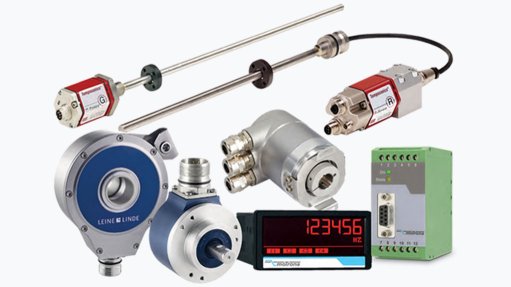
ATI systems comprises five divisions: electrical assemblies, drives and controls, feedback sensors, enclosures, and strip guiding.
VISIT SHOWROOM
Your global lifecycle technology & service partner for materials & minerals processing equipment for coal, iron ore, copper, manganese & other...
VISIT SHOWROOM



Announcements
What's On
Subscribe to improve your user experience...
Option 1 (equivalent of R125 a month):
Receive a weekly copy of Creamer Media's Engineering News & Mining Weekly magazine
(print copy for those in South Africa and e-magazine for those outside of South Africa)
Receive daily email newsletters
Access to full search results
Access archive of magazine back copies
Access to Projects in Progress
Access to ONE Research Report of your choice in PDF format
Option 2 (equivalent of R375 a month):
All benefits from Option 1
PLUS
Access to Creamer Media's Research Channel Africa for ALL Research Reports, in PDF format, on various industrial and mining sectors
including Electricity; Water; Energy Transition; Hydrogen; Roads, Rail and Ports; Coal; Gold; Platinum; Battery Metals; etc.
Already a subscriber?
Forgotten your password?
Receive weekly copy of Creamer Media's Engineering News & Mining Weekly magazine (print copy for those in South Africa and e-magazine for those outside of South Africa)
➕
Recieve daily email newsletters
➕
Access to full search results
➕
Access archive of magazine back copies
➕
Access to Projects in Progress
➕
Access to ONE Research Report of your choice in PDF format
RESEARCH CHANNEL AFRICA
R4500 (equivalent of R375 a month)
SUBSCRIBEAll benefits from Option 1
➕
Access to Creamer Media's Research Channel Africa for ALL Research Reports on various industrial and mining sectors, in PDF format, including on:
Electricity
➕
Water
➕
Energy Transition
➕
Hydrogen
➕
Roads, Rail and Ports
➕
Coal
➕
Gold
➕
Platinum
➕
Battery Metals
➕
etc.
Receive all benefits from Option 1 or Option 2 delivered to numerous people at your company
➕
Multiple User names and Passwords for simultaneous log-ins
➕
Intranet integration access to all in your organisation
