



Mega-trends and their impact on South Africa’s development plan

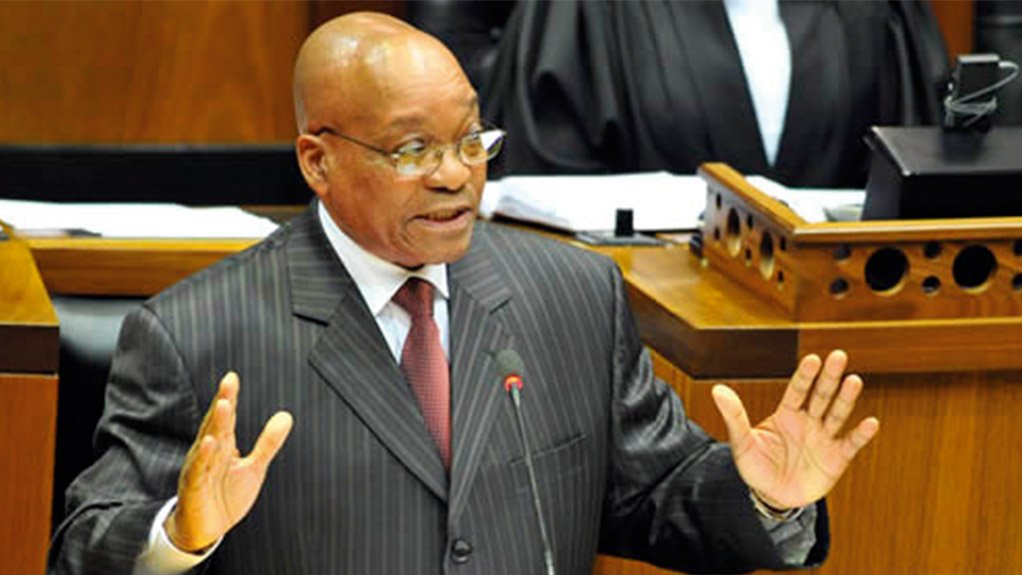


During President Jacob Zuma’s recent electoral victory speech, after South Africa’s fifth democratic elections were held earlier this month, he highlighted the centrality of the National Development Plan (NDP) to the country’s future and the incoming administration’s policies.
The NDP was adopted as the overarching development policy in 2012 and provides a vision for the country towards 2030. Its key objectives are to eradicate poverty, make inroads into reducing inequality, create 11-million jobs and facilitate economic growth of around 5% a year over the period.
“The NDP has been praised in many quarters, but is not uncontested. Its effective implementation requires all departments to follow the key tenets it sets out around growth, jobs and raising living standards,” South African Institute of International Affairs chief executive Elizabeth Sidiropoulos said earlier this month.
Speaking at a discussion forum on South African and Polish relations, hosted by the Department of International Relations and Cooperation, she stated that the NDP needed to be placed against the background of certain global trends, which affected the way in which States and regional bodies addressed their particular challenges.
These key trends, at a global level, were characterised by contestation and tension, Sidiropoulos added.
“The first tension is between sovereignty and internationalism, or regionalism and multilateralism. The twentieth century made great strides in pooling sovereignty and creating a global governance architecture.”
Sidiropoulos pointed out that this tension raised questions about whether there was sufficient political will and modesty in sovereignty to deal with the challenges of providing global public goods, which required more internationalism, more multilateralism and some regionalism.
“My concern around regionalism is that, sometimes, we cannot get things going at the more formal, inclusive global multilateral level and we end up resorting to regionalism, which creates fragmentation,” she said.
The second tension is one that exists between the haves and the have nots, with Sidiropoulos noting that it revolved around relative depravation, which had increasingly manifested in heightened inequality worldwide, particularly in developing economies such as South Africa.
“South Africa has the dubious distinction of being one of the most unequal countries in the world in terms of the Gini coefficient, which measures the degree of inequality in the distribution of family income in a country, alternating that position with Brazil,” she said.
Sidiropoulos added that, in recent years, inequality and what was perceived as injustice had found powerful expression in the hands of the people, which has been reflected through revolutionary waves of demonstrations and protests, such as the Arab Spring, over the last two to three years.
She noted that technology allowed for dissatisfaction about the injustices in countries to become mobilised, creating a domino effect.
“It means that development plans take on an added urgency for States, especially where there are no outlets, or limited outlets, for other forms of expression in authoritarian or semi-authorisation States,” she said.
The third tension Sidiropoulos mentioned was the one between the old and the new emerging orders. By the end of the first decade of the twenty-first century, she said, the world was no longer unipolar. Multiple poles – State and non-State – had emerged, challenging the US hegemony and also the primacy of States.
“The shift to a multipolar world is to be welcomed and feared. The old order is moving on, but the new order is still to be borne. Existing values that have come to define the post-cold-war order will not necessarily be acceptable to emerging powers that currently feel they can be rule makers, not just rule takers,” she said.
Sidiropoulos noted that theorists argued that the new order was so democratic that emerging powers could sufficiently form part of it, but she argued that it masked what Chinese academics had called conceptual gaps in the understanding of value.
“These tensions between old and new manifest in the new acronyms that have entered our lexicon, such as the Group of 8 (G8), the Group of 20 (G20) and the Brazil, Russia, India, China and South Africa (Brics) grouping.
“More recently, reflecting on new and old orders, developments in Ukraine have raised new challenges in the old Soviet space, which has reintroduced instability at territorial borders,” Sidiropoulos noted.
She pointed out that South Africa’s engagement in the global system had been characterised by the recognition that its reform was key to the ability of developing countries to meet their domestic developmental goals.
“These three tensions have significant implications with regard to the way South Africa positions itself internationally, the areas the country identifies for cooperation and the ability to be policy innovators to move some of these global discussions forward,” she said.
Article Enquiry
Email Article
Save Article
Feedback
To advertise email advertising@creamermedia.co.za or click here
Research Reports

Projects


Latest Multimedia


Latest News
Showroom
Roytec Global is an international company specializing in liquid / solid and mineral separation technologies for the Mining and Industrial sectors.
VISIT SHOWROOM
Virtual Gas Network supplies compressed natural gas via a virtual gas distribution network.
VISIT SHOWROOM



Announcements
What's On
Subscribe to improve your user experience...
Option 1 (equivalent of R125 a month):
Receive a weekly copy of Creamer Media's Engineering News & Mining Weekly magazine
(print copy for those in South Africa and e-magazine for those outside of South Africa)
Receive daily email newsletters
Access to full search results
Access archive of magazine back copies
Access to Projects in Progress
Access to ONE Research Report of your choice in PDF format
Option 2 (equivalent of R375 a month):
All benefits from Option 1
PLUS
Access to Creamer Media's Research Channel Africa for ALL Research Reports, in PDF format, on various industrial and mining sectors
including Electricity; Water; Energy Transition; Hydrogen; Roads, Rail and Ports; Coal; Gold; Platinum; Battery Metals; etc.
Already a subscriber?
Forgotten your password?
Receive weekly copy of Creamer Media's Engineering News & Mining Weekly magazine (print copy for those in South Africa and e-magazine for those outside of South Africa)
➕
Recieve daily email newsletters
➕
Access to full search results
➕
Access archive of magazine back copies
➕
Access to Projects in Progress
➕
Access to ONE Research Report of your choice in PDF format
RESEARCH CHANNEL AFRICA
R4500 (equivalent of R375 a month)
SUBSCRIBEAll benefits from Option 1
➕
Access to Creamer Media's Research Channel Africa for ALL Research Reports on various industrial and mining sectors, in PDF format, including on:
Electricity
➕
Water
➕
Energy Transition
➕
Hydrogen
➕
Roads, Rail and Ports
➕
Coal
➕
Gold
➕
Platinum
➕
Battery Metals
➕
etc.
Receive all benefits from Option 1 or Option 2 delivered to numerous people at your company
➕
Multiple User names and Passwords for simultaneous log-ins
➕
Intranet integration access to all in your organisation
