Medupi power station project, South Africa – update

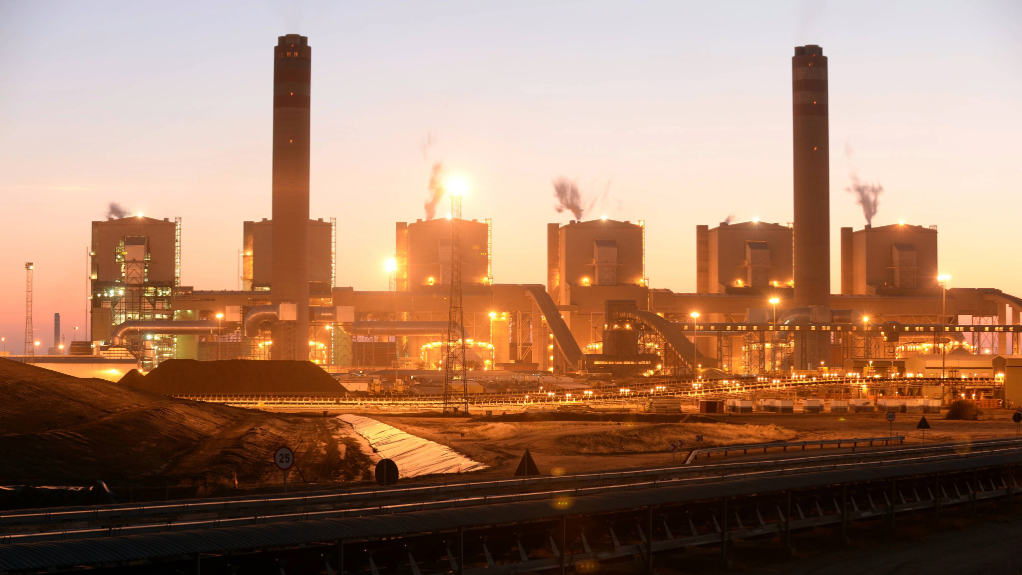
Photo by Eskom


Name of the Project
Medupi power station project.
Location
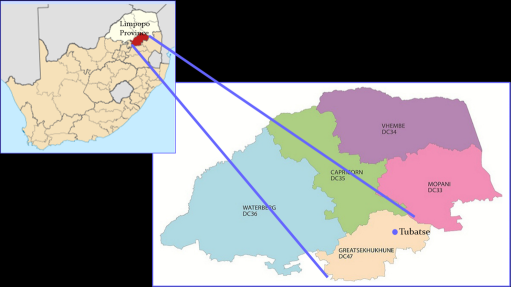
An 883 ha site in Lephalale, Limpopo, in South Africa.
Project Owner/s
State-owned power utility Eskom.
Project Description
Medupi will be the fourth-biggest coal-fired power plant and the biggest dry-cooled power station in the world. The power station will comprise six units with an installed capacity of 4 764 MW.
The planned operational life of the station is 50 years.
The power station will use high-tech supercritical boilers, which will operate at higher temperatures and pressures, compared with those of older boilers, thereby providing greater efficiency. Supercritical technology will result in more efficient use of natural resources, such as water and coal, and will have an improved environmental performance and footprint.
It is the first baseload coal-fired power station to be built in South Africa in more than 20 years and its delivery on schedule is viewed as critical.
The project is somewhat unique because Medupi is being built in reverse order – traditionally Eskom has always started building Unit 1 and ended with Unit 6. This new approach is the result of the rock agglomeration on the southern side of the site, which was excavated and reused for engineering fill on the northern side.
The project forms part of the utility’s integrated strategic electricity plan and is designed to be wet flue-gas desulphurisation (FGD) ready.
Potential Job Creation
At the peak of its construction, the project employed more than 18 000 people on building activities and another 2 000 supporting employees on site.
Further, more than 4 600 artisans, technicians, engineers and managers have been formally trained by Eskom’s contractors.
Capital Expenditure
The capital cost of the project is R122-billion so far, and Eskom expects to spend about R135-billion on completion of balance of plant.
Planned Start/End Date
All six units’ construction and commissioning activities were completed by July 2021, after more than a decade under construction. The project started construction in 2007.
The first unit, Unit 6, was synchronised to the grid on March 2, 2015. It attained full power (796 MW) on May 26, 2015, and attained commercial operation on August 23, 2015.
Unit 5 was first synchronised to the national grid on September 8, 2016. It reached full power (796 MW) on December 17, 2016, and attained commercial operation on April 3, 2017.
Unit 4 was first synchronised to the national grid on May 31, 2017. It reached full power (796 MW) on June 19, 2017, and attained commercial operation on November 28, 2017.
Unit 3 was first synchronised to the national grid on April 8, 2018. It reached full power (796 MW) on May 16, 2018, and attained commercial operation on June 28, 2019.
Unit 2 was synchronised to the national grid on October 7, 2018. It reached commercial operation status on November 12, 2019.
Unit 1 was synchronised to the grid on August 27, 2019. It reached commercial operation on July 31, 2021.
Latest Developments
Eskom expects to submit the final benefit-cost analysis (BCA) report on flue gas desulphurisation (FGD) to Forestry, Fisheries and the Environment Minister Willie Aucamp in early April, after releasing a draft report for public comment on February 24.
Eskom has acknowledged that it missed the original six-month deadline set in a directive issued on March 31, 2025, by Forestry, Fisheries and the Environment Minister Dr Deon George, who held the position at the time.
The directive followed Eskom’s 2024 application for exemption from the sulphur dioxide (SO2) minimum emission standards (MES) for Medupi, in which it also questioned whether FGD remained appropriate, despite the technology having been a condition of the $3.7-billion World Bank loan approved in 2010.
Although the exemption was granted until 2030, Eskom was required to expand the BCA to assess alternatives to FGD and to compare the cost of complying with SO2 standards with the health costs of failing to comply.
The draft report, therefore, assesses wet, semidry and dry FGD technologies, as well as six alternative emissions-reduction scenarios.
Only wet FGD will bring Medupi into compliance with South Africa’s MES under the National Ambient Air Quality Standards. However, it also has the highest upfront capital cost, at R56-billion, compared with R48-billion for semidry FGD and R15-billion for dry FGD. Over a 45-year project life, wet FGD is estimated to cost a nominal R383-billion, which could add 4c/kWh to electricity tariffs.
Across all three FGD options, the BCA ratios are well below (one)?only one?, indicating that the monetised health benefits are lower than the capital and operating costs.
Eskom’s proposed alternatives are based on these weak ratios and its assessment of air quality in the Waterberg-Bojanala Priority Area between 2022 and 2024, which it says shows general compliance with ambient air quality standards. As a result, the alternatives focus more on health benefits in the Highveld than in the Waterberg.
The six scenarios, with estimated capital costs of between R5-billion and R11-billion, include a clean cooking offset programme for 96 000 households near coal-fired stations, small modular nuclear reactors at five power stations, renewable-energy and storage projects across six sites, high-efficiency, low emission (HELE) circulating fluidised bed combustion technology at Hendrina, Grootvlei and Duvha, coal beneficiation and efficiency improvements across Eskom’s fleet, as well as post-combustion carbon capture, utilisation and storage technologies.
The draft identifies the clean cooking offset programme as having the strongest BCA ratio for particulate and SO2 reductions, although concerns have been raised about its long-term sustainability. The renewables and SMR options have also shown positive health benefits, but these were not fully quantified through BCA ratios because electricity generation benefits were excluded. Negative ratios were recorded for the HELE, coal beneficiation and CCUS options, while several of the technologies assessed are still precommercial.
During the consultation, alternative interventions were also proposed. Renew-e managing partner Etienne Rubbers has argued that Eskom should either invest the capital it would otherwise spend on Medupi’s FGD or proceed with the installation. He has also proposed using the funding to accelerate grid strengthening for renewables or to retire Eskom’s more polluting power stations earlier.
Concerns have also been raised that none of the alternatives will meet South Africa’s MES, while the current exemptions are already having serious health impacts.
Eskom has said it will consider the verbal and written submissions received before the March 25 deadline, revise the draft, and compile a comment-and-response report. That report, together with the final BCA, will then be submitted to Aucamp for a determination. Eskom has said it will engage lenders, such as the World Bank, only after the Minister has made a decision, and only if that decision affects its loan obligations.
Key Contracts, Suppliers and Consultants
Principal Contracts:
Parsons Brinckerhoff (execution partner); Roshcon (enabling civils); Rula Bulk Materials Handling (coal overland conveyor and ash dump conveyor); Mitsubishi Hitachi Power Systems Africa, or now MHI Power (boiler); Alstom S&E Africa (turbine); LP Services consortium (low-pressure services); Alula Water (water treatment plant); Karrena-Concor joint venture, or JV (chimneys and silos); MPS JV (main civils); Actom (electrical power installation and medium-voltage switchgear); General Electric (low-voltage switchgear system); Siemens (auxiliary transformers and generator transformers); Standby Systems (uninterruptible power supply); Alstom C&I (control and instrumentation); Honeywell Automation & Control Solutions South Africa (fire detection and access control); T-Systems (information technology (IT) and IT infrastructure); Siemens ACI Open Consortium (laboratory and analysers); Civcon/G4 JV (miscellaneous infrastructure and reservoirs); Basil Read (buildings, ash dump infrastructure, clarifiers and coal stockyard extension); NCI (diesel generators); thyssenkrupp Materials Handling (coal stockyard equipment); Clyde Bergemann Africa (dust handling and conditioning systems); ELB Engineering Services (terrace coal and ash); Aveng Grinaker-LTA (buildings phases 1 and 3); Nugen Technologies (nitrogen); Stefanutti Stocks/Mathomamayo JV (raw-water pumpstation and substation); WBHO (Excess Coal Stock Yard); Eskom Rotek Industries (dust handling plant – completing scope); and Exxaro (coal supply).
Contact Details for Project Information
Eskom media desk, email mediadesk@eskom.co.za.
Article Enquiry
Email Article
Save Article
To advertise email advertising@creamermedia.co.za or click here
Research Reports

Projects
Latest News

Showroom
Press Office
Announcements
What's On
Subscribe to improve your user experience...
Option 1 (equivalent of R125 a month):
Receive a weekly copy of Creamer Media's Engineering News & Mining Weekly magazine
(print copy for those in South Africa and e-magazine for those outside of South Africa)
Receive daily email newsletters
Access to full search results
Access archive of magazine back copies
Access to Projects in Progress
Access to ONE Research Report of your choice in PDF format
Option 2 (equivalent of R375 a month):
All benefits from Option 1
PLUS
Access to Creamer Media's Research Channel Africa for ALL Research Reports, in PDF format, on various industrial and mining sectors
including Electricity; Water; Energy Transition; Hydrogen; Roads, Rail and Ports; Coal; Gold; Platinum; Battery Metals; etc.
Already a subscriber?
Forgotten your password?
Receive weekly copy of Creamer Media's Engineering News & Mining Weekly magazine (print copy for those in South Africa and e-magazine for those outside of South Africa)
➕
Recieve daily email newsletters
➕
Access to full search results
➕
Access archive of magazine back copies
➕
Access to Projects in Progress
➕
Access to ONE Research Report of your choice in PDF format
RESEARCH CHANNEL AFRICA
R4500 (equivalent of R375 a month)
SUBSCRIBEAll benefits from Option 1
➕
Access to Creamer Media's Research Channel Africa for ALL Research Reports on various industrial and mining sectors, in PDF format, including on:
Electricity
➕
Water
➕
Energy Transition
➕
Hydrogen
➕
Roads, Rail and Ports
➕
Coal
➕
Gold
➕
Platinum
➕
Battery Metals
➕
etc.
Receive all benefits from Option 1 or Option 2 delivered to numerous people at your company
➕
Multiple User names and Passwords for simultaneous log-ins
➕
Intranet integration access to all in your organisation