


Mantashe commits to finalising Mining Charter III next month


The Department of Mineral Resources (DMR) will make policy and legislation one of its key priorities this year and has committed to finalising the Mining Charter in June, Minister Gwede Mantashe said last week.
Mantashe, who tabled the DMR’s Budget Vote in Parliament, listed the department’s other priorities as health and safety, mining rights and application for mining licences as well as dealing with illegal mining.
The DMR has been allocated R1.9-billion, of which 51% will go to entities reporting to the department, with Mintek and the Council for Geoscience receiving 83% of the 51%, for critical work being undertaken in research and development.
Mantashe said that the funding allocated to the DMR and its portfolio of entities was “inadequate” to effectively carry out its mandate.
“An inefficient allocation of resources curtails our efforts to create more economic opportunities. We are [however] mindful of the fiscal constraints the country faces [at the same time] and we will strive to deliver with the limited resources at our disposal.”
South Africa’s economy is built on the back of its mineral resources, which have made significant contributions; mining plays a strategic role in economic growth and development and it is therefore necessary for stability and policy certainty in the industry to attract investment and derive value from the mineral resources.
According to Statistics South Africa, mining production increased by 3.1% year-on-year in February. However, the positive growth was reversed by the 8.4% plunge in production in March, owing to the serious downturn of 18% in gold, 8.9% in iron-ore and 6.1% in platinum group metals (PGMs).
“The high number of mines and shafts under care and maintenance (currently six major mines in South Africa) contributes heavily to the massive decline in both production and employment. In this regard, we will meet with companies that are the culprits of these practices.
“We intend to discuss the ‘use it or lose it’ principle in our law. Our mineral wealth must be exploited and not left unused, if we are to generate economic growth and impact on the development of society,” Mantashe said.
South Africa accounts for 94% of known global reserves of PGMs, 73.7% of chrome, 29% of manganese, 18.4% of vanadium and 10.5% of gold reserves.
“The country has the potential to supply a large share of the global demand for many commodities, but it can only be realised through a vibrant exploration sector,” said Mantashe.
African National Congress Member of Parliament Imamile Pikinini commented that there was an estimated $2.5-trillion worth of mineral reserves in South Africa. In the previous financial year, the mining gross domestic product contribution was R3.12-billion, or about 6.8%.
However, the Democratic Alliance’s James Lorimer raised his concern about the 8.4% decline in mining production amid a global resources boom, “which South Africa is missing out on”.
Lorimer suggested that regulations had to be improved to foster junior mining and that “mining should be about mining and not be a cog in the grand scheme of social engineering”, alluding to the demanding ownership requirements in the Mining Charter.
Legislative Amendments
Mantashe said that finalising the Mining Charter should aid in restoring investor confidence in South Africa.
According to international agency Fraser Institute, which rates 91 mining jurisdictions, South Africa could do better in terms of investor attractiveness. The country is currently rated 47th for investor attractiveness and 80th in terms of policy and regulatory framework.
“It is evident that the conflict in the industry around the Mining Charter and failure to have the sector coalesce contributed to uncertainty among investors. This has further been exacerbated by delays in finalising the Mineral and Petroleum Resources Development Act (MPRDA),” Mantashe averred.
Meanwhile, the department is in the process of reviewing the housing and living conditions standards, which are developed in terms of Section 100 of the MPRDA. The review seeks to address the historic and systematic policies of discrimination and marginalisation of mineworkers in terms of their working, housing and living conditions, and to provide for the progressive realisation and protection of their basic constitutional right to human dignity through the provision of adequate access to housing, better living conditions and related amenities.
The MPRDA Bill is currently before the National Council of Provinces (NCOP). Eight of the nine provincial legislatures supported the Bill in the negotiating process. The DMR has provided responses to the provincial legislatures’ negotiating mandates and the NCOP is currently negotiating and voting on the mandates.
Once the Select Committee on Land and Mineral Resources (within the council) has finalised the mandates, it will compile its report and recommend further processing of the Bill to the National Assembly.
Ironing out Licensing Issues
Mantashe admitted that the issuing of licences was an aspect of the DMR’s work that was laced with corruption. The department would address issues such as declined prospecting rights, unprocessed applications and unexplained red tape.
The DMR’s preliminary investigation across seven of its regional offices found that the backlog of new mineral rights applications stretched as far back as 2012 and that for applications for the renewal of prospecting rights went as far back as 2010.
Mantashe reported that this backlog was mostly due to applications from “known and paying” applicants being prioritised, which meant that prominent community members with financial backing got preference when it came to the processing of their applications.
Article Enquiry
Email Article
Save Article
Feedback
To advertise email advertising@creamermedia.co.za or click here
Research Reports

Projects


Latest Multimedia


Latest News

Showroom

As a reticulator, Egoli Gas provides natural gas to homes and businesses via underground pipes.
VISIT SHOWROOM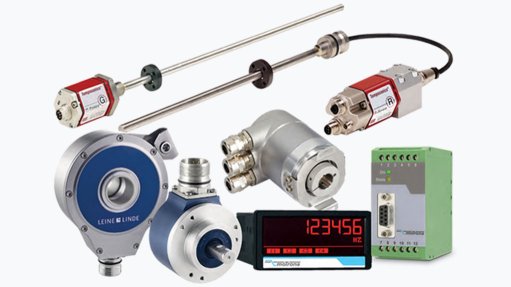
ATI systems comprises five divisions: electrical assemblies, drives and controls, feedback sensors, enclosures, and strip guiding.
VISIT SHOWROOM



Press Office
Announcements
What's On
Subscribe to improve your user experience...
Option 1 (equivalent of R125 a month):
Receive a weekly copy of Creamer Media's Engineering News & Mining Weekly magazine
(print copy for those in South Africa and e-magazine for those outside of South Africa)
Receive daily email newsletters
Access to full search results
Access archive of magazine back copies
Access to Projects in Progress
Access to ONE Research Report of your choice in PDF format
Option 2 (equivalent of R375 a month):
All benefits from Option 1
PLUS
Access to Creamer Media's Research Channel Africa for ALL Research Reports, in PDF format, on various industrial and mining sectors
including Electricity; Water; Energy Transition; Hydrogen; Roads, Rail and Ports; Coal; Gold; Platinum; Battery Metals; etc.
Already a subscriber?
Forgotten your password?
Receive weekly copy of Creamer Media's Engineering News & Mining Weekly magazine (print copy for those in South Africa and e-magazine for those outside of South Africa)
➕
Recieve daily email newsletters
➕
Access to full search results
➕
Access archive of magazine back copies
➕
Access to Projects in Progress
➕
Access to ONE Research Report of your choice in PDF format
RESEARCH CHANNEL AFRICA
R4500 (equivalent of R375 a month)
SUBSCRIBEAll benefits from Option 1
➕
Access to Creamer Media's Research Channel Africa for ALL Research Reports on various industrial and mining sectors, in PDF format, including on:
Electricity
➕
Water
➕
Energy Transition
➕
Hydrogen
➕
Roads, Rail and Ports
➕
Coal
➕
Gold
➕
Platinum
➕
Battery Metals
➕
etc.
Receive all benefits from Option 1 or Option 2 delivered to numerous people at your company
➕
Multiple User names and Passwords for simultaneous log-ins
➕
Intranet integration access to all in your organisation
