



Long-running polymers excessive-pricing case gets moving

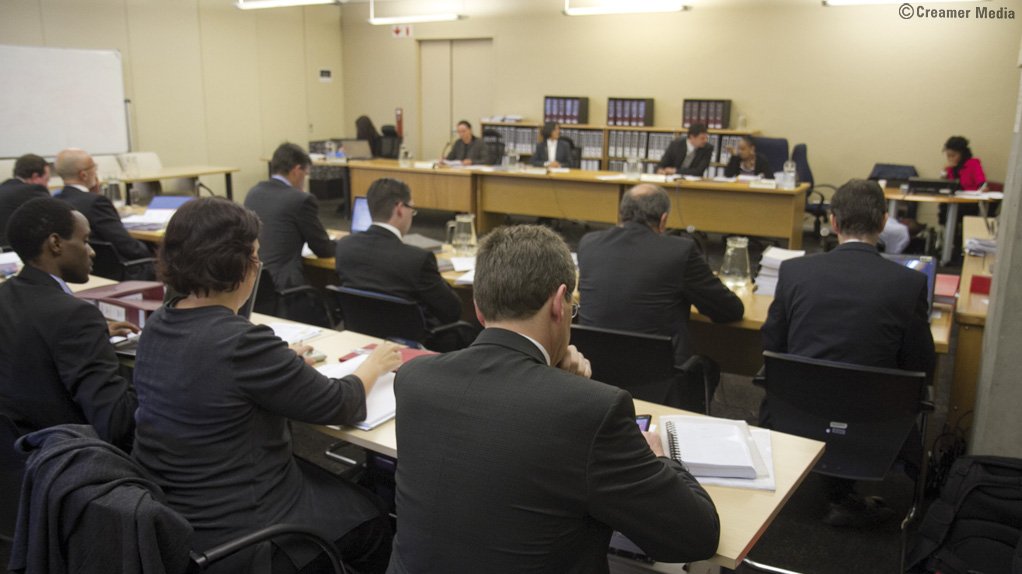



The Competition Tribunal began hearings on Monday into the alleged excessive pricing of propylene and polypropylene by Sasol Chemical Industries (SCI) between 2004 and the end of 2007, with Advocate Arnold Subel outlining the commission’s case and Advocate Wim Trengove leading SCI’s defence.
The Pretoria hearings attracted both media and public interest with various stakeholders attending the first day, including National Union of Metalworkers (Numsa) general-secretary Irvin Jim.
Jim told Engineering News Online that Numsa remained steadfastly opposed to the anticompetitive behaviour of certain monopoly enterprises – behaviour that was undermining the development of job-rich manufacturing businesses.
The Competition Commission referred the case to the tribunal in 2010 following a probe, initiated after the Department of Trade and Industry requested an investigation into whether polymer producers, SCI and Safripol, were contravening the Competition Act through the prices they charged to domestic consumers.
The commission found that SCI had exerted its market dominance to charge import-parity prices to domestic consumers by preventing surplus output from the plants from flowing into the domestic market.
Domestic prices, Subel argued, bore no relation to economic value, nor SCI’s favourable cost structure and were also “substantially” higher than export prices and those charged to consumers in other markets.
In fact, Subel argued that domestic consumers were subjected to prices that were 30% higher than export prices and described the domestic prices as being excessive.
The commission was, thus, requesting the tribunal to intervene to ensure that SCI charged non-discriminatory prices, while also imposing a fine of 10% of Sasol’s 2009 turnover inside South Africa.
Trengrove indicated that SCI defence would lean heavily on the Competition Appeal Court ruling, which arose following South Africa’s first-ever excessive-pricing case, which was referred against ArcelorMittal South Africa by gold miners Harmony and DRDGold.
The case was eventually settled, but not before Judge Dennis Davis delivered a 90-page ruling in 2009.
SCI differed with the commission definition of the polypropylene market as a domestic rather than an international one, objected to its method of calculating economic value and argued that any special advantage that resulted in SCI’s costs being lower than the ‘notional competitive norm’ should be disregarded.
The production of polypropylene volumes that were beyond that which the domestic market could absorb was also not a reflection, Trengrove argued, that export prices represented economic value.
Instead it was the consequence of a business optimisation decision taken to mitigate the negative financial effects that were expected to arise as a result of the upgrade of its refineries to produce unleaded fuel. This optimisation was undertaken under the banner of Project Turbo, which resulted in the reduction of petrol volumes and an increase in polypropylene output.
The net result was that, while the domestic market for polypropylene stood at around 280 000 t/y, Sasol and Safripol, together, had the capacity to produce about 650 000 t/y, with the surplus sold in markets outside of South Africa.
Over the coming four weeks, 16 witnesses were due to give evidence, including several expert witnesses, as well as domestic users, such as plastic furniture and consumer goods producer SA Leisure, Usabco, which make the Addis range of plastic consumer products, plastic products manufacturer SB Plastics and thermoplastic polymers supplier Plastamid.
In 2010 and 2011 respectively, Safripol and Sasol concluded settlement agreements with the commission with regard to the pricing formula, which initially arose when Sasol and AECI merged portions of their chemicals businesses to form Polifin.
The agreement was found to contravene the Competition Act. As a consequence, Safripol paid an administrative penalty of R16.5-million, which represented 1.5% of its 2009 turnover derived from polypropylene products, while Sasol paid a fine of nearly R112-million, which translated into 3% of Sasol Polymer’s turnover for 2009.
Sasol agreed to amend the supply agreement, while Safripol agree to cooperate with the commission in its ongoing investigations related to the excessive-pricing issue.
Sasol was, thus, the sole remaining respondent contesting the excessive-pricing matter, with Safripol CEO Joaquin Schoch having been named as a factual witness on behalf of the commission.
Article Enquiry
Email Article
Save Article
Feedback
To advertise email advertising@creamermedia.co.za or click here
Research Reports

Projects


Latest Multimedia


Latest News
Showroom
Astore Keymak is one of South Africa’s leading suppliers of high-quality Thermoplastic Pipeline Systems, with branches in the major provinces.
VISIT SHOWROOM




Press Office
Announcements
What's On
Subscribe to improve your user experience...
Option 1 (equivalent of R125 a month):
Receive a weekly copy of Creamer Media's Engineering News & Mining Weekly magazine
(print copy for those in South Africa and e-magazine for those outside of South Africa)
Receive daily email newsletters
Access to full search results
Access archive of magazine back copies
Access to Projects in Progress
Access to ONE Research Report of your choice in PDF format
Option 2 (equivalent of R375 a month):
All benefits from Option 1
PLUS
Access to Creamer Media's Research Channel Africa for ALL Research Reports, in PDF format, on various industrial and mining sectors
including Electricity; Water; Energy Transition; Hydrogen; Roads, Rail and Ports; Coal; Gold; Platinum; Battery Metals; etc.
Already a subscriber?
Forgotten your password?
Receive weekly copy of Creamer Media's Engineering News & Mining Weekly magazine (print copy for those in South Africa and e-magazine for those outside of South Africa)
➕
Recieve daily email newsletters
➕
Access to full search results
➕
Access archive of magazine back copies
➕
Access to Projects in Progress
➕
Access to ONE Research Report of your choice in PDF format
RESEARCH CHANNEL AFRICA
R4500 (equivalent of R375 a month)
SUBSCRIBEAll benefits from Option 1
➕
Access to Creamer Media's Research Channel Africa for ALL Research Reports on various industrial and mining sectors, in PDF format, including on:
Electricity
➕
Water
➕
Energy Transition
➕
Hydrogen
➕
Roads, Rail and Ports
➕
Coal
➕
Gold
➕
Platinum
➕
Battery Metals
➕
etc.
Receive all benefits from Option 1 or Option 2 delivered to numerous people at your company
➕
Multiple User names and Passwords for simultaneous log-ins
➕
Intranet integration access to all in your organisation
