



Nine African Presidents now championing cross-border infrastructure projects


Spearheaded by South Africa’s President Jacob Zuma, the Presidential Infrastructure Champion Initiative (PICI), aimed at accelerating regional trade and unlocking the economic potential of the continent, now has nine African Presidents on board, with ten projects in the spotlight as Africa continues its infrastructure development drive.
Speaking at the Infrastructure Africa conference, New Partnership for Africa’s Development (Nepad) Planning and Coordinating Agency transport infrastructure expert and PICI coordinator Dr John Tambi said progress was being made across Africa with the partnerships of country leaders driving long-standing infrastructure projects.
“We are not just talking. Things are happening,” Tambi told delegates.
When the PICI was initiated in 2011, eight projects to be ‘championed’ were identified by seven selected heads of State, who committed to bringing visibility and awareness to the projects, providing political leadership, unblocking political bottlenecks, leading resource mobilisation for project implementation, ensuring speedy implementation and regularly reporting on the projects to the African Union.
One of the latest projects under the umbrella of the heads of State is Kenya’s $24.5-billion Lapsset Corridor project, which comprises three airports, three resort cities, 32 berths at Kenya’s Lamu Port, a railway line, a crude oil pipeline, oil refineries and highways interlinking Kenya, Ethiopia and South Sudan, with plans in place to eventually connect to Uganda.
Nepad has described the project as one of East Africa’s “largest and most ambitious” infrastructure projects that will link the three countries.
Progress is being made on the initial group of projects, including Algeria’s $102-million Trans-Sahara Highway ‘missing links’ and its associated $80-million, 4 500 km terrestrial optic-fibre project, both running from Algeria to Nigeria.
The Trans-Sahara Highway project, which links an important regional trade route spanning Algeria, Niger, Nigeria, Tunisia, Mali and Chad, aims to plug the ‘missing’ 225 km road link between Assamakka and Arlit, in Niger, which is currently unpaved.
The optic-fibre project, meanwhile, will stretch from Algeria, through Niger to Nigeria, along the Nigeria–Algeria Trans-Sahara natural gas pipeline.
The 4 400 km Trans-Saharan natural gas pipeline project is ‘championed’ by Nigeria President Muhammadu Buhari.
Nepad outlined that the pipeline is expected to be deployed along a 1 037 km route from Nigeria to the Niger border, and a further 841 km from Niger to Algeria, within and across Algeria, spanning a route of 2 303 km, before ending in Spain 220 km away.
Also on the radar and led by Senegal, the Dakar–Ndjamena–Djbouti project, an 8 715 km road/rail initiative spanning ten countries, is expected to start in 2018, subject to funding, once studies on the $2.2-billion project have been concluded.
Meanwhile, a road-rail project in the Republic of Congo (RC), ready for implementation in 2018, is also a highlight of the PICI.
The RC is currently seeking funding for the Kinshasa–Brazzaville Bridge road-rail project, which will comprise the construction of a fixed crossing linking Kinshasa, in the Democratic Republic of Congo, with Brazzaville, in the RC.
Another project under the PICI is Egypt’s construction of the navigational line between Lake Victoria and the Mediterranean Sea aimed at promoting intermodal transport by integrating river, rail and road transport facilities along the Nile Corridor and developing river management capacity.
According to Nepad, the intermodal transport integration will include sections along the Trans-Africa Highway.
Rwanda, meanwhile, has completed and interconnected the five East African Community countries to the submarine cables at Mombasa, in Kenya, and Dar es Salaam, in Tanzania, with the focus of the project since shifting to a Smart Africa initiative to provide last- mile connectivity and to ensure that the benefits of information and communication technology are extended to all regions – urban and rural.
South Africa has continued its work on the North–South Corridor multimodal trans-continental rail-road-port project connecting Cape Town, in the south, and Cairo, in the north.
Article Enquiry
Email Article
Save Article
Feedback
To advertise email advertising@creamermedia.co.za or click here
Research Reports

Projects
Latest Multimedia

Showroom
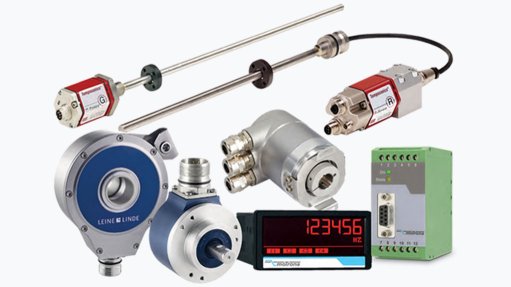
ATI systems comprises five divisions: electrical assemblies, drives and controls, feedback sensors, enclosures, and strip guiding.
VISIT SHOWROOM
Your global lifecycle technology & service partner for materials & minerals processing equipment for coal, iron ore, copper, manganese & other...
VISIT SHOWROOM

Announcements
What's On
Subscribe to improve your user experience...
Option 1 (equivalent of R125 a month):
Receive a weekly copy of Creamer Media's Engineering News & Mining Weekly magazine
(print copy for those in South Africa and e-magazine for those outside of South Africa)
Receive daily email newsletters
Access to full search results
Access archive of magazine back copies
Access to Projects in Progress
Access to ONE Research Report of your choice in PDF format
Option 2 (equivalent of R375 a month):
All benefits from Option 1
PLUS
Access to Creamer Media's Research Channel Africa for ALL Research Reports, in PDF format, on various industrial and mining sectors
including Electricity; Water; Energy Transition; Hydrogen; Roads, Rail and Ports; Coal; Gold; Platinum; Battery Metals; etc.
Already a subscriber?
Forgotten your password?
Receive weekly copy of Creamer Media's Engineering News & Mining Weekly magazine (print copy for those in South Africa and e-magazine for those outside of South Africa)
➕
Recieve daily email newsletters
➕
Access to full search results
➕
Access archive of magazine back copies
➕
Access to Projects in Progress
➕
Access to ONE Research Report of your choice in PDF format
RESEARCH CHANNEL AFRICA
R4500 (equivalent of R375 a month)
SUBSCRIBEAll benefits from Option 1
➕
Access to Creamer Media's Research Channel Africa for ALL Research Reports on various industrial and mining sectors, in PDF format, including on:
Electricity
➕
Water
➕
Energy Transition
➕
Hydrogen
➕
Roads, Rail and Ports
➕
Coal
➕
Gold
➕
Platinum
➕
Battery Metals
➕
etc.
Receive all benefits from Option 1 or Option 2 delivered to numerous people at your company
➕
Multiple User names and Passwords for simultaneous log-ins
➕
Intranet integration access to all in your organisation
