Infrastructure Failure Is Now a Core Business Risk


This article has been supplied and will be available for a limited time only on this website.
Infrastructure failures including unreliable electricity, transport breakdowns, and weak water systems are a significant constraint on growth in developing economies, with studies indicating they can reduce annual GDP growth by up to 2 percentage points. Poor infrastructure and maintenance can also reduce business productivity by as much as 40%, underscoring the scale of operational impact. (World Bank).
Following this weekend's declaration of a national disaster amid severe storms and widespread flooding in South Africa, that structural cost is becoming visible in real time. Damage to roads, bridges, drainage systems, and municipal infrastructure has disrupted mobility, delayed logistics flows, and placed additional pressure on already strained service delivery systems.
For many businesses, infrastructure instability is no longer an external factor, it is a direct operational constraint shaping continuity and cost structures.
Across South Africa, ongoing disruptions in energy and water systems, logistics networks, and municipal services continue to increase operational, financial and logistical pressure on both public and private sector organisations. Many businesses are being forced to invest in backup power, water storage, and alternative logistics arrangements simply to maintain operational continuity.
At municipal level, infrastructure stress is becoming increasingly visible. The Department of Water and Sanitation's latest Green Drop assessment (2023/24 cycle, released in 2026) found that 47% of wastewater treatment systems are in a critical condition, up from 39% in the previous assessment cycle (South African Government News Agency). The findings highlight ongoing deterioration in wastewater infrastructure and persistent compliance challenges across municipalities.
These pressures reflect broader structural weaknesses in infrastructure maintenance and renewal. The Department of Water and Sanitation estimates that South Africa requires approximately R400 billion to address maintenance backlogs in water and sanitation infrastructure, while 73% of water authorities are already rated as poor or critical (GroundUp).
Infrastructure decay and instability should increasingly be viewed as a core operational risk rather than a series of isolated technical failures, reflecting what many analysts describe as a systemic 'permacrisis' environment characterised by overlapping energy, water, logistics, and municipal disruptions.
"Infrastructure instability is no longer a standalone technical issue, it has become a systemic operational risk," says Muhammad Ali, Managing Director of South African ISO specialist World Wide Industrial & Engineering Systems (WWISE). "Businesses are increasingly operating in an environment where external infrastructure dependency directly affects continuity, cost structures, productivity, and resilience."
Ali notes that many organisations are still underestimating the structural nature of the challenge.
"Historically, infrastructure disruptions were treated as isolated events," he says. "What we are now seeing is a sustained operating environment characterised by recurring failures across water, logistics, energy, and municipal systems."
The impact is particularly pronounced for small and medium-sized enterprises (SMEs), which often lack the financial capacity to absorb prolonged disruption or invest in alternative infrastructure systems. While larger corporates are increasingly strengthening resilience frameworks, adoption remains uneven across the broader economy.
"Too many organisations still rely on reactive contingency planning rather than continuous resilience management," Ali explains. "Static business continuity documents are no longer sufficient in a high-disruption environment."
Ali says organisations must now move toward integrated resilience models capable of managing multiple concurrent disruptions.
"Infrastructure failure, logistics disruption, cyber risk, and municipal instability are increasingly interconnected," he says. "These risks cannot be managed in isolation anymore."
He notes that internationally recognised management frameworks are becoming increasingly important in strengthening operational resilience. Standards such as ISO 22301:2019 for Business Continuity Management, ISO 31000:2018 for Risk Management, ISO 22316:2017 for Organisational Resilience, and the recently introduced ISO 22372:2025 for Resilient Infrastructure provide structured approaches for identifying vulnerabilities, stress-testing systems, and improving long-term continuity planning.
Municipalities could also benefit from adopting SANS/ISO 18091, which is tailored for local government and provides a structured framework to assess, strengthen, and continuously improve service delivery systems, operational processes, and governance performance.
"Resilience today is about operational adaptability," Ali says. "Businesses need systems that allow them to anticipate disruption, respond quickly, and sustain critical functions even when external infrastructure fails."
As infrastructure instability deepens across South Africa, the distinction between external risk and operational risk is rapidly narrowing. For businesses, resilience is no longer a compliance exercise, it is becoming a core requirement for operational survival and long-term competitiveness.
Article Enquiry
Email Article
Save Article
Feedback
To advertise email advertising@creamermedia.co.za or click here
Research Reports

Projects
Latest Multimedia

Latest News


Showroom

Stewarts & Lloyds is a leading steel, tube, and engineering product supplier in South Africa.
VISIT SHOWROOM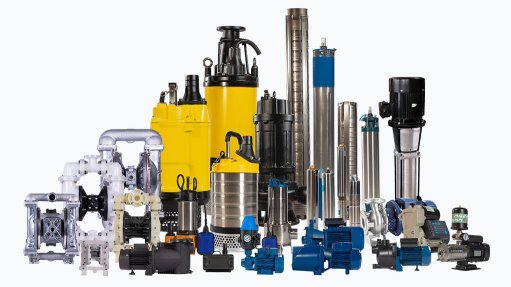
AxFlow AQS Liquid Transfer (Pty) Ltd is an Importer and Distributor of Pumps in Southern Africa
VISIT SHOWROOM

Announcements
What's On
Subscribe to improve your user experience...
Option 1 (equivalent of R125 a month):
Receive a weekly copy of Creamer Media's Engineering News & Mining Weekly magazine
(print copy for those in South Africa and e-magazine for those outside of South Africa)
Receive daily email newsletters
Access to full search results
Access archive of magazine back copies
Access to Projects in Progress
Access to ONE Research Report of your choice in PDF format
Option 2 (equivalent of R375 a month):
All benefits from Option 1
PLUS
Access to Creamer Media's Research Channel Africa for ALL Research Reports, in PDF format, on various industrial and mining sectors
including Electricity; Water; Energy Transition; Hydrogen; Roads, Rail and Ports; Coal; Gold; Platinum; Battery Metals; etc.
Already a subscriber?
Forgotten your password?
Receive weekly copy of Creamer Media's Engineering News & Mining Weekly magazine (print copy for those in South Africa and e-magazine for those outside of South Africa)
➕
Recieve daily email newsletters
➕
Access to full search results
➕
Access archive of magazine back copies
➕
Access to Projects in Progress
➕
Access to ONE Research Report of your choice in PDF format
RESEARCH CHANNEL AFRICA
R4500 (equivalent of R375 a month)
SUBSCRIBEAll benefits from Option 1
➕
Access to Creamer Media's Research Channel Africa for ALL Research Reports on various industrial and mining sectors, in PDF format, including on:
Electricity
➕
Water
➕
Energy Transition
➕
Hydrogen
➕
Roads, Rail and Ports
➕
Coal
➕
Gold
➕
Platinum
➕
Battery Metals
➕
etc.
Receive all benefits from Option 1 or Option 2 delivered to numerous people at your company
➕
Multiple User names and Passwords for simultaneous log-ins
➕
Intranet integration access to all in your organisation