Partners advocate switching to alternative fuels for oxyfuel cutting

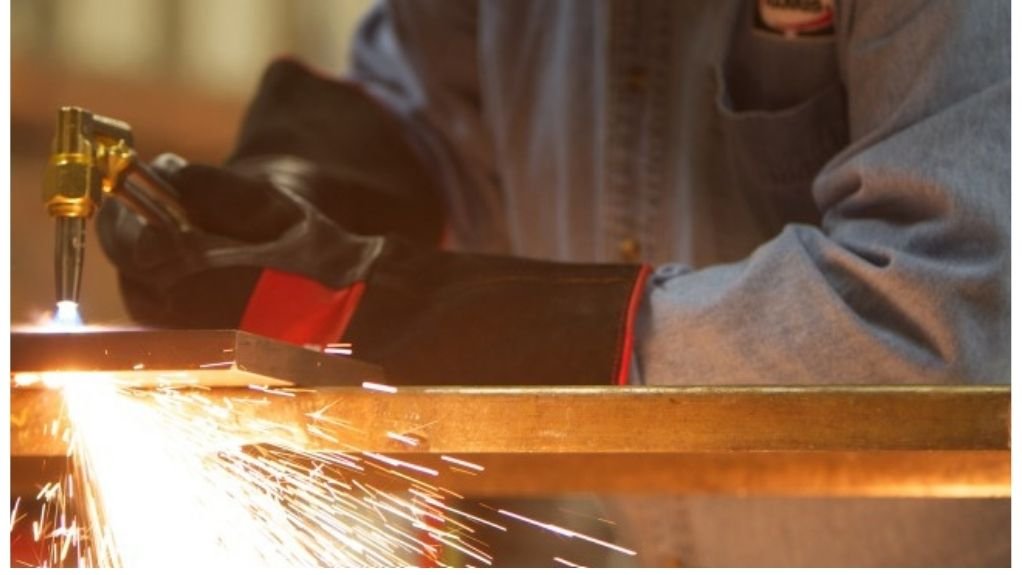
CUTTING EDGE TECHNOLOGY The Harris model 62-5 alternative fuels cutting attachment is available in various torch lengths, torch head angles and with unique mixer systems depending on the gas service selected
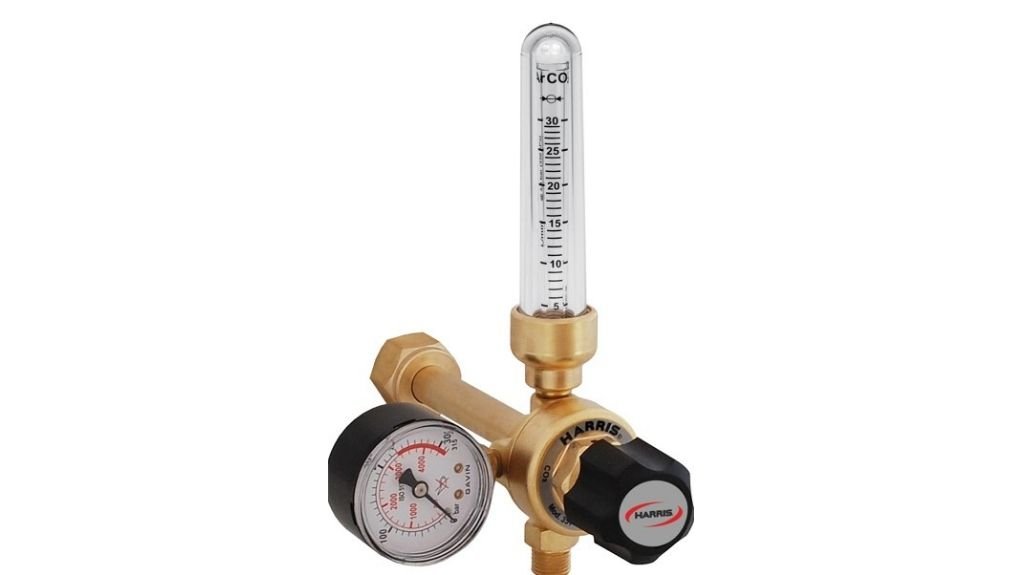
REDUCING WASTE The Harris Model 351 heavy-duty, ‘zero’ compensated flowmeter regulator delivers 20% to 25% savings on general welding and up to 30% on tacking


South Africa’s metal fabrication sector is under pressure to reduce costs without compromising on safety and output, with rising energy prices, persistent skills shortages and tighter project margins forcing businesses to reassess cutting and welding processes, says metalworking products and consumables supplier Harris Products Group sub-Saharan Africa sales manager Anthony McGuinness.
For equipment and consumables suppliers, such as the Harris Products Group, the response is to focus on solutions that reduce gas consumption and rework while improving operator safety.
The market is moving towards solutions that deliver measurable savings per metre cut and kilogramme deposited, observes McGuinness.
Having been present in South Africa since the early 1960s, Harris Products Group’s portfolio spans standard gas cutting equipment, high-pressure and high-flow regulators, specialty gas flow regulators, manifold systems and brazing alloys. The company envisions long-term opportunities with its new distributor, industrial supplier Bolt and Engineering Distributors (B.E.D.), in the local market.
“Harris Products Group has long been the preferred brand in mining and safety-critical industries. The appointment of B.E.D as a distributor in 2026 was driven by its extensive national footprint, established in mining, agriculture, power generation, manufacturing and many other sectors,” notes B.E.D.’s Harris Products Group brand ambassador and technical specialist Shaun Geyer.
He cites two Harris products that are suited to South African conditions. The Harris Model 351 gas-saving regulator delivers 20% to 25% savings on general welding and up to 30% on tacking. There is also a lockable version that enables supervisors to “set and fix the correct flow rate, eliminating noncompliance and gas wastage”.
The second product, on the cutting side, is the Harris range of alternative fuel torches and specialised nozzles – including the longstanding Model 62-5F injector torch – which provides complete cutting systems using either liquefied petroleum gas (LPG) or other alternative fuels.
Geyer highlights the role of Harris’ high- velocity injector mixers in improving cutting performance in these systems, noting that since oxygen and LPG do not blend naturally, the injector mixer increases oxygen velocity through the torch, producing a more homogenous mixture and resulting in better flame quality
Cutting performance depends on heat transfer onto the material, measured in British thermal units (BTUs), and not only flame temperature, so the injector also draws fuel gas through the system under 2 PSIG, reducing consumption and almost completely eliminating flashback risk.
Alternative Fuels Transition
Alternative fuels are becoming a central part of conversations in the welding and cutting industry, says McGuinness.
Harris Products Group pioneered cutting with propane, LPG and other fuels in the late 1930s and early 1940s using the Model 62-5F injector torch, which is still in use today. Its specialised fuel nozzles, including high-preheat and high-speed variants, provide a complete and optimised system for customers.
“Harris supplies equipment for manual and automated computer-numerical controlled oxyfuel cutting. Automated cutting already uses alternative fuels almost universally.”
McGuinness adds that, for manual cutting, alternative fuels are “superior” from 15 mm steel plate thickness upwards, as they produce a “clean, carbon-free cutting edge which eliminates the costly grinding step required after acetylene cutting and before welding”.
The transition from acetylene to alternative fuels requires changing only three components: the gas-specific regulator, the hose and the nozzle. The flashback arrestor remains the same.
Cutting using alternative fuel with the Model 62-5F torch benefits less skilled operators owing to the ease of setting the cutting flame – and the nozzle distance to the plate, which increases to 10 mm compared to 2 mm to 3 mm using acetylene.
Geyer notes that B.E.D. encourages customers to trial the switch from regular to alternative fuels through practical demonstration, asserting that the transition is simpler than what might be assumed, with “compelling benefits”. Further, B.E.D. and Harris Products Group are committed to supporting their customers through “every step of the process”.
The transition is also beneficial from a safety perspective.
“The injector torch almost completely eliminates flashback, the encapsulated valve prevents particles entering the high-pressure regulator section and all products meet international safety standards, including EN 17931,” McGuinness notes.
This also addresses the challenges of using acetylene, which requires strict storage conditions.
“On a relative combustibility index of 1 to 10, acetylene rates at 8 and LPG at 2. Acetylene cylinders must be stored upright to prevent acetone from migrating into the regulator. The acetylene cylinders are also less shock- resistant, creating handling risks on South Africa’s roads.”
McGuinness says it is surprising that acetylene remains widely used in South Africa, given the clear safety, cost and performance advantage in ‘making the switch’ to alternative fuels.
Article Enquiry
Email Article
Save Article
Feedback
To advertise email advertising@creamermedia.co.za or click here
Research Reports
Projects


Latest Multimedia



Showroom

For over 60 years, VEGA has provided industry-leading products for the measurement of level, density, weight and pressure. As the inventor of the...
VISIT SHOWROOM
Stewarts & Lloyds is a leading steel, tube, and engineering product supplier in South Africa.
VISIT SHOWROOM



Press Office
Announcements
What's On
Subscribe to improve your user experience...
Option 1 (equivalent of R125 a month):
Receive a weekly copy of Creamer Media's Engineering News & Mining Weekly magazine
(print copy for those in South Africa and e-magazine for those outside of South Africa)
Receive daily email newsletters
Access to full search results
Access archive of magazine back copies
Access to Projects in Progress
Access to ONE Research Report of your choice in PDF format
Option 2 (equivalent of R375 a month):
All benefits from Option 1
PLUS
Access to Creamer Media's Research Channel Africa for ALL Research Reports, in PDF format, on various industrial and mining sectors
including Electricity; Water; Energy Transition; Hydrogen; Roads, Rail and Ports; Coal; Gold; Platinum; Battery Metals; etc.
Already a subscriber?
Forgotten your password?
Receive weekly copy of Creamer Media's Engineering News & Mining Weekly magazine (print copy for those in South Africa and e-magazine for those outside of South Africa)
➕
Recieve daily email newsletters
➕
Access to full search results
➕
Access archive of magazine back copies
➕
Access to Projects in Progress
➕
Access to ONE Research Report of your choice in PDF format
RESEARCH CHANNEL AFRICA
R4500 (equivalent of R375 a month)
SUBSCRIBEAll benefits from Option 1
➕
Access to Creamer Media's Research Channel Africa for ALL Research Reports on various industrial and mining sectors, in PDF format, including on:
Electricity
➕
Water
➕
Energy Transition
➕
Hydrogen
➕
Roads, Rail and Ports
➕
Coal
➕
Gold
➕
Platinum
➕
Battery Metals
➕
etc.
Receive all benefits from Option 1 or Option 2 delivered to numerous people at your company
➕
Multiple User names and Passwords for simultaneous log-ins
➕
Intranet integration access to all in your organisation