



Strike 'human tragedy' says CEO, Implats posts 18% output slump

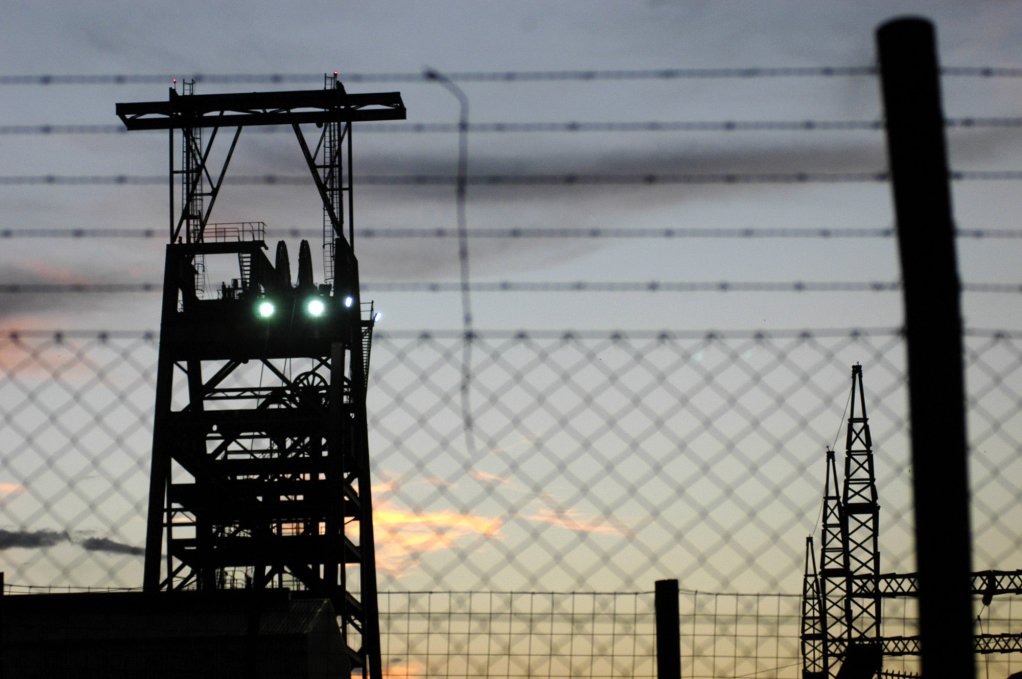


JOHANNESBURG (miningweekly.com) – Impala Platinum (Implats) CEO Terence Goodlace said on Friday that a “human tragedy” was unfolding in the platinum belt, describing the effect of no income, violence and intimidation on its striking workers as “devastating.”
“The wage offer that has been tabled as part of the wage negotiations with the Association of Mineworkers and Construction Union (AMCU) is fair in the current low platinum price environment.
“Implats urges AMCU to moderate their demands and accept the fair wage offer. Employees should be allowed to return to work, while the leadership of AMCU and Impala can engage to find a long-term, viable solution for employees,” he reiterated in a results statement on Friday.
The platinum companies, including industry peers Anglo American Platinum and Lonmin, were now in the sixteenth week of a platinum strike by AMCU that had yet to be resolved through negotiation and had, in recent days, been punctuated by reports of violence and intimidation in the platinum-rich Rustenburg area.
During the period of the strike to date, Implats had lost some 246 000 oz of platinum production, equivalent to revenue of R5.4-billion, while employees had forfeited wages of around R1.4-billion.
Goodlace reported in a results statement for the third quarter ended March 31, that Implats’ “good start to the financial year” had been severely impacted in the third quarter by the protracted wage strike at its Impala Rustenburg operation.
“While all other operations maintained their strong safety and operational performances, production at Impala [Rustenburg] was significantly reduced owing to the closure of the mine during the strike,” he said.
STUNTED OUTPUT
Group production over the period was significantly impacted by the unresolved industrial action at Impala Rustenburg, at which some 131 000 oz of platinum production was lost in the quarter under review.
Production from other mining operations, which typically accounted for around 45% of the group’s total production, remained unaffected.
At group level, gross refined platinum production declined by 18% to 992 000 oz in the nine-month period ended March 31 compared with 1.2-million ounces in the corresponding period of the prior year.
The industrial action halted all mining and mineral processing operations at the Rustenburg operation and, as a consequence, refined platinum production from this mine for the nine months declined to 411 000 oz.
“Normalised production, adjusting for the lost production of 131 000 platinum ounces owing to the strike, would have yielded 542 000 platinum ounces compared with the prior period production of 557 000 oz.
“Additional ounces were lost owing to the decision to safely stop all mining operations prior to the start of the strike,” Goodlace explained, adding that “stringent” cash preservation initiatives were implemented as a result of the strike action.
These included force majeure notices to suppliers of all nonessential goods and services and the strict application of the ‘no-work no-pay’ principle for striking workers, which yielded “much lower” operating costs and lower capital expenditure.
“Operating costs incurred at the Impala Rustenburg mine in this period only included security and essential services and maintenance costs,” Goodlace said.
Capital costs were also significantly reduced and all capital projects, other than 17 shaft, were stopped. Activities at 17 shaft were curtailed in line with the cash preservation strategy.
“The net result [of these interventions] was that, for the period of the strike, operating costs and capital expenditure were curtailed by 67%, or around R1.9-billion, in total,” Goodlace advanced.
At the group’s Marula mine, in the North West, platinum-in-concentrate benefitted from higher milled tonnes and improved ore grades, rising 16% to 59 000 oz of platinum for the nine-month period ended March 31 compared with 51 000 oz in the prior period.
“The operation remains on track to reach the production target of 86 000 oz of platinum in concentrate by 2016,” said Goodlace.
Meanwhile, tonnes milled by Implats’ Zimplats operation, in Zimbabwe, increased by 36% in the nine-month period to March 31, as a result of the Phase 2 expansion project and a planned increase in the mining cut.
As a result of the increased mining cut, ore grades reduced by 3% to 3.46 g/t from 3.55 g/t in the previous reporting period.
Consequently, platinum-in-matte production increased by 26% to 174 000 oz compared with 138 000 oz in the prior corresponding period.
Quarter-on-quarter, platinum-in-matte decreased by 9% to 58 000 oz of platinum compared with 64 000 oz in the prior period.
“This was as a direct result of higher volumes of concentrate smelted in the corresponding period in the prior year, following furnace outages and a subsequent concentrate build-up that was treated in this period. Zimplats matte continued to be treated at the Springs refinery during the strike,” explained Goodlace.
He added that the group continued to engage actively with the government of Zimbabwe in respect of the indigenisation implementation plan, corporate taxation and royalty dispensation, as well as the company’s commitment to primary beneficiation within Zimbabwe.
“Regarding beneficiation, the company has committed to a first-stage refurbishment of the existing Selous-based base-metal refinery to partially process the Zimplats matte. Progress will be disclosed as soon as further agreement is reached with the State,” Goodlace said.
At Implats’ Mimosa mine, also in Zimbabwe, platinum-in-concentrate amounted to 79 000 oz for the nine-month period ended March 31, compared with 81 000 oz in the corresponding period of the prior year.
This mine’s performance remained on plan with steady-state throughput capacity.
Meanwhile, refined platinum volumes at Impala Refining Services, north of Johannesburg, decreased by 10% to 581 000 oz of platinum for the nine-month period compared with 649 000 oz in the first three quarters of the prior year.
“The decrease in production over the reporting period is largely attributed to the cessation of deliveries of autocatalysts from a recycling customer in the prior period,” noted Goodlace.
Refined platinum for the quarter under review increased by 21% to 184 000 oz, compared with 152 000 oz of platinum in the prior period, largely owing to increased metal receipts from Zimplats.
METAL PRICES
With the exception of palladium, all other metals traded around 10% lower in the nine-month period to March 31 compared with the corresponding period in the prior year.
Platinum averaged $1 419/oz, which was 10% lower than the $1 570 achieved in the prior period, while the price of rhodium was down by 14% at $979/oz and nickel slumped by 17% to $13 964/t.
In contrast, palladium benefitted from improved vehicle sales in the US and China and traded at an average price of $72/oz, 10% higher than $65.07/oz traded a year ago.
“Despite lower metal prices, the rand:dollar exchange rate provided some respite, depreciating by 20% to average R10.31 to the dollar compared with a rate of R8.59 to the dollar in the prior period,” Goodlace noted.
NET DEBT
Group unit costs for the nine months increased by 15% to R18 304/oz, which included strike-related costs net of operational costs savings.
On a normalised basis, adjusting for the savings on operational costs and the 131 000 oz of lost platinum production, unit costs would have been R17 077/oz – a 7.3% increase on the comparable nine-month period.
On March 31, group debt amounted to R7.8-billion, while gross cash was R5.2-billion, resulting in a net debt position of R2.6-billion.
The group had not drawn down on any of its committed facilities during this period.
IMPENDING SETTLEMENT?
The group iterated on Friday that it remained committed to finding a negotiated wage settlement with AMCU that was both affordable and sustainable for the business.
“To this end, the company has offered to increase wages over a five-year period by a range of 7.5% to 10% yearly. The settlement offer goes some way to meeting AMCU’s demand and would increase the minimum cash remuneration for entry-level underground employees to R12 521 a month by July 2017,” Goodlace held.
No increases had been granted to management for the year and the CEO had not accepted any increases, bonuses or share options since having joined the company in July 2012, the company stated.
Commenting further on the strike, Goodlace said the economic realities of the company and the industry could not be ignored by AMCU.
“We have resolved with the other platinum mining companies that are also being affected by the strike to communicate our settlement offer directly to employees. The reopening of the mine will only be considered when the risk of violence and intimidation can be eliminated.
“Impala remains hopeful that AMCU will moderate their demands and accept the fair wage offer and allow employees to return to work,” he said.
Meanwhile, all other operations were expected to continue to meet planned performance targets and the stockpiled concentrates from Marula, Mimosa and Two Rivers, in Mpumalanga, would be processed in the current quarter.
As a result, group refined platinum production for the final quarter of the 2014 financial year was expected to be roughly 150 000 oz, while group refined platinum sales were expected to be around 1.2-million ounces for the full financial year.
“This will include about 150 000 oz of platinum that will be drawn down from metal inventories, such as pipeline and refined stocks, with no further excess stocks immediately available for drawdown or sale,” said Goodlace.
He added that cash preservation would be maintained for the duration of the strike and it was estimated that total cash expenditure would be curtailed by between 70% and 75% as a result.
“The resumption of normalised production levels at Impala Rustenburg, once the strike ends and operations resume, is expected to take at least three months to achieve. Consequently, no further production is expected from this operation in the final quarter of 2014,” Goodlace said, noting that no force majeure notices to customers were expected, as customers had agreed to receive reduced metal deliveries.
Article Enquiry
Email Article
Save Article
Feedback
To advertise email advertising@creamermedia.co.za or click here
Research Reports

Projects


Latest Multimedia


Latest News
Showroom

Rooted in the hearts of South Africans, combining technology and a quest for perfection to bring you a battery of peerless standing. Willard...
VISIT SHOWROOM
The Steel Tube Export Association of South Africa was established to develop sustainable, internationally competitive carbon steel tube and pipe...
VISIT SHOWROOM



Announcements
What's On
Subscribe to improve your user experience...
Option 1 (equivalent of R125 a month):
Receive a weekly copy of Creamer Media's Engineering News & Mining Weekly magazine
(print copy for those in South Africa and e-magazine for those outside of South Africa)
Receive daily email newsletters
Access to full search results
Access archive of magazine back copies
Access to Projects in Progress
Access to ONE Research Report of your choice in PDF format
Option 2 (equivalent of R375 a month):
All benefits from Option 1
PLUS
Access to Creamer Media's Research Channel Africa for ALL Research Reports, in PDF format, on various industrial and mining sectors
including Electricity; Water; Energy Transition; Hydrogen; Roads, Rail and Ports; Coal; Gold; Platinum; Battery Metals; etc.
Already a subscriber?
Forgotten your password?
Receive weekly copy of Creamer Media's Engineering News & Mining Weekly magazine (print copy for those in South Africa and e-magazine for those outside of South Africa)
➕
Recieve daily email newsletters
➕
Access to full search results
➕
Access archive of magazine back copies
➕
Access to Projects in Progress
➕
Access to ONE Research Report of your choice in PDF format
RESEARCH CHANNEL AFRICA
R4500 (equivalent of R375 a month)
SUBSCRIBEAll benefits from Option 1
➕
Access to Creamer Media's Research Channel Africa for ALL Research Reports on various industrial and mining sectors, in PDF format, including on:
Electricity
➕
Water
➕
Energy Transition
➕
Hydrogen
➕
Roads, Rail and Ports
➕
Coal
➕
Gold
➕
Platinum
➕
Battery Metals
➕
etc.
Receive all benefits from Option 1 or Option 2 delivered to numerous people at your company
➕
Multiple User names and Passwords for simultaneous log-ins
➕
Intranet integration access to all in your organisation
