



Icasa to review state of SA’s ICT competition

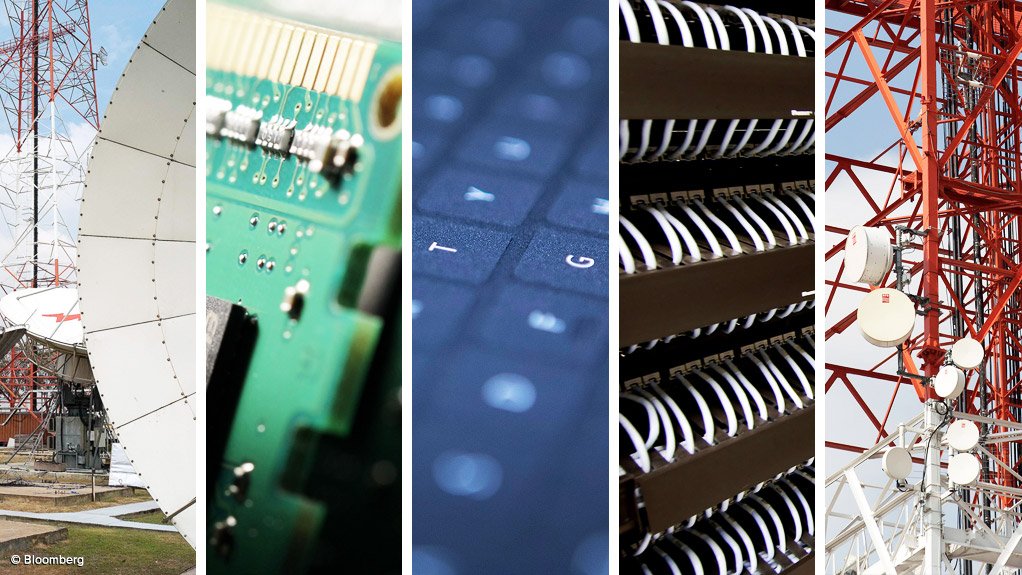



The Independent Communications Authority of South Africa (Icasa) on Thursday initiated a six-to-eight-month high-level study of competition in South Africa’s information and communications technology (ICT) sector.
South Africa’s “fluid and volatile” ICT sector was heading for a crossroad similar to that experienced by the US in the 1980s, explained Icasa chairperson Dr Stephen Mncube at a press briefing on the launch of the inquiry at Icasa’s head office, in Sandton.
There was a need to reappraise the nation’s ICT sector, in particular competition, on the back of rapid technological changes with “far-reaching” implications.
Icasa councillor Willie Currie said, while the “wide-ranging” inquiry “to develop a full appreciation of the implication of these unfolding changes and developments on the regulation of competition in the ICT sector” was not a Chapter 8 review, in terms of the Electronic Communications Act, of a specific market, the study could potentially identify certain markets in need of further scrutiny.
The inquiry would seek to determine the state of competition in the sector in its entirety, address challenges hampering the creation of a level playing field across platforms, understand the impact of convergences, net neutrality and disruptive technologies on the competitive landscape, and understand the role of fixed-line and wireless networks in enabling competition, Currie said.
“Within the different market segments of the ICT industry there are many competition issues to be addressed. Competition needs to be enhanced at both the infrastructural and services layers of the industry,” South Africa Communications Forum (SACF) executive director Loren Braithwaite-Kabosha said.
The SACF, which “strongly” supported what it deemed to be a long-overdue process, suggested the inquiry address leveling the playing field in content access by broadcasters, infrastructure sharing, the interoperability of set-top boxes, the efficient use of spectrum and the objectives and impact of different types of licensing regimes, among others.
“One area in which these [technological] changes are more pronounced is in the competitiveness of the electronic communications, broadcasting and postal sectors and the assumption is that greater competition will lead to a reduction in the cost to communicate,” Icasa noted.
Despite a considerable flux in the electronic communications network services (ECNS) and electronic communications services (ECS) markets, which now boasted about 720 ECNS and ECS licensees – 416 of which were operational – the cost to communicate had not declined significantly.
With South Africa’s consumers paying more than their counterparts in the rest of Africa, in reality, increased competition had not led to an automatic reduction in the cost to communicate.
“Another issue is [the] impact any consolidation of the market will have on the state of competition, the cost to communicate and bridging the digital divide,” Icasa said.
The authority expressed its concerns over the implications of “unprecedented” market consolidation on competition and the cost to communicate, citing plans by South Africa’s two largest mobile operators MTN and Vodacom – which combined held more than 80% of the market – to buy out other ECNS/ECS licensees.
This came as Vodacom was within weeks of completing its due diligence to acquire 100% of Neotel and as MTN and telecommunications group Telkom entered network management services and reciprocal roaming agreements, which would see MTN take over financial and operational responsibility for the roll-out and operation of Telkom’s radio access network.
Further, Icasa questioned whether the assignment of spectrum for broadband would also have an effect on the state of competition in the ICT sector.
The market was still waiting for the Department of Communications' release of the Spectrum Policy, which would guide Icasa on the implementation of spectrum allocation and allow the licensing of the 2.6 GHz and 800 MHz band spectrum.
The regulator invited stakeholders to submit their written representations within 60 days, after which Icasa would hold public hearings to develop a draft position paper and, eventually, a final position paper.
Article Enquiry
Email Article
Save Article
Feedback
To advertise email advertising@creamermedia.co.za or click here
Research Reports

Projects


Latest Multimedia


Latest News
Showroom
Roytec Global is an international company specializing in liquid / solid and mineral separation technologies for the Mining and Industrial sectors.
VISIT SHOWROOM
Virtual Gas Network supplies compressed natural gas via a virtual gas distribution network.
VISIT SHOWROOM



Announcements
What's On
Subscribe to improve your user experience...
Option 1 (equivalent of R125 a month):
Receive a weekly copy of Creamer Media's Engineering News & Mining Weekly magazine
(print copy for those in South Africa and e-magazine for those outside of South Africa)
Receive daily email newsletters
Access to full search results
Access archive of magazine back copies
Access to Projects in Progress
Access to ONE Research Report of your choice in PDF format
Option 2 (equivalent of R375 a month):
All benefits from Option 1
PLUS
Access to Creamer Media's Research Channel Africa for ALL Research Reports, in PDF format, on various industrial and mining sectors
including Electricity; Water; Energy Transition; Hydrogen; Roads, Rail and Ports; Coal; Gold; Platinum; Battery Metals; etc.
Already a subscriber?
Forgotten your password?
Receive weekly copy of Creamer Media's Engineering News & Mining Weekly magazine (print copy for those in South Africa and e-magazine for those outside of South Africa)
➕
Recieve daily email newsletters
➕
Access to full search results
➕
Access archive of magazine back copies
➕
Access to Projects in Progress
➕
Access to ONE Research Report of your choice in PDF format
RESEARCH CHANNEL AFRICA
R4500 (equivalent of R375 a month)
SUBSCRIBEAll benefits from Option 1
➕
Access to Creamer Media's Research Channel Africa for ALL Research Reports on various industrial and mining sectors, in PDF format, including on:
Electricity
➕
Water
➕
Energy Transition
➕
Hydrogen
➕
Roads, Rail and Ports
➕
Coal
➕
Gold
➕
Platinum
➕
Battery Metals
➕
etc.
Receive all benefits from Option 1 or Option 2 delivered to numerous people at your company
➕
Multiple User names and Passwords for simultaneous log-ins
➕
Intranet integration access to all in your organisation
