



HSRC's first GBV report pushes for holistic, long-term solutions

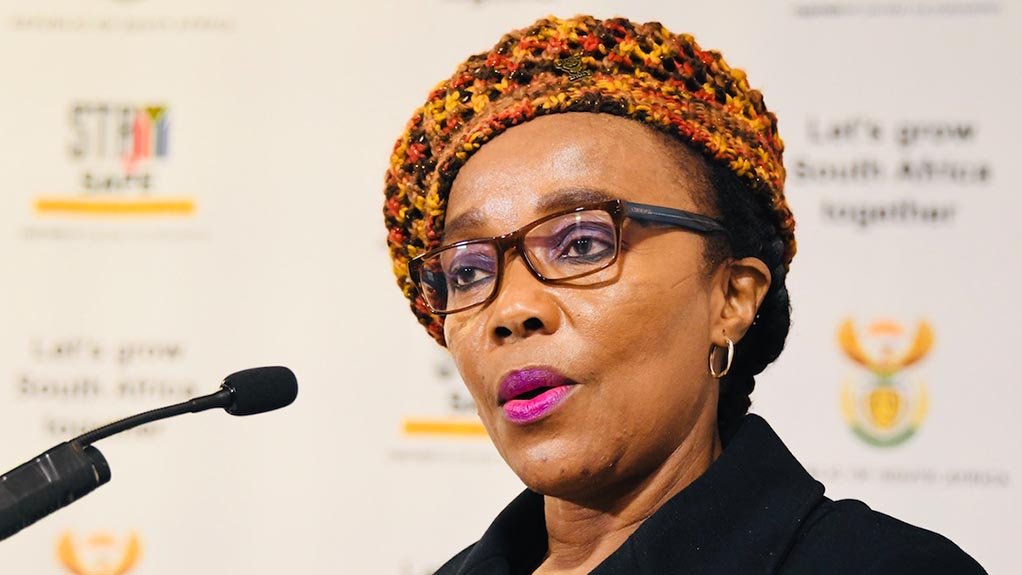
Minister in the Presidency for Women, Youth and People with Disabilities Sindisiwe Chikunga


The Human Sciences Research Council (HSRC) on Monday called on Minister in the Presidency for Women, Youth and People with Disabilities Sindisiwe Chikunga and her deputy Mmapaseka Steve Letsike to find a long-term holistic approach in curbing gender-based violence (GBV), and to also implement interventions that address psychological and social behavioural factors.
The HSRC released and handed over its first South African National Gender-Based Violence Study 2022 to Chikunga, who promised that her department would incorporate the HSRC’s recommendations into the department’s strategic plan.
The council wants the Presidency to strengthen childhood protection and legal enforcement services.
The HSRC’s report presented the findings of the first ‘fit-for-purpose’ national study on the prevalence of GBV in nine provinces, outlining the prevalence of physical, sexual, emotional, and economic violence, and psychological abuse among youth and adults 18 years and older.
The study also examined the perpetration of violence by men against their female partners and the underlying role of gender norms in driving GBV.
The study findings contribute to understanding the life course of victimisation and perpetration in South Africa.
HSRC deputy executive director Nompumelelo Zungu pointed out that the study found that 33.1% of all women aged 18 years and older had experienced physical violence in their lifetime.
“…this translates to an estimated 7 310 389 women who have experienced physical violence in their lifetime. Lifetime physical violence was significantly higher among black African women, with 35.5%, compared to women of other race groups,” she said.
Zungu added that lifetime physical violence was also significantly higher among women who were cohabiting but not married compared to women who were currently married and women who were not currently in a relationship.
She highlighted that overall, 6.1% of women reported that they had experienced physical violence in the past 12 months, saying this translated to an estimated 1 338 336 women who were physically violated in the country.
Chikunga said the findings of the study should not only serve as a source of shame but also a call for immediate action.
“The findings and recommendations of the study will contribute to our ongoing focus on prevention, enhanced protection for victims and ensuring that perpetrators are held accountable,” she added.
Her department would simplify the findings of this study, without diluting it, she said, and added that community intelligence into this complex subject was needed.
“…researchers, scholars, advocates and activists will go beyond reproducing mainstream narratives and get a granular picture from communities that face violence at a community or even street level, to ensure that justice is served,” she explained.
She said the study was a baseline from which more research would be conducted at micro levels, saying one of the first actions was to challenge and deliberately repurpose all values and practices across the educational, religious, cultural, sporting and creative environments to support the fight against patriarchal and chauvinism in all spheres of life.
“We must influence the content and delivery of school curriculum to nurture our youth who reject the patriarchal script and the violence it perpetuates in every aspect of life,” stated Chikunga.
In promoting awareness, Chikunga further announced that her department would be responsible for integrating the study’s findings into the national strategic plan on GBV and femicide.
“…this includes recalibrating existing policies and programmes to align with evidence presented in this study. It is important to mention that the study confirms that we are implementing the pillars of the national strategic plan, particularly pillar six, which is about research and information management systems,” she pointed out.
In response to the study, the department announced that it intends convening all social partners to assign responsibility for taking some of the recommendations forward.
“…in this case we mean government, civil society, research institutions, academia, the private sector and everybody else that plans on playing a role in ensuring that the recommendations are implemented,” she said.
Chikunga added that the sheer scale of the challenge required an all-of-society approach.
She said her department would continue to mobilise funding from public- and private-sector resources, to ensure the department’s interventions against GBV and femicide were adequately resourced.
She pointed to the support of civil society, which she said would be crucial.
Article Enquiry
Email Article
Save Article
Feedback
To advertise email advertising@creamermedia.co.za or click here
Research Reports

Projects


Latest Multimedia



Showroom

Rentech provides renewable energy products and services to the local and selected African markets. Supplying inverters, lithium and lead-acid...
VISIT SHOWROOM
For over 60 years, VEGA has provided industry-leading products for the measurement of level, density, weight and pressure. As the inventor of the...
VISIT SHOWROOM



Press Office
Announcements
What's On
Subscribe to improve your user experience...
Option 1 (equivalent of R125 a month):
Receive a weekly copy of Creamer Media's Engineering News & Mining Weekly magazine
(print copy for those in South Africa and e-magazine for those outside of South Africa)
Receive daily email newsletters
Access to full search results
Access archive of magazine back copies
Access to Projects in Progress
Access to ONE Research Report of your choice in PDF format
Option 2 (equivalent of R375 a month):
All benefits from Option 1
PLUS
Access to Creamer Media's Research Channel Africa for ALL Research Reports, in PDF format, on various industrial and mining sectors
including Electricity; Water; Energy Transition; Hydrogen; Roads, Rail and Ports; Coal; Gold; Platinum; Battery Metals; etc.
Already a subscriber?
Forgotten your password?
Receive weekly copy of Creamer Media's Engineering News & Mining Weekly magazine (print copy for those in South Africa and e-magazine for those outside of South Africa)
➕
Recieve daily email newsletters
➕
Access to full search results
➕
Access archive of magazine back copies
➕
Access to Projects in Progress
➕
Access to ONE Research Report of your choice in PDF format
RESEARCH CHANNEL AFRICA
R4500 (equivalent of R375 a month)
SUBSCRIBEAll benefits from Option 1
➕
Access to Creamer Media's Research Channel Africa for ALL Research Reports on various industrial and mining sectors, in PDF format, including on:
Electricity
➕
Water
➕
Energy Transition
➕
Hydrogen
➕
Roads, Rail and Ports
➕
Coal
➕
Gold
➕
Platinum
➕
Battery Metals
➕
etc.
Receive all benefits from Option 1 or Option 2 delivered to numerous people at your company
➕
Multiple User names and Passwords for simultaneous log-ins
➕
Intranet integration access to all in your organisation
