



How to fly a helicopter


Ahelicopter has four controls: the cyclic joystick, the tail rotor pedals, the collective lever and the throttle.
The cyclic controls the plane of the main rotor rotation, that is, the disc. The collective controls the angle of the main blades to give less or more lift. The pedals control the angles of the tail rotor to compensate for the tendency of the main rotor torque to spin the aircraft in a direction opposite to the main blade rotation, and the throttle adds more or less power to the rotors and is used to keep the rotation speed constant. Got that? Good. Takes time to get them to all work in harmony.
When you fly an approach to land at a given spot, you have to follow a determined flight path. Fly too low and too slow and, if the engine fails, you will crash and burn. Fly too high and you will end up in a high hover over the chosen spot and, if the engine fails, you will crash and burn.
There are many ways to crash and burn, varying through ground resonance, vortex ring state, low rotor rpm, flying behind the power curve . . . and so on. All these are crashes caused by bad flying. There is a whole herd of other potential mechanical failures. The most interesting thing is that, once you get into a dangerous flying condition, often your options for getting out are very limited.
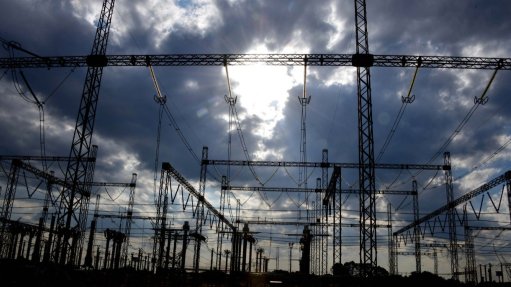
Much the same has happened to Eskom. In 1994, the present government was handed a perfectly good power system, run by Eskom. The power station build programme had kept pace with development, electricity was cheap and allowed South African mines to run at good profits. Eskom staff were well trained, Eskom salaries were slightly above market but reasonable.
As soon as the present government took over, it messed the whole thing up. It pushed Eskom to place untrained previously disadvantaged people in high positions and got rid of highly trained staff by giving them early retirement packages, thus ensuring that the untrained previously disadvantaged people would not get trained except by trial and error. They stopped the power station build programme. The then Minister of Mineral and Energy Affairs, Penuell Maduna, and government orchestrated the signing over of huge blocks of power supply to three aluminium smelters, thus committing nearly all the surplus power which Eskom had at the time.
The results were predictable: In 2007/8, there were rolling blackouts all over the country. The ‘old’ Eskom staff could have probably kept the system going but the untrained staff could not. I listened in astonishment to some of the tales – how, given grid separation of a number of power stations, the system operations people had used up hydropower reserves which would take months to return to required levels; operation of the wrong power lines at the wrong loads. And so on. Today things are getting worse. Many Eskom coal contracts have corrupt transport operators. The Medupi power station, under construction, has a boiler control software system which does not work and is way behind. Boilers, supplied by Hitachi South Africa (which is 25%-owned by the ruling party) have been found to have about 2 000 defects.
Futher, government’s renewable-energy programme, which orders Eskom to buy power at exorbitant rates from wind farms and other renewable-energy suppliers, has sent power costs soaring.
Like a helicopter being badly flown, the whole edifice is on a flight path which can only lead to disaster. It is not the fault of Eskom. The untrained have now become trained. It is interference by government and ruthlessly self-interested politicians which is responsible for the whole mess. If Eskom business was left to Eskom and not politicised for gain by the ruling party, we would have a well-run power system providing affordable power, with a surplus and a well-planned build programme. But it is not going to happen, is it? The ruling party has no idea how to fly a power system but ludicrously thinks it can. Only one result, like the poorly flown helicopter . . . crash and burn and sooner than you think, this year.
Article Enquiry
Email Article
Save Article
Feedback
To advertise email advertising@creamermedia.co.za or click here
Research Reports

Projects


Latest Multimedia


Showroom
Design, Construction and Maintenance of Site Erected, Welded Bulk Storage Tanks for the Petrochemical, LNG, Ammonia and Sustainable fuel Sectors.
VISIT SHOWROOM
FLANDERS Southern Africa provides integrated solutions for mining and industrial operations, covering field services, automation, electrification,...
VISIT SHOWROOM



Press Office
Announcements
What's On
Subscribe to improve your user experience...
Option 1 (equivalent of R125 a month):
Receive a weekly copy of Creamer Media's Engineering News & Mining Weekly magazine
(print copy for those in South Africa and e-magazine for those outside of South Africa)
Receive daily email newsletters
Access to full search results
Access archive of magazine back copies
Access to Projects in Progress
Access to ONE Research Report of your choice in PDF format
Option 2 (equivalent of R375 a month):
All benefits from Option 1
PLUS
Access to Creamer Media's Research Channel Africa for ALL Research Reports, in PDF format, on various industrial and mining sectors
including Electricity; Water; Energy Transition; Hydrogen; Roads, Rail and Ports; Coal; Gold; Platinum; Battery Metals; etc.
Already a subscriber?
Forgotten your password?
Receive weekly copy of Creamer Media's Engineering News & Mining Weekly magazine (print copy for those in South Africa and e-magazine for those outside of South Africa)
➕
Recieve daily email newsletters
➕
Access to full search results
➕
Access archive of magazine back copies
➕
Access to Projects in Progress
➕
Access to ONE Research Report of your choice in PDF format
RESEARCH CHANNEL AFRICA
R4500 (equivalent of R375 a month)
SUBSCRIBEAll benefits from Option 1
➕
Access to Creamer Media's Research Channel Africa for ALL Research Reports on various industrial and mining sectors, in PDF format, including on:
Electricity
➕
Water
➕
Energy Transition
➕
Hydrogen
➕
Roads, Rail and Ports
➕
Coal
➕
Gold
➕
Platinum
➕
Battery Metals
➕
etc.
Receive all benefits from Option 1 or Option 2 delivered to numerous people at your company
➕
Multiple User names and Passwords for simultaneous log-ins
➕
Intranet integration access to all in your organisation
