


Harmony Q3 operational profit up, despite lower production



JOHANNESBURG (miningweekly.com) – Harmony Gold has reported a 10% quarter-on-quarter drop in gold production to 245 697 oz in the three months to March 31, owing to a slow start-up after the December holidays.
The company also reiterated that it would be restructuring for profitability. “We have responded to a lower gold price – first by rationalising our assets and then restructuring our portfolio – cutting costs, reducing labour numbers and focusing on mining only safe, profitable ounces.
“During the next couple of months, we will continue to improve the performance of our assets and restructure Masimong, Doornkop and Hidden Valley for profitability. We are assessing ways of funding Golpu and unlocking the true value of each of our assets, which will ensure
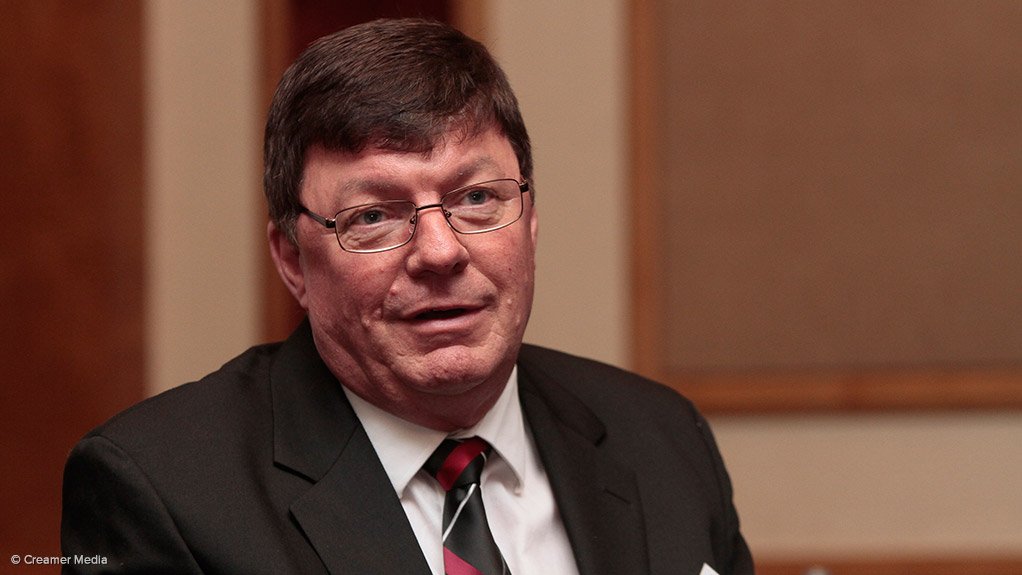
shareholder returns in the long term,” CEO Graham Briggs said in a statement.
Despite lower gold output, production profit increased by 4% to R643-million in the third, compared with R618-million in the previous quarter, mainly owing to a 10% decrease in operating costs, supported by a 6% increase in the average gold price received.
Harmony reduced its headline loss a share from 114c in the December quarter, to a loss a share of 60c in the quarter under review.
During the reporting period, the average gold price increased by 2% to $1 220/oz, which boded well for the company. Paired with the weakening of the rand against the dollar to R11.74, the rand gold price increased to R460 569/kg.
However, Briggs pointed out it was difficult to say whether the gold price would increase further in the months ahead. “It is certainly a tough environment,” he noted, adding that with rapidly escalating input costs, wage increases – with labour accounting more than 50% of costs – power constraints and policy and regulatory challenges, the company would face a tough year ahead.
Regarding the electricity crisis, Briggs highlighted that Harmony had engaged in energy-saving activities, decreasing its consumption by 13% since 2012. “We will continue to operate sparingly on electricity,” he noted.
At the same time, there had been a 34% cost increase to about R2-billion. “If you look at the cost of electricity, over the last five years it has increased about 133% – a massive increase. We are a big user of electricity, no doubt about that, with our ventilation and cooling, but that’s the reality of our situation,” Briggs said, adding that, in April, the gold miner saw an increase of 12.7% in electricity costs.
“There will be further increases in the year ahead. This is certainly a threat to us,” he said, estimating that the company would spend about R2.2-billion on its utility bill by the end of the year.
GOLD WAGE DEMANDS
The company highlighted in its results statement that it would not survive high wage increases. Although the number of employees had decreased by 11% from 34 721 in the 2014 financial year, to 31 880 in this year, the total labour costs soared by 19%, from R6.4-billion in 2014 to R6.7-billion this year.
Briggs noted that should high increases be granted in the year ahead, the market could expect the company to engage in massive retrenchments. “Harmony is not replacing employees at the moment. We also have a moratorium on labour, so where there are shortages, when people leave or retire, we replace from within, transferring employees from one operation to the other,” he said.
“Under these circumstance we are looking to negotiate a win-win [situation], where we can look at job retention and get the best deal for employees as well as the employer,” Briggs said.
“Since 2012, [we have been] focusing a lot on communication. . .to deal with some of the issues, such as housing and the debt levels of our employees. We have been really engaging with our employees,” he said.
OPERATIONS
Following two lossmaking quarters, Harmony decided to scale down orebody development at its Masimong mine, in the Free State, in an effort to restore the mine to profitability.
The plan was partially implemented and would impact on the life-of-mine (LoM), which would be shortened to about two years. Labour would also be reduced by about 400 employees during the June quarter.
Further, the company also closed its Target 3 shaft, stopped work at the Phakisa decline, in the Free State, and completed the restructuring of its Kusasalethu mine, near Carletonville.
Commenting on the restructuring, Briggs pointed out that the company had not had a full quarter of operations on the new plan yet and that the old mine had now been shut down at Level 7. “We are now focusing on the bottom levels.”
Briggs highlighted that the miner’s other lossmaking operations, which had total production costs of over R460 000/kg, included Doornkop, with Tshepong and Unisel also bordering on the lossmaking side.
“Tshepong has had some good quarters, but the last quarter was fairly poorly,” Briggs noted, adding that the “old lady of Harmony” – Unisel – tottered along at close to 4 g/t.
“Doornkop's performance was disappointing due to grade and volume constraints. Doornkop posted a net loss in the last three quarters and we are investigating alternatives to return the mine to profitability, which includes restructuring,” Briggs said.
The company would focus on development for improved higher-grade mining, with the restructuring likely resulting in employee reductions.
At Hidden Valley, in Papua New Guinea, a revised LoM plan was being considered with reduced stripping requirements, which would enhance cash generation in the short term. Cost reduction efforts being pursued at the mine included revising the organisational structure. An operational improvement programme had also been launched, with a specific focus on mining and maintenance discipline.
The company’s Golpu exploration project, also in Papua New Guinea, was edging along, with work on the feasibility study for Stage 1 and the prefeasibility study for Stage 2 having continued during the third quarter.
Stage 1 targeted the upper higher value portion of the orebody, while the second stage encompassed the rest of the ore reserve. Both studies were scheduled to be completed by the end of the year.
Article Enquiry
Email Article
Save Article
Feedback
To advertise email advertising@creamermedia.co.za or click here
Research Reports

Projects
Latest Multimedia
Latest News
Showroom
Sika South Africa is a trusted partner for the nation’s infrastructure, commercial, residential, and industrial sectors.
VISIT SHOWROOM
For over 30 years, Werner South Africa Pumps & Equipment (PTY) LTD has been designing, manufacturing, supplying and maintaining specialist...
VISIT SHOWROOM

Press Office
Announcements
What's On
Subscribe to improve your user experience...
Option 1 (equivalent of R125 a month):
Receive a weekly copy of Creamer Media's Engineering News & Mining Weekly magazine
(print copy for those in South Africa and e-magazine for those outside of South Africa)
Receive daily email newsletters
Access to full search results
Access archive of magazine back copies
Access to Projects in Progress
Access to ONE Research Report of your choice in PDF format
Option 2 (equivalent of R375 a month):
All benefits from Option 1
PLUS
Access to Creamer Media's Research Channel Africa for ALL Research Reports, in PDF format, on various industrial and mining sectors
including Electricity; Water; Energy Transition; Hydrogen; Roads, Rail and Ports; Coal; Gold; Platinum; Battery Metals; etc.
Already a subscriber?
Forgotten your password?
Receive weekly copy of Creamer Media's Engineering News & Mining Weekly magazine (print copy for those in South Africa and e-magazine for those outside of South Africa)
➕
Recieve daily email newsletters
➕
Access to full search results
➕
Access archive of magazine back copies
➕
Access to Projects in Progress
➕
Access to ONE Research Report of your choice in PDF format
RESEARCH CHANNEL AFRICA
R4500 (equivalent of R375 a month)
SUBSCRIBEAll benefits from Option 1
➕
Access to Creamer Media's Research Channel Africa for ALL Research Reports on various industrial and mining sectors, in PDF format, including on:
Electricity
➕
Water
➕
Energy Transition
➕
Hydrogen
➕
Roads, Rail and Ports
➕
Coal
➕
Gold
➕
Platinum
➕
Battery Metals
➕
etc.
Receive all benefits from Option 1 or Option 2 delivered to numerous people at your company
➕
Multiple User names and Passwords for simultaneous log-ins
➕
Intranet integration access to all in your organisation
