



Green hydrogen touted as best long-term opportunity to decarbonise hard-to-abate carbon emitters

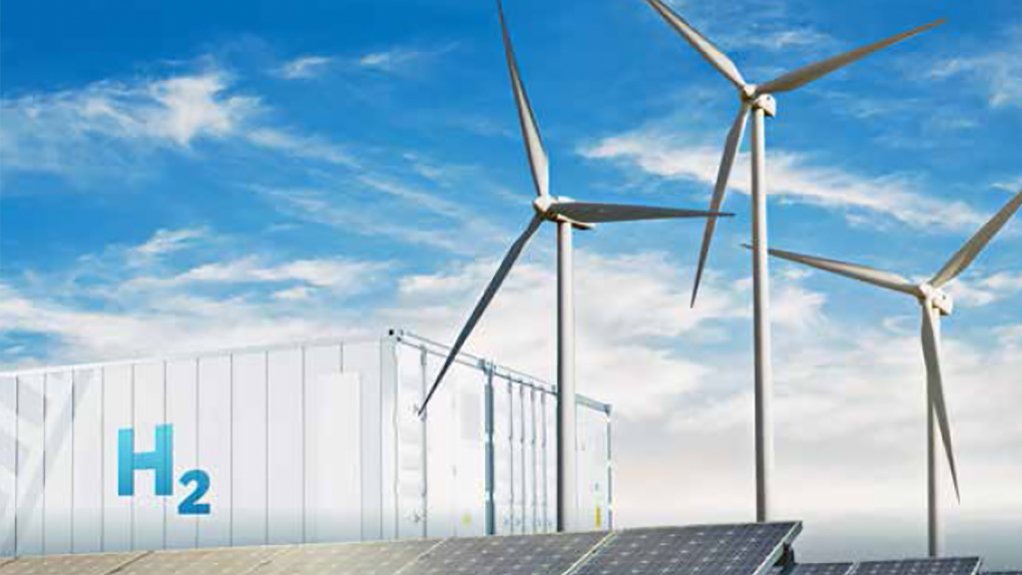


Hard-to-abate carbon emissions-intensive sectors – such as heavy-duty transport and aviation, as well as the maritime and heavy industries – may be able to reduce their emissions through the use of green hydrogen produced at a deep-water harbour facility in Boegoebaai, 60 km north of Port Nolloth.
The Boegoebaai green hydrogen development has been designated a Strategic Integrated Project in the South African National Development Plan and is located in the Namakwa Special Economic Zone (SEZ).
Green hydrogen is produced using only renewable-energy sources.
Speaking during a stakeholder engagement meeting in Port Nolloth on January 17, Minister in the Presidency Mondli Gungubele said hard-to-abate industries could not be decarbonised through renewable energy and electrification or through renewable energy and battery storage and that green hydrogen was “the best, long-term opportunity” to decarbonise such sectors, as it produced zero harmful emissions.
Integrated chemicals and energy company Sasol signed a memorandum of agreement with the Northern Cape Economic Development, Trade and Promotion Agency to lead a 24-month feasibility study to explore the potential of Boegoebaai as an export hub for green hydrogen and ammonia.
Currently, Sasol is a major manufacturer or grey hydrogen (hydrogen made from natural gas), producing about 2.4-million tonnes a year for the domestic market.
The production of green hydrogen, however, provides Sasol with an opportunity to leverage its expertise to enter a new market through greenfield facilities such as the planned Boegoebaai Green Hydrogen SEZ, said Gungubele.
At the same time, the Department of Trade, Industry and Competition is developing a hydrogen commercialisation strategy, and the Northern Cape and Gauteng provincial governments are developing provincial green hydrogen strategies focused on exports and domestic decarbonisation respectively.
South Africa has a number of strategic advantages which could make it a globally competitive green hydrogen producer, said Gungubele.
These advantages include a “superior endowment of both onshore wind and solar, [with] renewable energy [being] the largest cost component in the production of green hydrogen”, he pointed out.
Gungubele also pointed out that South Africa holds the largest concentration of known platinum group metal (PGM) reserves, further making it advantageous as a result of platinum being a major component in the manufacture of hydrogen fuel cells and polymer electrolyte membrane electrolysers. “[Ninety per cent] of known PGM reserves are in South Africa and Zimbabwe.”
In addition, he said South African industry has “deep expertise” in the Fischer-Tropsch Process used to produce power fuels, such as diesel, petrol and kerosene (jet fuel).
As for the energy required to produce green hydrogen, Gungubele highlighted that South Africa has large tracts of “relatively cheap” land that could be used for building renewable energy plants, as well as a “large electric grid for the wheeling of renewable energy”.
In terms of demand, he said South Africa had a large domestic industrial base that could serve as a source of local demand for green hydrogen.
Green hydrogen is still an emerging sector but has significant potential, Gungubele stated. “Global green hydrogen demand could reach 530-million tonnes by 2050, displacing roughly 10.4-billion barrels of oil equivalent, [which is about] 37% of prepandemic global oil production.”
He added that the green hydrogen export market could be worth $300-billion a year by 2050.
In its efforts to catch up on export potential and domestic decarbonisation efforts, Gungubele said work has been undertaken in the past 12 months to catalyse green hydrogen endeavours.
In this regard, he pointed out that Infrastructure South Africa has been working with the Northern Cape and Gauteng provincial governments to develop catalytic green hydrogen projects that will underpin provincial green hydrogen strategies. Here, the Northern Cape will be the production hub, while Gauteng will serve as the domestic demand hub.
“These projects and strategies, together with the Department of Science and Innovation’s Hydrogen Society Roadmap for South Africa, will be the foundation of a national green hydrogen strategy,” stated Gungubele.
He said the Northern Cape and Gauteng have signed three agreements, including a memorandum of understanding between the Northern Cape and Sasol, for Sasol to be the anchor developer of the planned Boegoebaai Green Hydrogen SEZ.
Article Enquiry
Email Article
Save Article
Feedback
To advertise email advertising@creamermedia.co.za or click here
Research Reports

Projects


Latest Multimedia

Latest News
Showroom
Leading condition monitoring specialists, WearCheck, help boost machinery lifespan and reduce catastrophic component failure through the scientific...
VISIT SHOWROOM



Press Office
Announcements
What's On
Subscribe to improve your user experience...
Option 1 (equivalent of R125 a month):
Receive a weekly copy of Creamer Media's Engineering News & Mining Weekly magazine
(print copy for those in South Africa and e-magazine for those outside of South Africa)
Receive daily email newsletters
Access to full search results
Access archive of magazine back copies
Access to Projects in Progress
Access to ONE Research Report of your choice in PDF format
Option 2 (equivalent of R375 a month):
All benefits from Option 1
PLUS
Access to Creamer Media's Research Channel Africa for ALL Research Reports, in PDF format, on various industrial and mining sectors
including Electricity; Water; Energy Transition; Hydrogen; Roads, Rail and Ports; Coal; Gold; Platinum; Battery Metals; etc.
Already a subscriber?
Forgotten your password?
Receive weekly copy of Creamer Media's Engineering News & Mining Weekly magazine (print copy for those in South Africa and e-magazine for those outside of South Africa)
➕
Recieve daily email newsletters
➕
Access to full search results
➕
Access archive of magazine back copies
➕
Access to Projects in Progress
➕
Access to ONE Research Report of your choice in PDF format
RESEARCH CHANNEL AFRICA
R4500 (equivalent of R375 a month)
SUBSCRIBEAll benefits from Option 1
➕
Access to Creamer Media's Research Channel Africa for ALL Research Reports on various industrial and mining sectors, in PDF format, including on:
Electricity
➕
Water
➕
Energy Transition
➕
Hydrogen
➕
Roads, Rail and Ports
➕
Coal
➕
Gold
➕
Platinum
➕
Battery Metals
➕
etc.
Receive all benefits from Option 1 or Option 2 delivered to numerous people at your company
➕
Multiple User names and Passwords for simultaneous log-ins
➕
Intranet integration access to all in your organisation
