



Gentler sex more adept at dealing with mining’s nontechnical issues


Increasing the participation of women in mining will positively impact on the industry’s reputation, say extractives analysts Kathryn Brooks and Julia Baxter, who believe that the unique array of skills commonly attributed to women make them better qualified than their male counterparts to manage progressively pertinent industry issues, including labour relations, community development and a company’s social licence to operate.
Brooks and Baxter, who provide strategic advice to high-profile mining companies in East, West and Southern Africa, maintain that, with the challenges currently facing the mining industry, it is no longer sufficient for mining companies to focus only on the core technical aspects of a business.
These challenges include growth demands, controversial press commentary and the changing expectations of host governments and societies, compounded by the global financial downturn.
“It is now a prerequisite for mining companies to place equal emphasis on managing their relationships with stake- holders beyond the traditional key actors,” argues Baxter.
Brooks adds that power networks requiring ‘soft’ skills saturate politics and business and, for companies investing in emerging markets, the major challenge lies in maintaining project support at all levels.
“Increasing gender diversity results in healthy stakeholder landscapes that are built on a positive combination of male-female skills sets. Moreover, more women are becoming key government stakeholders and, therefore, would appreciate an evenly balanced gender ratio in the private sector,” she says.
However, the mining industry is still lagging behind other sectors – including the oil and gas industry – in terms of gender diversity, with the lowest number of women occupying board seats of all the industries.
According to a 2013 study by industry body Women in Mining (WIM) UK and multinational professional services firm PricewaterhouseCoopers (PwC), women occupy 8% of all board seats in the world’s top 100 mining companies, with only four female executive directors in this group.
Overall, women occupy 5% of board posi- tions in the top 500 mining companies and comprise only 10% of the global mining workforce, contributing to the shallow pool of women occupying senior management positions.
“The level of female participation in the industry at all levels is astonishingly low, which seems illogical in the face of growing evidence demonstrating that businesses with higher levels of female representation on their boards perform better in several areas, including profitability, governance and risk management,” says Baxter.
Meanwhile, the WIM UK and PwC report shows that the percentage of women on mining company boards is significantly higher in South Africa. Women comprise an average of 21% of board members of JSE-listed companies that form part of the world’s top 100 mining companies, compared with Australia, where women comprise 13% of ASX-listed company board members.
The US, Hong Kong, Canada, and the UK all have a single-digit percentage with regard to the number of women occupying board positions.
The report attributes South Africa’s higher female:male ratio to its gender-equality poli- cies, including broad-based black economic empowerment and the 2010 South African Mining Charter, which aims to transfer 26% of mining-industry ownership to historically disadvantaged South Africans by 2014.
Mineral Resources Minister Susan Shabangu acknowledged South Africa’s development in this regard during her keynote address at the 2013 Investing in African Mining Indaba, which was held at the Cape Town International Convention Centre in February.
“I am encouraged by the substantial increase in the enrolment of young females and males in engineering qualifications, with female enrolment having doubled since 1996. This suggests that the base skills requirements for the sustainability of the industry are being built,” said Shabangu, warning, however, that these skills should be nurtured and protected.
According to the study, South Africa’s statistics indicate that gender-equality regu- lation may be the key to improved gender diversity in the mining industry.
“Mining needs to become a credible career option for women,” says Brooks, adding that the industry first needs to acknowledge the current deficit in female representation and strive to raise awareness in this regard.
“Mining companies have a responsibility to facilitate a friendlier work environment for women and change internal biases, as other industries have done.”
Baxter believes that setting diversity targets and institutionalising diversity policies will demonstrate the industry’s commitment to gender diversity.
“The current level of female participation is suboptimal and a reluctance remains to appreciate the positive contribution that women can make,” she says, adding that the changing industry landscape will continue to push companies in the direction of diversity, partly as a result of women applying the requisite skills in the workplace.
“A proactive approach that challenges current thinking and deals with the existing barriers, which restrict the development of women in mining, must be invested in.”
Brooks believes that entrenched male-domi- nated thinking and the tendency of insiders to recruit like-minded people are among the challenges facing the efforts to improve gender diversity in the mining industry.
“However, the industry has been evolving and the ingredients for project success are different now than what they were before. Therefore, an internalisation and transition process is required to acknowledge these changes and the strong contribution of women,” she says.
Baxter further highlights what she deems to be the “inertia of the status quo”, explaining that it is easy for the mining industry to continue as a male-dominated industry. She points out, however, that skills sets traditionally held by women are becoming more valuable to the mining sector.
“More women are developing the relevant technical skills sets and capabilities required for management positions in the sector. These trends combine to create an opportunity and requirement for change,” she concludes.
Article Enquiry
Email Article
Save Article
Feedback
To advertise email advertising@creamermedia.co.za or click here
Research Reports

Projects

Latest Multimedia
Latest News

Showroom
Sika South Africa is a trusted partner for the nation’s infrastructure, commercial, residential, and industrial sectors.
VISIT SHOWROOM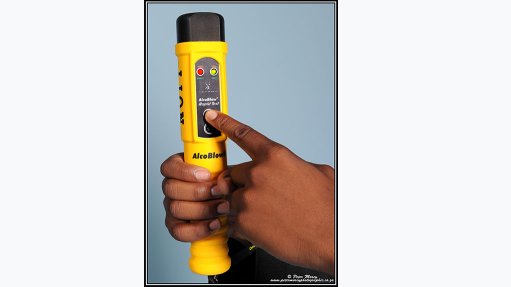
Developed to exceed the latest EN 15964 standards for police breathalysers proving that it will remain accurate and reliable for many years to come.
VISIT SHOWROOM
Press Office
Announcements
What's On
Subscribe to improve your user experience...
Option 1 (equivalent of R125 a month):
Receive a weekly copy of Creamer Media's Engineering News & Mining Weekly magazine
(print copy for those in South Africa and e-magazine for those outside of South Africa)
Receive daily email newsletters
Access to full search results
Access archive of magazine back copies
Access to Projects in Progress
Access to ONE Research Report of your choice in PDF format
Option 2 (equivalent of R375 a month):
All benefits from Option 1
PLUS
Access to Creamer Media's Research Channel Africa for ALL Research Reports, in PDF format, on various industrial and mining sectors
including Electricity; Water; Energy Transition; Hydrogen; Roads, Rail and Ports; Coal; Gold; Platinum; Battery Metals; etc.
Already a subscriber?
Forgotten your password?
Receive weekly copy of Creamer Media's Engineering News & Mining Weekly magazine (print copy for those in South Africa and e-magazine for those outside of South Africa)
➕
Recieve daily email newsletters
➕
Access to full search results
➕
Access archive of magazine back copies
➕
Access to Projects in Progress
➕
Access to ONE Research Report of your choice in PDF format
RESEARCH CHANNEL AFRICA
R4500 (equivalent of R375 a month)
SUBSCRIBEAll benefits from Option 1
➕
Access to Creamer Media's Research Channel Africa for ALL Research Reports on various industrial and mining sectors, in PDF format, including on:
Electricity
➕
Water
➕
Energy Transition
➕
Hydrogen
➕
Roads, Rail and Ports
➕
Coal
➕
Gold
➕
Platinum
➕
Battery Metals
➕
etc.
Receive all benefits from Option 1 or Option 2 delivered to numerous people at your company
➕
Multiple User names and Passwords for simultaneous log-ins
➕
Intranet integration access to all in your organisation
