


Gauteng Rapid Rail Integrated Network extension project, South Africa – update



Name of the Project
Gauteng Rapid Rail Integrated Network (GRRIN) extension project.
Location
Gauteng, South Africa.
Project Owner/s
Gauteng Department of Roads and Transport (GDRT), and the Gautrain Management Agency (GMA).
Project Description
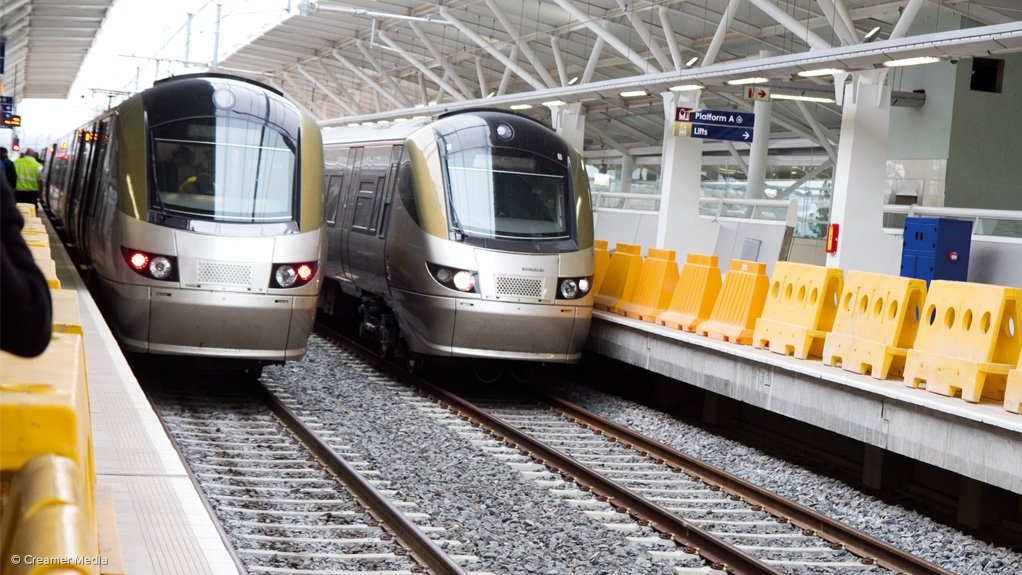
The proposed extension of the Gauteng Rapid Rail Network will add 146 km of rail, as well as 19 new stations, to the existing Gautrain system that comprises an 80 km route and ten stations. Of the 19 additional stations, four are located in Tshwane, three in Ekurhuleni, and 12 in Johannesburg.
The implementation of these extensions is planned over 20 years and will be phased as follows:
Phase 1 includes about 32 km of additional rail infrastructure and starts at the proposed location of a new station at Little Falls, located to the east of Hendrik Potgieter road, in Willowbrook.
From the proposed Little Falls station, the route runs in a north easterly direction towards Zandspruit, where the route will pass to the west of Jackal Creek Golf Estate. The route then changes in a south easterly direction towards Cosmo City and a newly proposed Cosmo City station.
From the Cosmo City station, the route will continue in a south easterly direction towards the newly proposed Randburg station, passing through North Riding, Olivedale, Bryanston and Ferndale. The route will continue in a south easterly direction through Randburg, Bordeaux and Hurlingham.
Once it has reached Sandhurst, the route will change direction towards the existing Sandton station where an upgraded station is proposed. From Sandton, the route will run in a north easterly direction through Sandton, Sandown, Marlboro and Alexandra towards the existing Marlboro station, where the existing station will be upgraded to accommodate the new alignment.
Phase 1 was initiated in October 2018 and has followed all due processes in the Gauteng Transport Infrastructure Act (GTIA), including being gazetted in May 2022.
Phase 2: Little Falls to Jabulani in Soweto, through Roodepoort.
Phase 3: Samrand to Tshwane East, through Irene.
Phase 4: Rhodesfield to the East Rand Mall, and Cosmo City to Sunninghill, through Fourways.
Phase 5: East Rand Mall to Boksburg, Cosmo City to Lanseria through Cradle, and Tshwane East to Mamelodi, through Hazeldean.
Potential Job Creation
The proposed extension of the GRRIN has the capacity to create about 211 000 direct jobs over the development of all five phases.
Capital Expenditure
The total capital expenditure required to implement this project will be concluded as the respective phases of implementation attain the relevant Public–Private Partnership (PPP) Treasury Approvals as per the Public Finance Management Act (PFMA),1999.
Planned Start/End Date
The estimated start and end dates for the development of the proposed extensions cannot yet be determined, as they depend on the attainment of the respective Treasury Approvals that entail the following:
Treasury Approval 1 (TAI): Start of the procurement process.
Treasury Approval 2A (TAIIA): Issuance of procurement documents to the market to prequalify bidders and, thereafter, the issuance of request for proposals.
Treasury Approval 2B (TAIIB): Negotiations with the preferred bidder and financial closure.
Treasury Approval 3 (TAIII): Signing of the PPP agreement.
Latest Developments
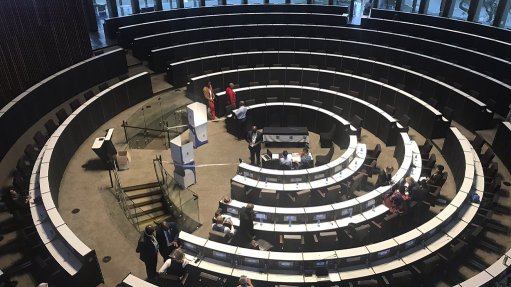
The GRRIN has been severely criticised as a vanity project, a white elephant and a waste of government finances by members of the Gauteng Legislature Portfolio Committee on Roads and Transport, which convened on August 16 to discuss the feasibility of the project.
The committee conducted a focus intervention study to investigate how the proposed expansion would address Gauteng’s public transport needs and challenges.
GMA CEO William Dachs highlighted the urgent need to expand the Gautrain network to address rapidly growing congestion on Gauteng’s road network.
He also explained the economic benefit that such an investment would have on the region and, consequently, the country.
However, numerous committee members argued that the existing Gautrain had failed to prove its value in decongesting the roads over the past decade, with some calling it a “failed project”.
The reasons for this “failure” were attributed to several factors, among them the ill-conceived placement of Gautrain stations, inadequate supporting public transport infrastructure and services, the perception that the service was not inclusive enough and that it failed to cater for lower-income groups.
The worst criticism directed towards the Gautrain and any proposed expansion thereof was the issue of its high fare prices, which are compounded by additional costs incurred by users, such as parking fees and supplementary public transport fees, including taxi or bus fares.
It was also argued that driving on the road was often faster or at least equivalent to taking the Gautrain – even with traffic congestion factored in.
The committee received several submissions from organised groups, including residents of the Sharonlea area, whose residential area falls on the proposed route of the Phase 1 expansion. They raised concerns, such as the likelihood of their land being expropriated and their homes consequently affected, as well as restricted access to essential services and schools in the area.
Other registered concerns were whether the new routes would cater for most commuters and solve public-transport challenges in the province, as well as how the Gautrain would link with other public transport modes.
The proposed financial expenditure to build the system was another matter raised by committee members, many of whom believe that the fiscus would be better steered towards upgrading and maintaining deteriorating road infrastructure or towards investments in electricity infrastructure.
Dachs responded that he did not say that new roads should not be built, but that they would not be enough.
The GMA had scheduled public engagement sessions with different categories of affected and interested stakeholders, and presented its public engagement strategy and efforts to the committee.
The GMA, however, was met with numerous complaints that feedback from the public had largely been ignored, with many different examples quoted by committee members and other members of the public who were present.
The public engagement process was called a “farce”, with committee members saying the extension would go ahead regardless of the public’s concerns because the decision to build it had already been made, and that the GMA was merely “ticking boxes”.
The focus intervention study is part of the committee’s oversight mandate under the Gauteng Department of Roads and Transport, to assess whether the extension project will solve Gauteng’s transportation problems and deliver the long-overdue relief to commuters that it promises to achieve.
The FIS is part of the committee’s comprehensive budget review process for the current financial year, through which it scrutinises all budgeted initiatives of the department to ensure that they contribute to sustainable service delivery.
Key Contracts and Suppliers
The announcements regarding key contracts and suppliers that are required for the development and implementation of the proposed extensions project will be made as the project attains key procurement milestones.
Contact Details for Project
GMA senior executive manager communication and marketing Dr Barbara Jensen, email barbaraj@gautrain.co.za.
Article Enquiry
Email Article
Save Article
To advertise email advertising@creamermedia.co.za or click here
Research Reports

Projects


Latest Multimedia


Latest News

Showroom

We supply customers with practical affordable solutions for their testing needs. Our products include benchtop, portable, in-line process control...
VISIT SHOWROOM
CMTS is a leading, well-established EC&I contractor with 37+ years of mining and industrial experience. We execute full-scope EC&I projects with...
VISIT SHOWROOM



Announcements
What's On
Subscribe to improve your user experience...
Option 1 (equivalent of R125 a month):
Receive a weekly copy of Creamer Media's Engineering News & Mining Weekly magazine
(print copy for those in South Africa and e-magazine for those outside of South Africa)
Receive daily email newsletters
Access to full search results
Access archive of magazine back copies
Access to Projects in Progress
Access to ONE Research Report of your choice in PDF format
Option 2 (equivalent of R375 a month):
All benefits from Option 1
PLUS
Access to Creamer Media's Research Channel Africa for ALL Research Reports, in PDF format, on various industrial and mining sectors
including Electricity; Water; Energy Transition; Hydrogen; Roads, Rail and Ports; Coal; Gold; Platinum; Battery Metals; etc.
Already a subscriber?
Forgotten your password?
Receive weekly copy of Creamer Media's Engineering News & Mining Weekly magazine (print copy for those in South Africa and e-magazine for those outside of South Africa)
➕
Recieve daily email newsletters
➕
Access to full search results
➕
Access archive of magazine back copies
➕
Access to Projects in Progress
➕
Access to ONE Research Report of your choice in PDF format
RESEARCH CHANNEL AFRICA
R4500 (equivalent of R375 a month)
SUBSCRIBEAll benefits from Option 1
➕
Access to Creamer Media's Research Channel Africa for ALL Research Reports on various industrial and mining sectors, in PDF format, including on:
Electricity
➕
Water
➕
Energy Transition
➕
Hydrogen
➕
Roads, Rail and Ports
➕
Coal
➕
Gold
➕
Platinum
➕
Battery Metals
➕
etc.
Receive all benefits from Option 1 or Option 2 delivered to numerous people at your company
➕
Multiple User names and Passwords for simultaneous log-ins
➕
Intranet integration access to all in your organisation
