Fuel retailers urged to diversify forecourt offerings

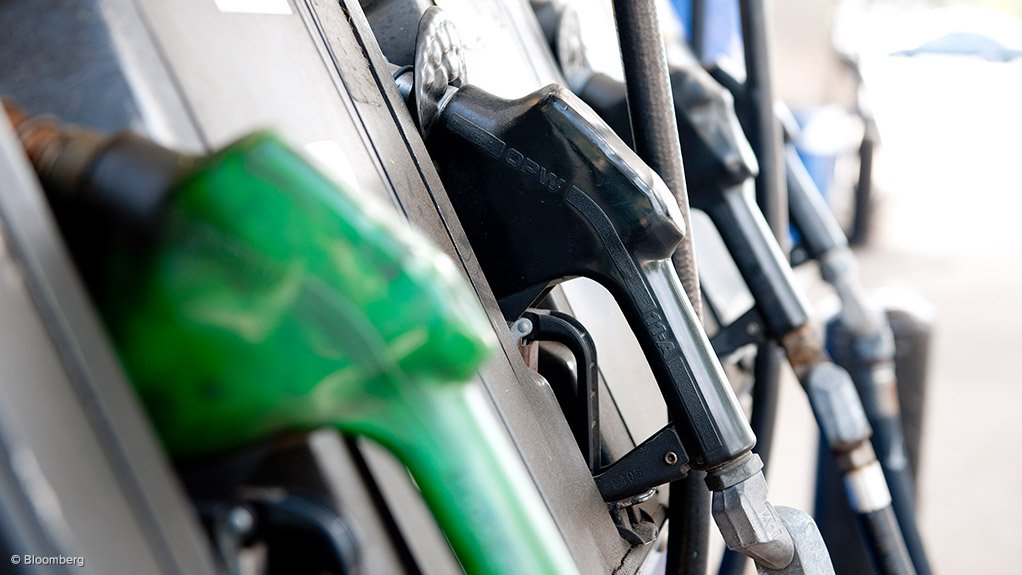



As the number of internal combustion engine (ICE) vehicles on the road declines globally and many people continue to work from home, contributing to a gradual decrease in overall fuel consumption, forecourt retailers are increasingly shifting their focus to nonfuel offerings to attract customers and drive revenue.
Forecourts are no longer viewed simply as petrol stations, but as convenience destinations that also sell fuel.
During a March 25 briefing by financial services provider Nedbank, speakers emphasised the need for diversification among forecourt retailers who can no longer rely mainly on fuel for profit generation.
Market researcher Trade Intelligence forecourt analyst Nicola Allen discussed growth opportunities in the sector, highlighting that it was valued at about R40-billion in 2024, driven by aspects such as consumer spending.
Despite an uptick in new car sales, Allen noted that fuel sales were still declining, driven by factors such as constrained economic activity that generally led to consumers opting to, for example, work from home or carpool.
Additionally, a decrease in fuel sales is also driven by newer cars being more fuel efficient.
Hence, she argued that maximising shop sales in the forecourt space was essential to achieving profitability.
“You can see why a lot of forecourt owners, who generally own the whole space, are looking to their quick service restaurants, stores [and] car washes to try and replace this shrinking revenue.”
Looking ahead, Allen discussed the uptake of electric vehicles (EVs) and the impact of that on fuel retailers.
She highlighted that traditional fuels would decline gradually over time, with EV recharging and alternative energy refuelling likely to gain traction from about 2040.
She, therefore, argued that convenience retail and adjacent services would make up an increasing share of total forecourt revenues.
Allen noted that about 80% of EV charging overseas takes place at home. She therefore said forecourts needed to provide more compelling reasons for consumers to spend their time at forecourts as they recharged their vehicles.
She acknowledged that South Africa would not be as quick to transition from ICE vehicles to EVs as other regions of the world, but expects the shift to continue over the longer term.
From 2041 to 2055, she said, revenue contributions from convenience retail and food and beverage sales could increase up to 35% as electricity recharging and alternative energy refuelling increased at forecourts.
In this vein, Nedbank National Retail franchising manager Karen Keylock emphasised the importance for fuel retailers to plan for the long term as EV adoption increases.
Keylock noted the impact of global events, such as the Iran war in the Middle East, on the local economy, as well as local risks, leading to cautious spending by consumers.
Hence, she reiterated the importance for fuel retailers to diversify their revenue streams through, for example, selecting strategic locations, investing in partnerships and embracing technology.
ECONOMIC IMPLICATIONS
Also speaking at the event, Nedbank economist Crystal Huntley outlined the broader economic context and the key factors influencing the retail industry.
She noted the potential impact of the Middle East war on the consumer in terms of aspects such as fuel price increases, depending on how long the war lasts.
She warned that geopolitical headwinds threatened the resilience of the consumer which, consequently, had implications for fuel retailers.
In 2025, Huntley noted, consumer spending was the leading driver of economic growth, supported by aspects such as declining inflation and interest rates. This supported income levels and discretionary spending which, subsequently, increased consumer confidence and demand.
She explained that inflation was expected to peak at just above 5% in April and May, whereafter it was expected to decrease to about 4.8%.
Throughout the year, she said, inflation was expected to average about 4.2% or 4.3% – above the tolerance of the South African Reserve Bank.
Thereafter, in early 2027, inflation was expected to drop below the 3% level.
Huntley warned that retailers would be navigating a more uncertain environment plagued by inflationary risk and potential supply chain disruptions, thereby leading to more weary and less confident consumers.
“What this means is that discretionary income is often squeezed. It holds implications for the size of baskets . . . and you see more of a shift to essentials, and for the retailer themselves, of course, the margin pressure will persist.”
Huntley noted that South Africa’s GDP was still expected to be about 1.5% this year, driven by softer, but still positive consumer spending and fixed investment activity.
Article Enquiry
Email Article
Save Article
Feedback
To advertise email advertising@creamermedia.co.za or click here
Research Reports

Projects


Latest Multimedia
Latest News


Showroom
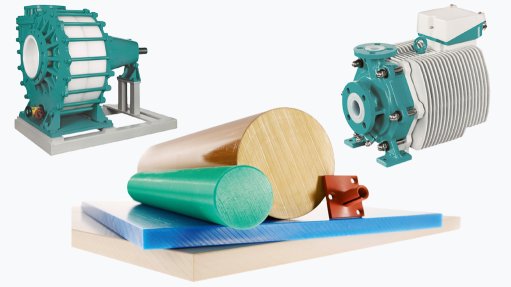
Mitsubishi Chemical Advanced Materials South Africa (Pty) Ltd is a leading manufacturer of high-performance engineering plastics for the mining...
VISIT SHOWROOM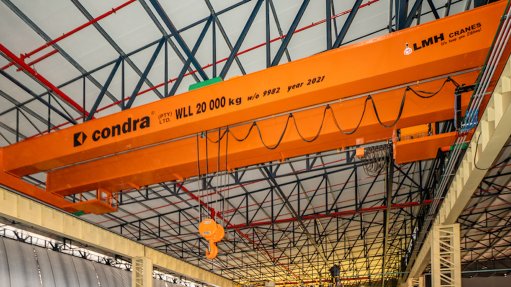
ISO-certified Condra manufactures overhead cranes, portal cranes, cantilever cranes and crane components: hoists, drives, end-carriages, brakes and...
VISIT SHOWROOM


Press Office
Announcements
What's On
Subscribe to improve your user experience...
Option 1 (equivalent of R125 a month):
Receive a weekly copy of Creamer Media's Engineering News & Mining Weekly magazine
(print copy for those in South Africa and e-magazine for those outside of South Africa)
Receive daily email newsletters
Access to full search results
Access archive of magazine back copies
Access to Projects in Progress
Access to ONE Research Report of your choice in PDF format
Option 2 (equivalent of R375 a month):
All benefits from Option 1
PLUS
Access to Creamer Media's Research Channel Africa for ALL Research Reports, in PDF format, on various industrial and mining sectors
including Electricity; Water; Energy Transition; Hydrogen; Roads, Rail and Ports; Coal; Gold; Platinum; Battery Metals; etc.
Already a subscriber?
Forgotten your password?
Receive weekly copy of Creamer Media's Engineering News & Mining Weekly magazine (print copy for those in South Africa and e-magazine for those outside of South Africa)
➕
Recieve daily email newsletters
➕
Access to full search results
➕
Access archive of magazine back copies
➕
Access to Projects in Progress
➕
Access to ONE Research Report of your choice in PDF format
RESEARCH CHANNEL AFRICA
R4500 (equivalent of R375 a month)
SUBSCRIBEAll benefits from Option 1
➕
Access to Creamer Media's Research Channel Africa for ALL Research Reports on various industrial and mining sectors, in PDF format, including on:
Electricity
➕
Water
➕
Energy Transition
➕
Hydrogen
➕
Roads, Rail and Ports
➕
Coal
➕
Gold
➕
Platinum
➕
Battery Metals
➕
etc.
Receive all benefits from Option 1 or Option 2 delivered to numerous people at your company
➕
Multiple User names and Passwords for simultaneous log-ins
➕
Intranet integration access to all in your organisation