



Commodities supercycle not dead, says Friedland, as he wows City of Gold with his dazzling platinum story


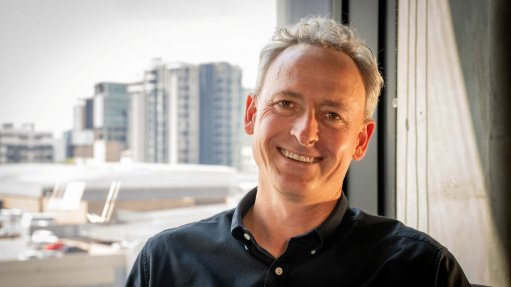
Mining entrepreneur extraordinaire Robert Friedland came to the City of Gold last week and wowed his audience with a stirring story of the richness of the South African platinum endowment.
The geological marketing wizard, whose name is associated with the Voisey’s Bay nickel development in Canada and the Oyu Tolgoi copper find in Mongolia’s Gobi desert, deliv- ered an hour-long keynote presentation in which he rolled out plans to build a promising platinum mine in the rich Platreef, close to the Mogalakwena mine, South Africa’s richest platinum operation owned by Anglo American Platinum.
The Toronto Stock Exchange-listed Ivanhoe Mines, which submitted an application for a mining licence to the Department of Mineral Resources five months ago, has well-advanced plans for a secondary listing on the JSE.
Friedland gave his presentation on day one of the Joburg 2013 Investing in Resources and Mining in Africa conference attended by the who’s who of the South African mining industry.
“Africa is potentially one of the most reward- ing places to be operating in on the planet,” said Friedland, whose Ivanhoe is also developing the Kamoa copper mine, in the Democratic Republic of Congo (DRC).
“A lot of people have been telling me that the commodity supercycle is dead. They’re completely idiotic,” he said, adding that the globe’s 7.3-billion people would rise to nine-billion people by 2030.
Also in the movie business, he revealed that Ivanhoe Pictures had teamed up with a Hollywood studio to make a futuristic movie called Copper, featuring an electrified world free of fossil-fuel burning and a commodities hunt in outer space.
Friedland, whose three decades of mining activity have spanned 50 countries, has a stated ambition of making his Flatreef project, at Mokopane, on the northern limb of the Bushveld Complex, a model twenty-first- century operation.
“We’re going to build this mechanised mine on a firm foundation with rock-solid legs,” he said, adding that the company expected to create 10 000 direct and indirect jobs through the construction and production phases.
“It’ll be safe and workers will be highly trained and very well paid,” Friedland said, promising one of the country’s broadest-based black economic-empowerment (BBBEE) deals, focused on host communities and employees.
He estimated that some 300 000 people in 17 communities would be equity participants, with BBBEE interests owning 26% of the asset and Ivanhoe Mines owning 64%.
“We’re trying to raise the bar in the way black empowerment is structured,” he said.
The Japanese, through Itochu and Jogmec, have bought 10% of the Ivanhoe platinum project for $300-million and are leading the push for the use of platinum-group metals (PGMs) in fuel-cell cars, power generation and clean industry.
A typical drill hole indicated platinum orebodies that were 24 m thick and a recent hole indicated a 90 m thickness, the height of a 30- storey building.
Fatality-free mining was the target and surgeonlike mineworkers would pave the way for the acceptability of fuel-cell cars among the celebrities of Hollywood and the like.
Ivanhoe, which planned to be producing a minimum of 500 000 oz/y of PGMs initially, expected eventual output to hit the one-million- ounce-a-year mark.
“This should become the largest platinum mine in the world,” Friedland told Mining Weekly.
Preparation was under way to sink the first shaft to a depth of 800 m at a cost of $81-million.
“We will be able to see and touch the orebody shortly,” he added.
The project, which is situated 180 km from Eskom’s 4 000 MW Medupi power station project, has taken steps to receive Eskom power.
Friedland said the company intended stimulating the local economy with enterprise devel- opment in agriculture, transport and services and was embracing the beneficiation of PGMs into marketable products.
Skills would be drawn from host communities and supported by partnerships in education.
Two University of Limpopo professors had already been introduced to the Goodman School of Mines, at Laurentian University, in Canada, to enhance the education and training prospects of Limpopo youth for employment in the mining sector.
“The world needs a sustainable mining model for the twenty-first century. There is no other way, and Ivanhoe Mines is pioneering for tomorrow,” Friedman said.
Japan’s national strategic policy was to lead the use of platinum-using fuel cells to generate electrical energy that was completely free of harmful emissions for use in homes, transportation and in industry.
“The Japanese government is encouraging the creation of a Platinum Valley here in South Africa,” Friedland told the Johannesburg conference.
Modelled on the US’s Silicon Valley, the envisaged Platinum Valley would serve as an incubator for the new uses for PGMs, with which South Africa was so richly endowed.
He said a fuel cell for a car required far more PGMs, some 30 g, compared with only about 0.15 oz of palladium for petrol engines and 0.15 oz of platinum for a diesel engine.
“An order of magnitude more platinum is required for vehicles with fuel cells,” he said, adding that Toyota Motor Company would this month unveil the first mass-market hydrogen fuel-cell automotive.
A reasonably priced fuel-cell-powered produc- tion sedan would be launched that could travel 700 km on a full tank of hydrogen, getting away from the lithium battery problem of inadequate range.
Honda had plans to introduce a fuel-cell vehicle both in the US and Canada in 2015 and Hyundai had already begun production of a fuel-cell-powered special utility vehicle.
Ford and Chrysler were pioneering a common system for the mass marketing of fuel-cell products by 2017.
“This is extremely good news for South Africa,” Friedland said.
He also flashed up a picture of a PGM-using magnetic levitation train that he said Japan Central Railway was planning to introduce as the world’s fastest train powered by linear induction motors.
A similar train was under consideration in the US for travel from New York City to Washington DC in under an hour.
“We know precisely what metals go into this train and that’s why we’re here in Africa to acquire the metals that have to go into it,” he said.
The number of people now living in cities was equal to the number living in rural areas, but, by 2050, 68% of people would be urbanised, creating strident demand for products that required PGMs and copper.
“Unlike tapering or any other temporary obsession on Wall Street, this process of urbanisation is absolutely unstoppable,” said Friedland, predicting that the emergence of the middle class in China and India would also spread to Africa.
Between now and 2020, China would increase its railway network by 54%, its airport capacity by 62% and highways by 157%, and the upper middle class would account for 56% of private urban consumption.
Friedland said existing reserves of copper would only be able to meet about a third of the world’s demand by 2030.
Much of the world’s future copper supply would have to come from the DRC, Zambia and Peru and a price of $10 000/t would be the incentive for the next wave of production growth.
Some 1.3-billion people still lived without electricity, mostly in rural villages in Asia and Africa, and electricity use was poised to expand by 70% to 32 000 terawatt hours by 2025.
Mobile phones contained 14 g of copper, electric cars 70 kg and subway cars 1 000 kg of copper.
Many copper mines were ageing and Africa was the undoubted source of future copper production as Chile depleted its resources.
Article Enquiry
Email Article
Save Article
Feedback
To advertise email advertising@creamermedia.co.za or click here
Research Reports

Projects


Latest Multimedia


Latest News

Showroom
Stewarts & Lloyds is a leading steel, tube, and engineering product supplier in South Africa.
VISIT SHOWROOM
ATI systems comprises five divisions: electrical assemblies, drives and controls, feedback sensors, enclosures, and strip guiding.
VISIT SHOWROOM



Press Office
Announcements
What's On
Subscribe to improve your user experience...
Option 1 (equivalent of R125 a month):
Receive a weekly copy of Creamer Media's Engineering News & Mining Weekly magazine
(print copy for those in South Africa and e-magazine for those outside of South Africa)
Receive daily email newsletters
Access to full search results
Access archive of magazine back copies
Access to Projects in Progress
Access to ONE Research Report of your choice in PDF format
Option 2 (equivalent of R375 a month):
All benefits from Option 1
PLUS
Access to Creamer Media's Research Channel Africa for ALL Research Reports, in PDF format, on various industrial and mining sectors
including Electricity; Water; Energy Transition; Hydrogen; Roads, Rail and Ports; Coal; Gold; Platinum; Battery Metals; etc.
Already a subscriber?
Forgotten your password?
Receive weekly copy of Creamer Media's Engineering News & Mining Weekly magazine (print copy for those in South Africa and e-magazine for those outside of South Africa)
➕
Recieve daily email newsletters
➕
Access to full search results
➕
Access archive of magazine back copies
➕
Access to Projects in Progress
➕
Access to ONE Research Report of your choice in PDF format
RESEARCH CHANNEL AFRICA
R4500 (equivalent of R375 a month)
SUBSCRIBEAll benefits from Option 1
➕
Access to Creamer Media's Research Channel Africa for ALL Research Reports on various industrial and mining sectors, in PDF format, including on:
Electricity
➕
Water
➕
Energy Transition
➕
Hydrogen
➕
Roads, Rail and Ports
➕
Coal
➕
Gold
➕
Platinum
➕
Battery Metals
➕
etc.
Receive all benefits from Option 1 or Option 2 delivered to numerous people at your company
➕
Multiple User names and Passwords for simultaneous log-ins
➕
Intranet integration access to all in your organisation
