



Extreme Light Infrastructure project, European Union

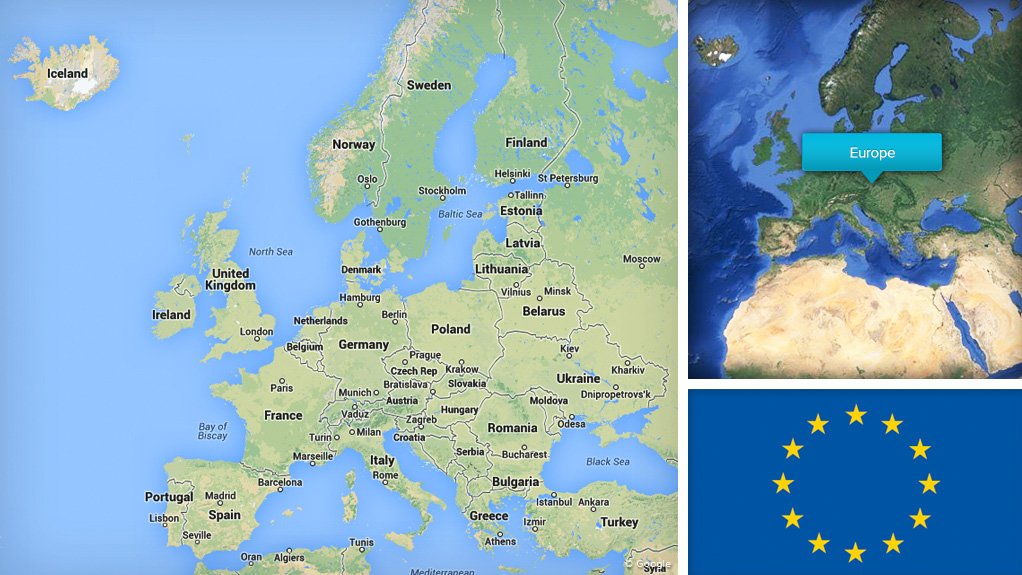


Name and Location
Extreme Light Infrastructure (ELI) project, European Union (EU).
Client
European Research Infrastructures (ELI-ERIC)
Project Description
ELI is a European project involving nearly 40 research and academic institutions from 13 EU member countries, which aims to build a pan-European Laser facility to host the most intense lasers worldwide.
The facility will be based on four sites in the eastern part of the EU.
The first facility – ELI Beamlines – will be located in the Czech Republic and will create a new generation of secondary sources for interdisciplinary applications in physics, medicine, biology and material sciences.
Experimental projects demanding ultrahigh- intensity light, like laser particle acceleration or laser generated X-ray radiation, will be mainly carried out at this facility.
The second centre – ELI Attosecond – will be developed in Hungary and will establish a unique attosecond facility, which provides light sources between THz (1012 Hz) and X-ray (1018-1019 Hz) for developers and users in the form of ultrashort pulses with a high repetition rate.
The third centre – ELI Nuclear Physics (NP) – is aimed at photonuclear physics and will be built in Romania.
It will focus on laser-based nuclear physics.
The ELI-NP will generate radiation and particle beams with much higher energies and brilliances suited to studies of nuclear and fundamental processes.
The location of the fourth research institute, devoted to nonlinear quantum electrodynamics and laboratory astrophysics, which will be able to generate 200 PW peak power laser pulses, will be decided later.
Value
The project has obtained a financial commitment of more than €700-million.
Duration
Not stated.
Latest Developments
Lawrence Livermore National Security (LLNS), led by Bechtel and the University of California, has been awarded a contract worth an estimated €34.5-million to develop and deliver a state-of-the-art laser system for the ELI Beamlines facility.
The laser system will combine sophisticated semiconductor diode laser technology with advanced optics, integrated control systems and techniques for managing the production of ultrashort pulses of light. It will be capable of reaching peak powers greater than one quadrillion watts – a petawatt – at a repetition rate of 10 Hz, with each pulse lasting for just a split second.
The system overcomes the traditional limitations of high-power lasers by means of patented technology developed for such missions as laser fusion energy.
Beginning immediately, LLNS will work with scientists from the Institute of Physics to design, develop, assemble and test the system at Lawrence Livermore National Laboratory (LLNL). After completion of qualification testing in 2016, the laser system will be transported to the ELI Beamlines facility in 2016, where it will be commissioned over a period of about 18 months.
In July this year, Thales signed a contract worth €60-million to develop a high-intensity laser system at the Horia Hulubei National Institute of Physics and Nuclear Engineering, in Magurele, near Bucharest, Romania.
The Thales laser system will generate an unprecedented power level of 2 × 10 petawatts (10E15 watts) in ultrashort pulses.
The contract is part of the ELI-NP programme.
The high-intensity laser system includes a scientific and technical training agreement between the University Politehnica of Bucharest and Thales University. The laser will be operational in 2017.
Key Contracts and Suppliers
LLNS (laser system).
On Budget and on Time?
Not stated.
Contact Details for Project Information
ELI Beamlines, tel +420 266 051 272 or email info@eli-beams.eu.
LLNL, tel +1 925 422 1100 or fax +1 925 422 1370.
Thales, Victoire Chartier, tel +33 1 57 77 90 22 or email victoire.chartier@thalesgroup.com.
Article Enquiry
Email Article
Save Article
To advertise email advertising@creamermedia.co.za or click here
Research Reports

Projects


Latest Multimedia


Showroom

Rio Carb is an OEM (Original Equipment Manufacturer) of R-C700 Chromium Carbide (CrC) alloy clad wear plates and pipes used for heavy materials...
VISIT SHOWROOM
Industrial Nozzles & Systems (Pty) Ltd (Est. 2000) exclusive representative in Southern Africa for LECHLER GmbH (Est. 1879) - Europe's leading...
VISIT SHOWROOM



Press Office
Announcements
What's On
Subscribe to improve your user experience...
Option 1 (equivalent of R125 a month):
Receive a weekly copy of Creamer Media's Engineering News & Mining Weekly magazine
(print copy for those in South Africa and e-magazine for those outside of South Africa)
Receive daily email newsletters
Access to full search results
Access archive of magazine back copies
Access to Projects in Progress
Access to ONE Research Report of your choice in PDF format
Option 2 (equivalent of R375 a month):
All benefits from Option 1
PLUS
Access to Creamer Media's Research Channel Africa for ALL Research Reports, in PDF format, on various industrial and mining sectors
including Electricity; Water; Energy Transition; Hydrogen; Roads, Rail and Ports; Coal; Gold; Platinum; Battery Metals; etc.
Already a subscriber?
Forgotten your password?
Receive weekly copy of Creamer Media's Engineering News & Mining Weekly magazine (print copy for those in South Africa and e-magazine for those outside of South Africa)
➕
Recieve daily email newsletters
➕
Access to full search results
➕
Access archive of magazine back copies
➕
Access to Projects in Progress
➕
Access to ONE Research Report of your choice in PDF format
RESEARCH CHANNEL AFRICA
R4500 (equivalent of R375 a month)
SUBSCRIBEAll benefits from Option 1
➕
Access to Creamer Media's Research Channel Africa for ALL Research Reports on various industrial and mining sectors, in PDF format, including on:
Electricity
➕
Water
➕
Energy Transition
➕
Hydrogen
➕
Roads, Rail and Ports
➕
Coal
➕
Gold
➕
Platinum
➕
Battery Metals
➕
etc.
Receive all benefits from Option 1 or Option 2 delivered to numerous people at your company
➕
Multiple User names and Passwords for simultaneous log-ins
➕
Intranet integration access to all in your organisation
