



Embedded generation investment a begrudging tonic for the economy





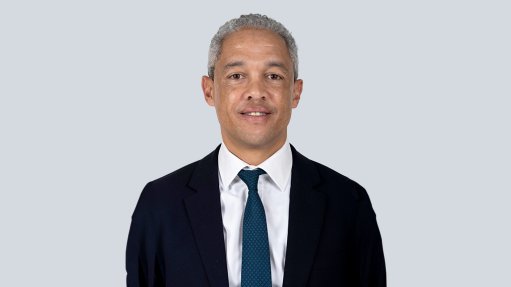
While South Africans lament having to make the grudge purchase of embedded electricity generation capacity, it has been a tonic for the economy in terms of investment, Standard Bank chief economist Goolam Ballim has said.
Speaking at Standard Bank’s headquarters, in Johannesburg, on February 9, he added that, with the level of investment in embedded electricity generation, South Africa could add up to 1 GW a year, which would equate to about one level of loadshedding reduction.
He said South Africa is undergoing enormous structural change in terms of the use of privately generated power supply in homes and businesses.
This will impact household balance sheets and change the composition of household spending, but it will also aid banks' lending, as residential power generation will likely be funded through credit, he explained.
Ballim estimated that last year's economic growth was compromised by 1.7 percentage points owing to power shortages and he thinks that it could have a similar impact on growth this year.
However, the impact is likely to be smaller this year as South Africans have recognised that self-generation is the only alternative.
“South Africans have recognised that nobody is coming,” he quipped.
South Africa had an average of 60% of generation capacity available in 2020, but in early December of last year, it plummeted to an unprecedented 49.1%.
“In other words, the public utility only had just about half of its theoretical capacity available for distribution,” Ballim noted.
Unplanned outages have become increasingly prevalent and significant, suppressing energy availability, along with a steady state of planned outages.
“What is also quite troubling is that, within that unplanned outage prism, it is not, as one would have initially expected, just the failure of old units. Rather, the disturbing element is that it is also the newer infrastructure that is not functioning,” Ballim said, referring to the Kusile and Medupi power stations.
Amid these economic circumstance, middle-income South Africans are straining more than anyone else owing to the expenses of investing in embedded generation or backup power supplies, coupled with modest income growth and the inability to rely on either recent or historical savings.
Ballim noted that, by contrast, low-income individuals have benefited from the social welfare net, particularly the Special Covid-19 Social Relief of Distress grant, while high-income individuals were more stable as a function of their greater wealth.
South Africa's power supply woes have weighed heavily on the goods-producing industries, causing a drop in production figures, while the retail industry has also been taking strain.
However, the services sector is showing some optimism in the wake of the pandemic, Ballim noted.
The unstable power supply has also been partly responsible for a steady rise in emigration over the past ten years.
“Even though the number of individuals financially emigrating is less than 8 000 thus far and the amount that those individuals who would have otherwise paid in personal income taxes amounts to less than R1-billion, emigration is a thing that starts off slow and then suddenly creeps up, hollowing out the tax system,” he said.
Ballim noted that South Africa's tax system was resting on a pinhead, with not much more than 350 000 individuals accounting for about 42% of overall personal income taxes.
He said Standard Bank viewed the emigration trend as a serious concern, noting that it was not just individuals leaving who threatened South Africa’s tax system, but their children as well, who would otherwise have been future resources to the economy, but were now also removed from the South African economic system.
“This speaks to a multi-generational hollowing out of, and an intertemporal risk to, public finances that needs to be arrested,” he said.
Article Enquiry
Email Article
Save Article
Feedback
To advertise email advertising@creamermedia.co.za or click here
Research Reports

Projects


Latest Multimedia


Latest News
Showroom

Sulzer South Africa, established in 1922, partners with critical industries like power, oil & gas, water, mining, and chemicals to boost...
VISIT SHOWROOM
Leading condition monitoring specialists, WearCheck, help boost machinery lifespan and reduce catastrophic component failure through the scientific...
VISIT SHOWROOM



Press Office
Announcements
What's On
Subscribe to improve your user experience...
Option 1 (equivalent of R125 a month):
Receive a weekly copy of Creamer Media's Engineering News & Mining Weekly magazine
(print copy for those in South Africa and e-magazine for those outside of South Africa)
Receive daily email newsletters
Access to full search results
Access archive of magazine back copies
Access to Projects in Progress
Access to ONE Research Report of your choice in PDF format
Option 2 (equivalent of R375 a month):
All benefits from Option 1
PLUS
Access to Creamer Media's Research Channel Africa for ALL Research Reports, in PDF format, on various industrial and mining sectors
including Electricity; Water; Energy Transition; Hydrogen; Roads, Rail and Ports; Coal; Gold; Platinum; Battery Metals; etc.
Already a subscriber?
Forgotten your password?
Receive weekly copy of Creamer Media's Engineering News & Mining Weekly magazine (print copy for those in South Africa and e-magazine for those outside of South Africa)
➕
Recieve daily email newsletters
➕
Access to full search results
➕
Access archive of magazine back copies
➕
Access to Projects in Progress
➕
Access to ONE Research Report of your choice in PDF format
RESEARCH CHANNEL AFRICA
R4500 (equivalent of R375 a month)
SUBSCRIBEAll benefits from Option 1
➕
Access to Creamer Media's Research Channel Africa for ALL Research Reports on various industrial and mining sectors, in PDF format, including on:
Electricity
➕
Water
➕
Energy Transition
➕
Hydrogen
➕
Roads, Rail and Ports
➕
Coal
➕
Gold
➕
Platinum
➕
Battery Metals
➕
etc.
Receive all benefits from Option 1 or Option 2 delivered to numerous people at your company
➕
Multiple User names and Passwords for simultaneous log-ins
➕
Intranet integration access to all in your organisation
