Deputy Minister highlights progress at a local level of climate policy framework

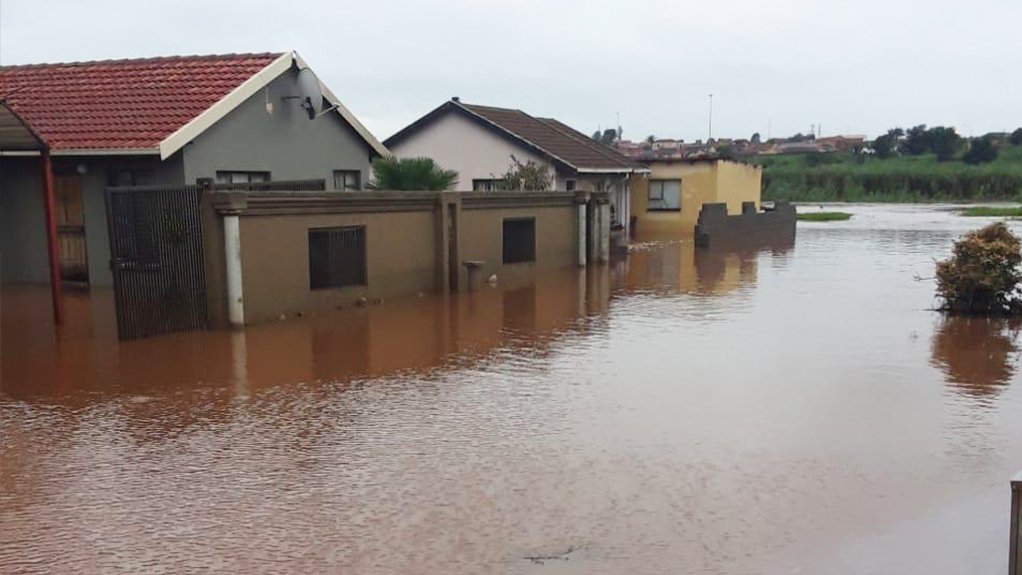
With rising levels of floods being experienced, government must provide planning and regulation, municipalities must enforce and guide development and communities must take responsibility for where and how they settle


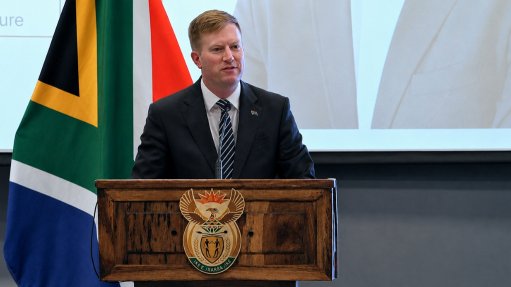
Forestry, Fisheries and the Environment Deputy Minister Narend Singh has welcomed the launch of the South African Local Government Association - Adaptation Climate Foundation-funded Climate Action Planning Support Project.
Speaking at an engagement convened at the launch, under the theme “From Policy to Practice”, Singh highlighted that partnerships such as these were essential instruments that enabled government to translate policy into practice, and commitments into measurable outcomes at the local level.
He pointed out that the country had made significant progress in developing robust climate policy frameworks.
The Department of Forestry, Fisheries and the Environment (DFFE) is actively advancing the implementation of the Climate Change Act, starting with the process of developing the National Climate Change Adaptation Scenarios.
These scenarios would be consulted on to ensure they reflected the realities faced by communities across urban, rural and coastal environments, Singh pointed out.
The department had also developed technical guidelines to support different spheres of society to undertake their adaptation needs and response assessments, as well as corresponding climate change response plans required by the Act, he averred.
The DFFE will also embark on the development of national adaptation objectives and associated indicators to guide adaptation planning and measure implementation progress.
“These objectives will galvanise all sections of society into action and unlock the implementation of adaptation interventions across sectors,” Singh acclaimed.
He informed that the department, as the environmental lead, together with sector partners, had endorsed a Local Government Support Strategy for the Medium Term Development Plan period of 2024/25 to 2028/29.
It is anchored on four key objectives, namely improving municipal institutional capacity to perform environmental management functions; improving funding of environmental functions in municipalities; strengthening law enforcement at municipal level; and ensuring municipalities respond effectively to climate change.
It aims to support 44 district municipalities in developing climate change response implementation plans that reflect the realities of their local municipalities and are formally adopted by councils.
In addition, 25 municipalities would be supported in developing climate change proposals to access funding, recognising that implementation was often constrained by limited financial resources, Singh pointed out.
The department is also working to ensure that at least 50% of municipalities effectively use early warning systems.
Meanwhile, to address rising unemployment, the DFFE has also undertaken a Municipal Capacity Analysis Study, which revealed significant capacity constraints faced by municipalities in implementing environmental management functions as required by legislation.
In response, the department launched the Environmental Graduate Programme under the Expanded Public Works Programme.
This programme targets environmental graduates with no prior work experience, placing them within municipalities to provide support while enabling them to gain practical workplace experience.
To date, the programme has employed over 3 000 graduates across municipalities in South Africa.
It is funded at over R200-million within the current medium term expenditure framework period.
With rising levels of floods being experienced, Singh also stressed the importance of preventing communities from settling in high-risk areas. He said government must provide planning and regulation, municipalities must enforce and guide development and communities must take responsibility for where and how they settled.
Moreover, to mitigate the impacts of the increasing wildfires in the Western Cape in recent years, municipalities worked collaboratively with South African National Parks and other stakeholders to implement interventions, underscoring the importance of a coordinated response mechanism, Singh highlighted.
He mentioned that the department had committed to support 20 district municipalities this financial year in undertaking detailed needs assessments with the view to developing corresponding response plans to ensure the full implementation of the Climate Change Act.
“Town and spatial planning remains one of the most effective tools to reduce climate risk and prevent avoidable disasters. . . In this regard, Salga plays an important supporting role by strengthening municipal capacity, promoting best practices, and ensuring alignment with national frameworks. In doing so, it shifts our approach from reacting to disasters to proactively preventing them,” Singh averred.
He also noted the importance of environmental-impact assessments (EIAs) in ensuring that development decisions accounted for climate risks.
The department had improved the efficiency of EIA processes while maintaining environmental safeguards, supported by Climate Change EIA Guidelines, Sigh informed.
“In cases of climate-induced disasters, the department issues directives under the National Environmental Management Act to enable rapid response and recovery efforts aimed at protecting lives, property and the environment,” he highlighted.
Article Enquiry
Email Article
Save Article
Feedback
To advertise email advertising@creamermedia.co.za or click here
Research Reports
Projects
Latest Multimedia

Latest News

Showroom

The SAIMM started as a learned society in 1894 after the invention of the cyanide process that saved the South African gold mining industry of the...
VISIT SHOWROOM
Columbus Stainless, based in Middelburg, Mpumalanga, is Africa’s only producer of stainless steel flat products. In addition, Columbus is the only...
VISIT SHOWROOM


Press Office
Announcements
What's On
Subscribe to improve your user experience...
Option 1 (equivalent of R125 a month):
Receive a weekly copy of Creamer Media's Engineering News & Mining Weekly magazine
(print copy for those in South Africa and e-magazine for those outside of South Africa)
Receive daily email newsletters
Access to full search results
Access archive of magazine back copies
Access to Projects in Progress
Access to ONE Research Report of your choice in PDF format
Option 2 (equivalent of R375 a month):
All benefits from Option 1
PLUS
Access to Creamer Media's Research Channel Africa for ALL Research Reports, in PDF format, on various industrial and mining sectors
including Electricity; Water; Energy Transition; Hydrogen; Roads, Rail and Ports; Coal; Gold; Platinum; Battery Metals; etc.
Already a subscriber?
Forgotten your password?
Receive weekly copy of Creamer Media's Engineering News & Mining Weekly magazine (print copy for those in South Africa and e-magazine for those outside of South Africa)
➕
Recieve daily email newsletters
➕
Access to full search results
➕
Access archive of magazine back copies
➕
Access to Projects in Progress
➕
Access to ONE Research Report of your choice in PDF format
RESEARCH CHANNEL AFRICA
R4500 (equivalent of R375 a month)
SUBSCRIBEAll benefits from Option 1
➕
Access to Creamer Media's Research Channel Africa for ALL Research Reports on various industrial and mining sectors, in PDF format, including on:
Electricity
➕
Water
➕
Energy Transition
➕
Hydrogen
➕
Roads, Rail and Ports
➕
Coal
➕
Gold
➕
Platinum
➕
Battery Metals
➕
etc.
Receive all benefits from Option 1 or Option 2 delivered to numerous people at your company
➕
Multiple User names and Passwords for simultaneous log-ins
➕
Intranet integration access to all in your organisation