



Deeper fiscal integration key to Eurozone bounce back

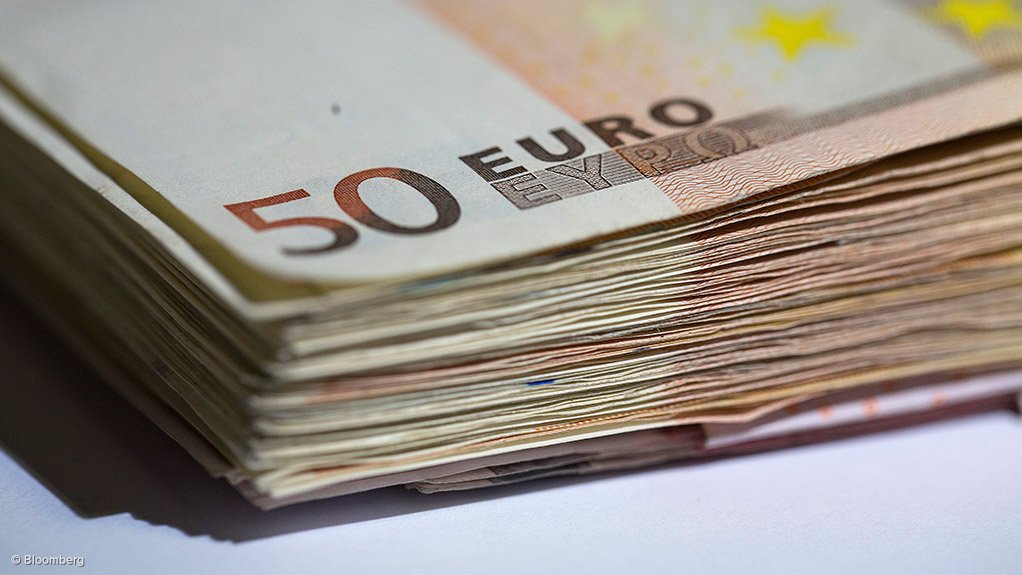



Deeper integration in the areas of public finances, the banking system and capital markets within the volatile Eurozone could go a long way in enhancing the stability of the monetary union, Deutsche Bundesbank executive Dr Andreas Dombret said on Friday.
While a European fiscal union was currently an “unrealistic vision”, the region had taken a major step towards integration after promoting banking supervision from the national level to the European level through the establishment of a banking union.
The European Central Bank (ECB) in November assumed responsibility for supervising 123 of the largest banks in the European region.
“The banking union is certainly the biggest step towards financial integration in Europe since the launch of the euro in 1999. To me, it is the most logical step to take,” Dombret said at a South African Institute of International Affairs speakers meeting, in Johannesburg.
The final step of the banking union would be the implementation, in January 2016, of a single supervisory mechanism, supplemented by a European resolution for banks, which would deal with future bank failures and limiting the impact on the taxpayer.
The next big move would be for Europe to establish a capital markets union, which would improve risk-sharing and serve as a buffer to absorb economic shocks, while improving access to funding for small and medium-sized enterprises and supporting economic growth and stability in Europe.
The proposed European capital markets union aimed to supplement bank-based funding with capital markets-based funding and integrate capital markets more closely across the entire European Union, explained Dombret.
“In the end, it comes down to the uncontested argument of diversification,” he stated.
The European commission aimed to establish the capital markets union by 2019.
“To be sure, these are all big steps but, in my view, they are worth taking,” he said, adding that it was, however, unrealistic to expect fiscal integration, despite the opportunities and benefits presented.
The fiscal union would depend on the countries of the Eurozone transferring national sovereignty to the European level.
Currently, each of the 19 countries in the region decided their own fiscal policies, while the ECB Governing Council, in Frankfurt, directed the single monetary policy for member States, an imbalance that enabled a “deficit bias” in the system.
“Giving up sovereignty in this way would be a radical change and require wide-ranging changes to national and European legislation. More than anything, such changes would need the support not only of policymakers but that of the general public,” he explained.
Further, there was no willingness to pursue the shift, particularly as many believed that Greece’s return to the spotlight and the ECB’s renewed quantitative easing programme to mitigate the lingering effects of the Eurocrisis were an indication that financial integration in Europe had failed.
“This means that, for the foreseeable future, [the] control of fiscal policy in Europe will remain at the national level,” Dombret concluded.
Article Enquiry
Email Article
Save Article
Feedback
To advertise email advertising@creamermedia.co.za or click here
Research Reports

Projects


Latest Multimedia


Latest News
Showroom
Established in 1933, EKATO is the world leader in agitation technology, supplying agitators for processes and applications such as chemicals and...
VISIT SHOWROOM
Multotec, recognised industry leaders in metallurgy and process engineering help mining houses across the world process minerals more efficiently,...
VISIT SHOWROOM



Press Office
Announcements
What's On
Subscribe to improve your user experience...
Option 1 (equivalent of R125 a month):
Receive a weekly copy of Creamer Media's Engineering News & Mining Weekly magazine
(print copy for those in South Africa and e-magazine for those outside of South Africa)
Receive daily email newsletters
Access to full search results
Access archive of magazine back copies
Access to Projects in Progress
Access to ONE Research Report of your choice in PDF format
Option 2 (equivalent of R375 a month):
All benefits from Option 1
PLUS
Access to Creamer Media's Research Channel Africa for ALL Research Reports, in PDF format, on various industrial and mining sectors
including Electricity; Water; Energy Transition; Hydrogen; Roads, Rail and Ports; Coal; Gold; Platinum; Battery Metals; etc.
Already a subscriber?
Forgotten your password?
Receive weekly copy of Creamer Media's Engineering News & Mining Weekly magazine (print copy for those in South Africa and e-magazine for those outside of South Africa)
➕
Recieve daily email newsletters
➕
Access to full search results
➕
Access archive of magazine back copies
➕
Access to Projects in Progress
➕
Access to ONE Research Report of your choice in PDF format
RESEARCH CHANNEL AFRICA
R4500 (equivalent of R375 a month)
SUBSCRIBEAll benefits from Option 1
➕
Access to Creamer Media's Research Channel Africa for ALL Research Reports on various industrial and mining sectors, in PDF format, including on:
Electricity
➕
Water
➕
Energy Transition
➕
Hydrogen
➕
Roads, Rail and Ports
➕
Coal
➕
Gold
➕
Platinum
➕
Battery Metals
➕
etc.
Receive all benefits from Option 1 or Option 2 delivered to numerous people at your company
➕
Multiple User names and Passwords for simultaneous log-ins
➕
Intranet integration access to all in your organisation
