


Company Announcement: Custom-Engineered Pontoons Increase Accessibility to Dewatering Operations


The advantages of pontoons for the dewatering of open pit operations have become apparent to a number of mines throughout South Africa and into the rest of the continent. This increased awareness is a direct result of a robust marketing campaign initiated by Weir Minerals Africa, which has highlighted the many cost and efficiency benefits of this technology to the local market. “By continually sharing information on pontoon technology and its applications with our customers, we’ve seen a sharp growth in demand for our pontoons.” Weir Minerals Africa’s rental and submersible manager, Howard Jones, says. “This is in line with the growth of our entire dewatering division and underlines the popularity of African-engineered technology.”
Weir Minerals Africa’s design centre, one of three design centres within the global Weir Group plc, has customised the design of pontoons produced by its Australian counterparts to suit African conditions. “There is an unprecedented need for more cost effective and operationally efficient dewatering solutions in the African mining industry,” Jones adds. “Conventional dewatering solutions are less effective and require expensive civil works, whereas pontoons are installed at the source, making pumping more efficient. Another major advantage is being able to migrate the pump wherever it is needed, compared to the alternative, in which a new pump station would have to be developed.
Built to endure
In its approach to the design of the pontoons, Weir Minerals Africa has factored in the harsh conditions found on mine sites. “Pump pontoons not only need to be impervious to corrosion, but also need to be stable and rigid. During the re-engineering of specific pontoons for the African market, we simultaneously broadened the product offering for use in other regions such as Russia, South America and Australia,” says Weir Minerals Africa dewatering manager, Ian Farquhar.
Farquhar points out that in addition to extensive input from its mechanical engineers, the company seconded the services of structural engineers to ensure the structural integrity of the pontoons. “When manufacturing each pontoon, we first address the specific needs of each site and we are then able to ascertain the best materials of construction for that application. As a result of our fit-for-purpose design, Weir Minerals Africa has become one of three global design centres of excellence in the Weir Minerals division for pontoons.”
Construction materials vary from complete steel pontoon barges to linear low density polyethylene flotation devices with steel frames for lighter applications, where mobility from one pond to another is required. The designs can handle most Weir Minerals pump offerings, with a load bearing capacity from 500 kg to 10 t, including the structure. The floating walkway holds the cable and piping from the docking station to the shore and provides ready access to the pumps. Jones says that while the majority of the pontoons used in Africa are medium sized units, Weir Minerals Africa has the ability to produce units for larger applications which can include workshops and sleeping quarters for personnel.
Farquhar explains that consultation with customers is critical to the success of the dewatering application. “Weir Minerals Africa believes that rather than changing the operation to fit the pontoon design, the pontoon should be designed to accommodate the dewatering application. We leverage the knowledge and experience our team has gained to ensure that maximised productivity is the result.” “We have a standard range of fully engineered pontoons which can cater for run-of-the-mill pond dewatering applications such as submersible and diesel driven sets. Our pontoons range up to 10 metres in length and 5 metres in width. In addition, our engineered solutions can accommodate extended walkways. Our larger barges can cater for large ponds, dams and alluvial sea applications, as well as situations where harbours or tailings dams require desilting,” says Jones.
In addition to their use in open pit dewatering, the pontoons are suitable for dewatering applications in which migration of containment ponds takes place in line with rainfall, or for alluvial applications. The large pontoon can also be used in acid mine drainage (AMD) applications for dewatering underground shafts. Diesel driven self-priming pumps, installed on lightweight pontoons, are used for desilting settling tanks and dams in the platinum and iron ore industries.
“We can refer to a number of successful installations where mines have benefited from a holistic dewatering system design. One such application involves pumping process water back to the plant and containing the levels of cyanide tainted water to prevent spillage, thus ensuring that the mine meets environmental requirements. This installation includes three pontoons and a docking station. Each lightweight pontoon is 7.5 metres long, 4.5 metres wide, weighs 10 t and is equipped with Warman® 8/6AH pumps coupled to 185 kW electric motors for automatic operation,” says Farquhar.
In a coal application in Mpumalanga, Weir Minerals Africa mounted a horizontal split case pump, coupled to a 450 kW motor, on an 18 t steel pontoon which incorporates a standard seaborne interceptor type priming system. This flood control application operates 365 days a year. Longevity and durability are important factors in the selection of a pontoon. The initial construction of the pontoon obviously plays a critical role. “Our extensive rental fleet of pontoons are tried in the field before we deploy them. This is complemented by a proactive maintenance programme provided by Weir Minerals Africa’s sales and service centres throughout Africa,” adds Jones.
“We can cite a pontoon that we installed at a gold mine in Ghana which has been in continuous operation for two and a half years. The pontoon is ideally suited to its application and has been maintained in accordance with a strict proactive regime to ensure maximised lifespan,” says Jones.“We are continually innovating to provide solutions for our customers’ changing needs, thus ensuring the growth and sustainability of our pontoons business. We are currently engineering a product for the desilting of small craft harbours, as well as assisting in the desilting of major ports,” Farquhar concludes.
WEBSITE: www.weirminerals.com
Article Enquiry
Email Article
Save Article
Feedback
To advertise email advertising@creamermedia.co.za or click here
Research Reports

Projects


Latest Multimedia


Latest News


Showroom

Sika South Africa is a trusted partner for the nation’s infrastructure, commercial, residential, and industrial sectors.
VISIT SHOWROOM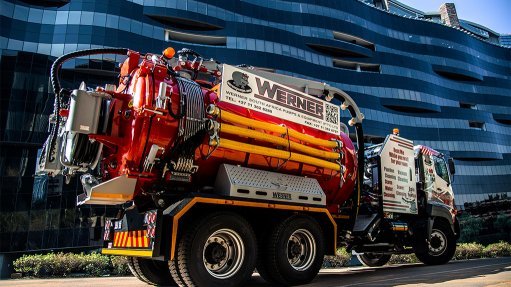
For over 30 years, Werner South Africa Pumps & Equipment (PTY) LTD has been designing, manufacturing, supplying and maintaining specialist...
VISIT SHOWROOM



Press Office
Announcements
What's On
Subscribe to improve your user experience...
Option 1 (equivalent of R125 a month):
Receive a weekly copy of Creamer Media's Engineering News & Mining Weekly magazine
(print copy for those in South Africa and e-magazine for those outside of South Africa)
Receive daily email newsletters
Access to full search results
Access archive of magazine back copies
Access to Projects in Progress
Access to ONE Research Report of your choice in PDF format
Option 2 (equivalent of R375 a month):
All benefits from Option 1
PLUS
Access to Creamer Media's Research Channel Africa for ALL Research Reports, in PDF format, on various industrial and mining sectors
including Electricity; Water; Energy Transition; Hydrogen; Roads, Rail and Ports; Coal; Gold; Platinum; Battery Metals; etc.
Already a subscriber?
Forgotten your password?
Receive weekly copy of Creamer Media's Engineering News & Mining Weekly magazine (print copy for those in South Africa and e-magazine for those outside of South Africa)
➕
Recieve daily email newsletters
➕
Access to full search results
➕
Access archive of magazine back copies
➕
Access to Projects in Progress
➕
Access to ONE Research Report of your choice in PDF format
RESEARCH CHANNEL AFRICA
R4500 (equivalent of R375 a month)
SUBSCRIBEAll benefits from Option 1
➕
Access to Creamer Media's Research Channel Africa for ALL Research Reports on various industrial and mining sectors, in PDF format, including on:
Electricity
➕
Water
➕
Energy Transition
➕
Hydrogen
➕
Roads, Rail and Ports
➕
Coal
➕
Gold
➕
Platinum
➕
Battery Metals
➕
etc.
Receive all benefits from Option 1 or Option 2 delivered to numerous people at your company
➕
Multiple User names and Passwords for simultaneous log-ins
➕
Intranet integration access to all in your organisation
