



Collective efforts in the perfect economic storm


If you are old enough or are a keen television watcher, you will remember the acclaimed 1990s television series, Dream On, which centres on the life of a book editor whose consciousness is greatly impacted on by television. When confronted with life’s daily challenges, he would rely on flashback clips from old movies and television programmes to find an explanation. The series preceded the creators’ phonemically successful television series, Friends.
Occasionally, I too lapse into movie and television memories of my own, usually in reminiscence. When writing this week’s column, I recalled two movies whose link, unbeknown to me at the time, is through an actor, who, I have little doubt, is not known to you too – Bruce Mahler.
In the original Police Academy movie, released in 1984 (there were, eventually, way too many), he plays Sergeant Fackler. In one scene, he is in a police patrol car in a very rough and dangerous downtown neighbourhood, where law and order is not appreciated. He is alone, awaiting the return of his partner, who, on his return, gives Fackler an apple, while he himself tucks into a succulent burger. Fackler looks at the apple for a while, says “Thanks”, and proceeds to throw it out of the departing patrol car’s window, hitting a gang member at the back of the head. On swinging around, the man spots a member of a rival gang carrying a bag of apples and devouring one. This causes an immediate confrontation, which, inevitably, turns violent. More and more people get involved in the ruction, which eventually becomes a full-blown riot.
In the meantime, Fackler arrives back at police headquarters and, on stepping out of the patrol car, enquires of two fellow officers: “Hey, did you hear the news on the radio? A riot broke out in downtown.”
“No,” they respond, “How come?”
“Who knows how these things get started,” Fackler responds while walking away. In the background, the police address system instructs all officers to put on their riot gear in preparation for an engagement with the rioters.
Mahler, who did not appear (star is too strong a word) in a great many movies, did appear in the The Perfect Storm, released in 2000. It is a biographical disaster drama adaptation of a 1997 nonfiction book of the same name, which tells the story of the Andrea Gail, a commercial fishing vessel that was lost at sea with all hands after being caught in the Perfect Storm of 1991. This storm was the combination of a tropical system and a nontropical system that collectively created a massive (mega) storm by feeding off each other, providing the stimulus to each other to continue and to intensify, thus causing massive destruction, which, otherwise, would not have been the case.
The scenes from the Police Academy and The Perfect Storm resonate with me, considering the present state of the South African economy. That South Africa is in the pathway of a perfect economic storm is indisputable and, depending on the commentator, the storm is in the process of formation or gaining momentum, is about to unleash itself or its first salvo has already hit.
What irks me no end is that there are many Sergeant Facklers in South Africa, who are evidently unable or unwilling to acknowledge, comprehend and appreciate their individual contribution to the creation of South Africa’s perfect economic storm. Humble their contributions are anything but. The names of those responsible are not as important as their enduring deeds. Do I believe that they really care, or have any remorse? I fear not. This is simply the case because blame is easily attributed elsewhere, with the past the favourite scapegoat.
The economy of present-day South Africa is characterised by a myriad of ever-intensifying, self-crafted and home-grown economic challenges – internal challenges. The most prominent are the deindustrialisation (also read ‘destruction’) of the manufacturing sector, the shrinking mining sector, electricity constraints, water constraints, the bloated government service (at all levels, including parastatals), declining educational standards and declining tourist numbers.
For convenience sake, however, all South Africa’s economic ills are generally blamed on external challenges, supplemented with a healthy dose of the legacies of the past.
Let us consider these elements.
Deindustrialisation is in part attributable to South Africa’s post-1994 excessive tariff liberalisation, which led to the country exceeding its General Agreement on Tariff and Trade (GATT) commitments, a practice that is referred to as ‘being holier than GATT’. This policy was implemented in the absence of a comprehensive industrial policy to support ‘winners’, restructure ‘losers’ and cushion the socioeconomic impact of adjustment arising from overhasty liberalisation. It was only 13 years later that Cabinet adopted the National Industrial Policy Framework (NIPF), in January 2007, and the first iteration of its ‘calling all pockets’ Industrial Policy Action Plan (Ipap) followed in August 2007. For his part, Moeletsi Mbeki, in Architects of Poverty, contends that black economic empowerment and its ‘cousins’, affirmative action and affirmative procurement, are the root causes of the deindustrialisation of South Africa. Have you ever wondered what it is that South Africa still ‘manufactures’? (no, not ‘assembles’.) There is the motor assembly industry, whose demise, if it materialises, will cost 670 000 jobs and 6% of the country’s gross domestic product.
Is the vehicle assembly industry’s demise impossible? Well, the 90-year-old Australian vehicle-assembly industry, on which South Africa based its programme, will be no more in 2017. If it was not for the Southern African Customs Union (Sacu), South Africa would, without exception, have recorded monthly merchandise trade balance deficits. Excluding the Sacu region, South Africa’s merchandise trade balance deficit for the year to date is R147.76-billion, with R31.22-billion for October alone. The release of the October deficit resulted in the rand recording its lowest-ever level against the US dollar.
Some might argue that South Africa’s competence lies in providing services. Well, consider the state of South Africa’s education system. Does outcome-based education, introduced in the late 1990s, still resonate with you? The World Economic Forum Global Information Technology Report 2015 ranks the quality of South Africa’s mathematics and science education as the worst in the world and the overall quality of its education system close to last – at 139 out of 143 countries.
Then there is the beleaguered mining sector, which, according to Economic Development Minister Ebrahim Patel, is in “dire straits” – to the extent that “government needs to boost other sectors to lessen the fallout”. According to gold mining companies, their production has halved to around 168 t in the past decade, with employment levels declining by around 30%. The South African Chamber of Mines recently announced that 50% of mining operations were making losses and foreign direct investment (FDI) was proving increasingly difficult to attract. In 2013, mining accounted for 14% of FDI, compared with 25% in 2010. Investors are apparently put off by a 7% royalty tax on unrefined minerals and the Mining Charter’s requirement that 26% of mining companies’ equity be owned by black South Africans.
With regard to the country’s electricity constraints, which are well known, the South African Institute of Race Relations stated in a recent report that one of the reasons for the electricity crisis is that government prohibited Eskom from building power stations in 1998. The Medupi power station, which has been plagued by delays, had its first operating unit coming into service on August 23.
One of the factors responsible for the water constraints is the fact that, since 1994, South Africa has built only one dam, the De Hoop dam, which was officially opened on March 24, 2014. Its completion was said to have been delayed by supply chain problems, technical and equipment problems, deficient environmental- impact studies, the need for resettlement and labour strikes. During a hearing of Parliament’s Portfolio Committee on Water Affairs, on January 27, 2011, it was reported that well over a third of the major dams (161 of 259) owned and managed by the Department of Water Affairs were in need of repair. The rehabilitation work required on 96 of the 161 dams was due to “inadequate maintenance eventually resulting in dam safety problems”.
Turning to South Africa’s 1.4-million-strong civil service – which includes 306 deputy directors-general, 41 directors-general and 1 233 chief directors – in the 2014 financial year, its salary bill was R392-billion. A director- general could earn up to R1.7-million a year, a deputy director-general’s salary started at R1.2-million a year and a chief director could earn up to R1.1-million. Public servants’ salaries, on average, now exceed those of private- sector employees.
To those believing in tourism as the next big thing – well, statistics from the first quarter of 2015 show that South African tourism is in crisis, with a 6% drop in total foreign tourist arrivals, the biggest since 2009. This was due to the introduction of the ill-conceived 2015 visa requirements, which are currently under review. But the damage has been done.
All this reminds me of an old German story of Eulenspiegel, a trickster and practical joker who once bemoaned his fate. “The whole world hates me,” he sighs, hastily adding: “But it is due to my own making.”
Article Enquiry
Email Article
Save Article
Feedback
To advertise email advertising@creamermedia.co.za or click here
Research Reports

Projects


Latest Multimedia


Latest News
Showroom
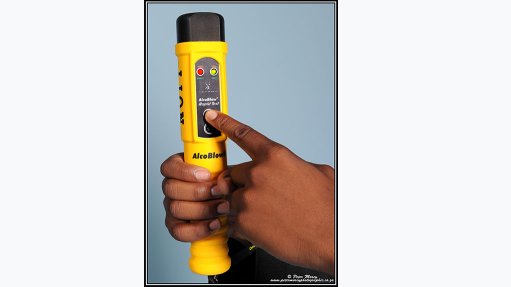
Developed to exceed the latest EN 15964 standards for police breathalysers proving that it will remain accurate and reliable for many years to come.
VISIT SHOWROOM
As a reticulator, Egoli Gas provides natural gas to homes and businesses via underground pipes.
VISIT SHOWROOM


Announcements
What's On
Subscribe to improve your user experience...
Option 1 (equivalent of R125 a month):
Receive a weekly copy of Creamer Media's Engineering News & Mining Weekly magazine
(print copy for those in South Africa and e-magazine for those outside of South Africa)
Receive daily email newsletters
Access to full search results
Access archive of magazine back copies
Access to Projects in Progress
Access to ONE Research Report of your choice in PDF format
Option 2 (equivalent of R375 a month):
All benefits from Option 1
PLUS
Access to Creamer Media's Research Channel Africa for ALL Research Reports, in PDF format, on various industrial and mining sectors
including Electricity; Water; Energy Transition; Hydrogen; Roads, Rail and Ports; Coal; Gold; Platinum; Battery Metals; etc.
Already a subscriber?
Forgotten your password?
Receive weekly copy of Creamer Media's Engineering News & Mining Weekly magazine (print copy for those in South Africa and e-magazine for those outside of South Africa)
➕
Recieve daily email newsletters
➕
Access to full search results
➕
Access archive of magazine back copies
➕
Access to Projects in Progress
➕
Access to ONE Research Report of your choice in PDF format
RESEARCH CHANNEL AFRICA
R4500 (equivalent of R375 a month)
SUBSCRIBEAll benefits from Option 1
➕
Access to Creamer Media's Research Channel Africa for ALL Research Reports on various industrial and mining sectors, in PDF format, including on:
Electricity
➕
Water
➕
Energy Transition
➕
Hydrogen
➕
Roads, Rail and Ports
➕
Coal
➕
Gold
➕
Platinum
➕
Battery Metals
➕
etc.
Receive all benefits from Option 1 or Option 2 delivered to numerous people at your company
➕
Multiple User names and Passwords for simultaneous log-ins
➕
Intranet integration access to all in your organisation
