



Civil society key to advancing democratic change in Africa – Kgalema Motlanthe

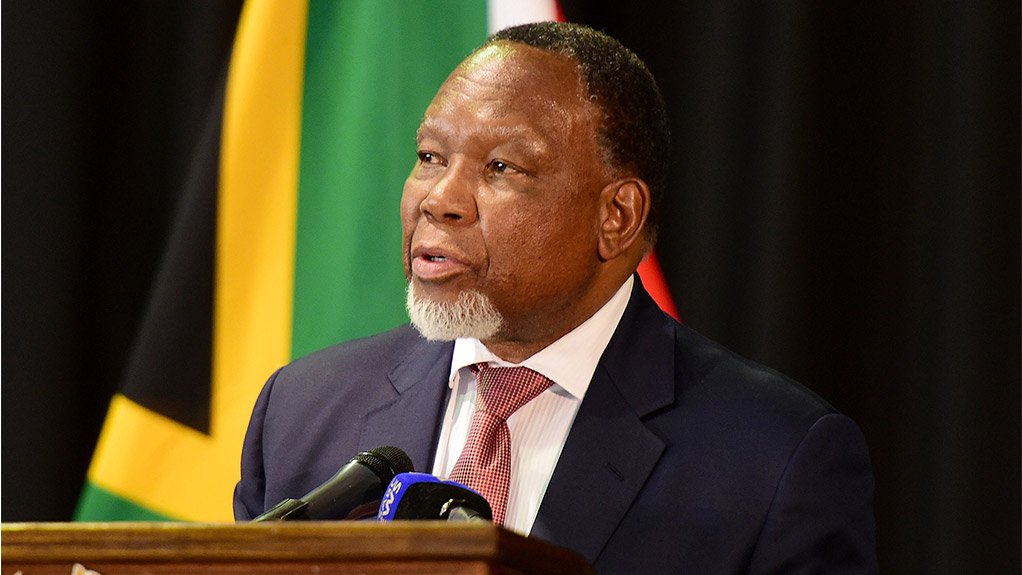


Former President Kgalema Motlanthe said on Tuesday that civil society is a pivotal key contributor in advancing democratic change in Africa.
He was delivering the keynote address at a symposium organised by the Faculty of Humanities at the University of Johannesburg under the theme ‘Good Governance, Participatory Democracy and Social Justice: Civil Society as an agent of change and innovation in Africa’.
Motlanthe said scholars, researchers, writers, political commentators, donor organisations and governments tendedto refer to all non-governmental organisations as civil society whereas others refered to the “golden triangle” of government, business and trade unions as the establishment and saw all other formations as civil society, including community-, religious- and faith-based organisations, academic institutions, traditional fellowship and cultural associations.
He said through the latter, one may generate a deeper appreciation of civil society as a pivotal key contributor in advancing democratic change in Africa.
He reminded delegates that in some African countries participatory democracy was enshrined in their Constitutions while in others it was a creature of legislation.
Motlanthe said it was important to note that no two African countries were exactly the same and, therefore, the terrain in which civil society operated was dissimilar.
“African countries need to win the right to define what their problems are and to determine their strategic goals, otherwise progressive policies will continue to be punished by investors and ratings agencies simply because they are deemed not to conform nor adhere to good governance,” he said.
He stressed that civil society had a role to play in winning the right to define their own problems and solutions to their strategic goals rather than advocating policies which were determined by donor funders.
Motlanthe said there was a basis for a shared interest between civil society organisations and African governments to pursue the best interest of their peoples on all fronts.
While the discourse of government in Africa had changed over the decades since the era of liberation and as the democratic landscape had emerged, civil society organisations had themselves undergone a rapid and fundamental transformation in the manner in which they interact with State institutions on governance matters.
He said this transition was visible in the efforts of organisations like the African Union, the Pan African Parliament and the African Peer Review Mechanism.
In the case of African Peer Review Mechanism he said there was little regard to the composition of civil society within the context of its structures and the centricity of dialogue as a process of governance.
“This omission of civil society collaboration and the reduction in stakeholder engagement has serious consequences for the participatory process of African people and the amelioration in governance on the continent,” he stated.
He said a robust democracy that relied on civil society as the last line of defence to fight on behalf of the people required civil society to be equally if not more robust to ensure that social movements protected the interests of the most vulnerable.
GOOD GOVERNANCE
Motlanthe added that the notion of good and bad governance as a political instrument was deployed to impose the agenda of developed countries over underdeveloped and developing countries.
He noted that democratic application and government practice could play the largest roles in reducing social ills and economic disasters, however he noted that it took political will and ethical leadership to govern well.
The former President argued that creating meaningful and lasting change was only possible if the rule of law was upheld and if the people were allowed to participate in their own political, social and economic development.
“The attainment of good governance requires operating, at its core, with participatory democracy giving way to greater social justice. However, social justice and social change is all too often hard won and these battlegrounds are the domain of social movements,” he stated.
He explained that social movements which made up part of civil society gave dignity to those who were suffering and amplified the voices of those who were marginalised, exploited and oppressed.
He hoped, through the conference, that the necessary dialogues would take place to respond to ever-changing demands on civil society to act as an agent of constant change and innovation on the African continent.
Article Enquiry
Email Article
Save Article
Feedback
To advertise email advertising@creamermedia.co.za or click here
Research Reports

Projects


Latest Multimedia


Latest News


Showroom
Complete range of security sealing solutions including security seals bags and labels.
VISIT SHOWROOM
Sulzer South Africa, established in 1922, partners with critical industries like power, oil & gas, water, mining, and chemicals to boost...
VISIT SHOWROOM



Announcements
What's On
Subscribe to improve your user experience...
Option 1 (equivalent of R125 a month):
Receive a weekly copy of Creamer Media's Engineering News & Mining Weekly magazine
(print copy for those in South Africa and e-magazine for those outside of South Africa)
Receive daily email newsletters
Access to full search results
Access archive of magazine back copies
Access to Projects in Progress
Access to ONE Research Report of your choice in PDF format
Option 2 (equivalent of R375 a month):
All benefits from Option 1
PLUS
Access to Creamer Media's Research Channel Africa for ALL Research Reports, in PDF format, on various industrial and mining sectors
including Electricity; Water; Energy Transition; Hydrogen; Roads, Rail and Ports; Coal; Gold; Platinum; Battery Metals; etc.
Already a subscriber?
Forgotten your password?
Receive weekly copy of Creamer Media's Engineering News & Mining Weekly magazine (print copy for those in South Africa and e-magazine for those outside of South Africa)
➕
Recieve daily email newsletters
➕
Access to full search results
➕
Access archive of magazine back copies
➕
Access to Projects in Progress
➕
Access to ONE Research Report of your choice in PDF format
RESEARCH CHANNEL AFRICA
R4500 (equivalent of R375 a month)
SUBSCRIBEAll benefits from Option 1
➕
Access to Creamer Media's Research Channel Africa for ALL Research Reports on various industrial and mining sectors, in PDF format, including on:
Electricity
➕
Water
➕
Energy Transition
➕
Hydrogen
➕
Roads, Rail and Ports
➕
Coal
➕
Gold
➕
Platinum
➕
Battery Metals
➕
etc.
Receive all benefits from Option 1 or Option 2 delivered to numerous people at your company
➕
Multiple User names and Passwords for simultaneous log-ins
➕
Intranet integration access to all in your organisation
