



Chevron makes case for updated fuel importation regulations

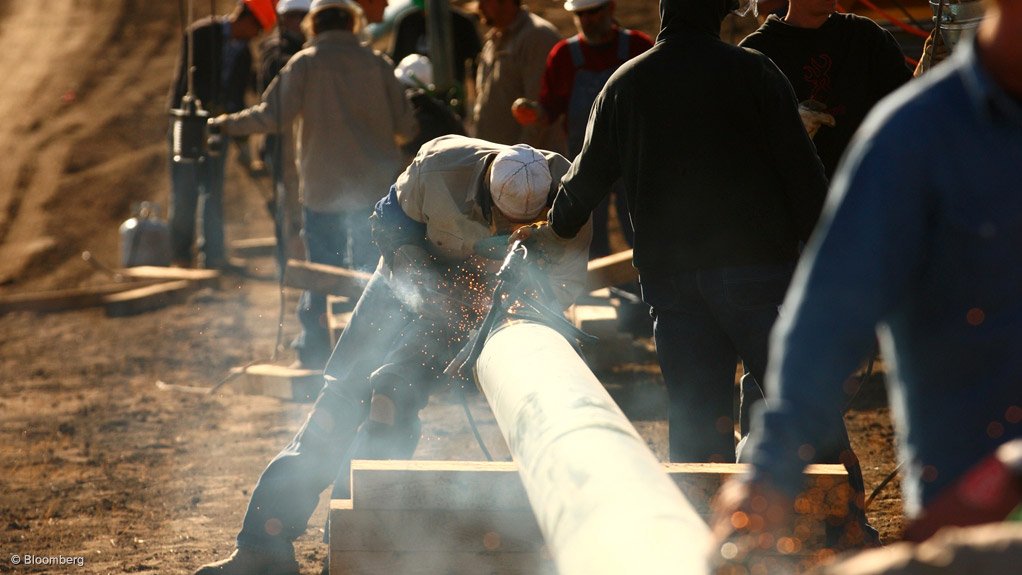



The deferment of a clean-fuels policy last year opened a gap for importers, and oil major Chevron is arguing that there is an urgent need to finalise the policy, especially after the National Energy Regulator of South Africa’s recent approval of a new liquid fuels storage and distribution facility at the Port of Cape Town.
Chevron is opposing the regulator’s decision to grant Burgan Cape Terminals a licence to develop the facility, which will allow traders to import large quantities of clean fuels. The objection is premised on the argument that it could halt and reverse the development of the local petroleum industry.
Burgan, however, has described Chevron’s claims as a “red herring” and an attempt to prevent competitors from entering the Western Cape and to maintain its “almost complete control” of fuel supply in the region. Burgan’s analysis shows that, “at worst”, the introduction of an alternative supply of fuel could reduce Chevron’s profits at its Western Cape refinery, Burgan CEO Muziwandile Mseleku has argued.
But Chevron has argued that the detrimental impact on its Milnerton-based Calref refinery should be mitigated through restrictions on clean fuels importation and the implementation of a fuels policy that balances the various competing priorities.
“We need to ensure that all South Africa’s refineries are protected by updated import regulations,” South African Petroleum Industry Association (Sapia) and Chevron chairperson Nobuzwe Mbuyisa notes, adding that Burgan’s plans have created a sense of urgency.
The refining industry has found itself in a downward trend after the delayed policy led to a mothballing of investment in cleaner fuels production capabilities amid uncertainties, thereby creating a unique opportunity for traders to import the increasingly popular clean fuels products that local refineries are not yet ready to produce.
South African refineries will collectively require up to R40-billion to upgrade their facilities to produce large quantities of clean fuels, an investment that refineries will not commit to until policy uncertainties are ironed out.
Owing to a lack of finality surrounding the cost-recovery mechanism, the July 1, 2017, compliance date for the introduction of new cleaner fuels standards has been delayed to a yet-to-be-determined date.
Mbuyisa tells Engineering News that the Burgan facility could render local refineries economically unviable on the back of unrestricted clean fuels imports.
But Mseleku says the concern is unfounded, as any fuel imports require a permit from the Department of Energy (DoE).
“The permit guidelines indicate that local manufacturing and security of supply should be taken into consideration during the issuing process,” he says, noting that this means that legislation imposed by the DoE and the International Trade Administration Commission of South Africa effectively ensures that domestic fuel supplies are exhausted before imports are approved.
However, Mbuyisa argues that if clean fuels are to be imported on a large scale and prior to industry investing in local manufacturing, it could have a significant adverse economic and socioeconomic impact on the South African economy, including negatively impacting on the security of supply for petrol, diesel, jet fuel, liquefied petroleum gas and bitumen, besides others.
“Refiners would be forced to reduce production, sell locally at a discount or export at a loss,” she explains, noting that, in effect, Burgan will “switch the market” ahead of a market transition. This could mean that importing and selling clean fuel products will accelerate the current conversion of the market over a shorter period from 500 parts per million (ppm) to 50 ppm or 10 ppm.
To date, 30% of the South African diesel market has already converted to 50 ppm, with Chevron meeting 70% of the Western Cape’s 50 ppm diesel demand.
The oil major is currently reviewing options to increase 50 ppm output, which is currently about 20% of its total diesel production.
This is in direct response to market shifts, which saw the local market demand for 500 ppm diesel fall below production capacity.
“The result is that the growth in domestic 50 ppm diesel is forcing refineries to either reduce production or export surplus product,” the company points out.
The 50 ppm grade is specifically introduced to accommodate diesel vehicles designed to operate on the current European diesel fuels entering South Africa and to accommodate new-technology particle-filter-equipped vehicles.
Currently, there is no local low-sulphur petrol market. While low-sulphur fuel imports could be a short-term solution to a shortage of fuels, it will significantly impact on the downstream refining industry and should only be allowed when local production cannot meet market demand.
Article Enquiry
Email Article
Save Article
Feedback
To advertise email advertising@creamermedia.co.za or click here
Research Reports

Projects


Latest Multimedia


Latest News

Showroom
As one of South Africa's leading manufacturers, Bell Equipment distributes and exports its wide range of heavy equipment globally to mining,...
VISIT SHOWROOM
From batteries for boats and jet skis, to batteries for cars and quad bikes, SABAT Batteries has positioned itself as the lifestyle battery of...
VISIT SHOWROOM


Announcements
What's On
Subscribe to improve your user experience...
Option 1 (equivalent of R125 a month):
Receive a weekly copy of Creamer Media's Engineering News & Mining Weekly magazine
(print copy for those in South Africa and e-magazine for those outside of South Africa)
Receive daily email newsletters
Access to full search results
Access archive of magazine back copies
Access to Projects in Progress
Access to ONE Research Report of your choice in PDF format
Option 2 (equivalent of R375 a month):
All benefits from Option 1
PLUS
Access to Creamer Media's Research Channel Africa for ALL Research Reports, in PDF format, on various industrial and mining sectors
including Electricity; Water; Energy Transition; Hydrogen; Roads, Rail and Ports; Coal; Gold; Platinum; Battery Metals; etc.
Already a subscriber?
Forgotten your password?
Receive weekly copy of Creamer Media's Engineering News & Mining Weekly magazine (print copy for those in South Africa and e-magazine for those outside of South Africa)
➕
Recieve daily email newsletters
➕
Access to full search results
➕
Access archive of magazine back copies
➕
Access to Projects in Progress
➕
Access to ONE Research Report of your choice in PDF format
RESEARCH CHANNEL AFRICA
R4500 (equivalent of R375 a month)
SUBSCRIBEAll benefits from Option 1
➕
Access to Creamer Media's Research Channel Africa for ALL Research Reports on various industrial and mining sectors, in PDF format, including on:
Electricity
➕
Water
➕
Energy Transition
➕
Hydrogen
➕
Roads, Rail and Ports
➕
Coal
➕
Gold
➕
Platinum
➕
Battery Metals
➕
etc.
Receive all benefits from Option 1 or Option 2 delivered to numerous people at your company
➕
Multiple User names and Passwords for simultaneous log-ins
➕
Intranet integration access to all in your organisation
