



Carrim promises delivery, to act on high communication costs

Communications Minister Yunus Carrim discusses the Department of Communication's plans to stabilise the departmart. Date recorded: 5.09.13. Camerawork: Nicholas Boyd. Video editing: Shane Williams.



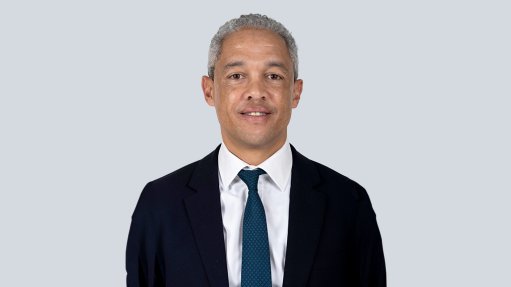
Yunus Carrim plans to use his time as Communications Minister to put the Department of Communications (DoC) on a firmer footing to deliver far more effectively in future and called on civil society to hold government accountable for results.
Carrim, who was sworn in as Minister two months ago after the axing of Dina Pule, on Thursday vowed to prioritise and fast-track certain aspects imperative to laying a solid base for the next five years.
“Civil society needs to pressurise government in various ways to deliver on information and communication technology (ICT) goals, which are basically crucial to our economic aims, job creation and unemployment reduction targets [besides others].
“It doesn’t matter [which political party] comes in [next], it matters what is done between now and April / May next year [when the country heads to the polls in a general election],” he commented at a Google Big Tent discussion, held in Johannesburg.
He admitted that, with much to do before elections in only eight months, the DoC might not achieve all its aims and that the department had narrowed its focus to strategic programmes.
Carrim highlighted the cost of communicating as one of these burning issues, questioning the mobile operators justification for offering lower prices in other African countries, but charging excessive amounts in their country of origin.
“The question of cost is clearly important. The reason why there is predatory pricing, that has been left to block expansion and use, needs to be addressed more actively,” he said.
“We have to sensibly and sensitively set a firm foundation for a further reduction in the costs of communication,” the Minister added.
Carrim plans to set up a pricing workshop as part of a consultative process on communication costs during September, as well as finalise a new policy directive on transparent pricing policy by month-end.
The department was liaising with the Independent Communications Authority of South Africa (Icasa) on their review of mobile termination rates (MTR's).
Icasa implemented the third and final MTR cut in March and was currently reviewing the pricing structure in the call termination market on the back of emerging transparency concerns.
Rate cuts had not produced the intended increase in competition and Icasa believed that the MTRs should be further reduced to between 15c and 25c, and eventually eliminated altogether.
The market review would examine the viability of this.
The current MTR was reduced to 40c a minute on March 1, as stipulated by Icasa’s 2010 Wholesale Voice Call Termination Regulations.
The initial termination rate of R1.25 a minute in 2009 had been systemically reduced over the years, dropping to 89c and 73c in 2010 and 2011 respectively, and finally reaching 56c last year.
The DoC also planned to finalise the National Broadband Policy by November, followed by the delivery of the long-awaited and much delayed spectrum policy in March.
Consultations with key industry experts were expected to convene in about two weeks.
The DoC expected to table the Green Paper for the National Integrated ICT Policy within the next two-and-a-half months, followed by a White Paper before elections.
The Minister also earlier indicated that a national ICT forum bringing together government, the industry, trade unions and other civil society role-players was planned for late November or early next year to oversee the implementation of the ICT policy Green Paper.
“The digital divide between the haves and have-nots needs to be reduced, and we are going to place much greater stress on delivering in rural and underserviced areas,” Carrim continued, stating that, by the end of the financial year, 788 schools would be connected.
“This figure will be higher if our current negotiations with some of the operators on implementing their universal service obligations go well,” he further noted in a statement.
“We will do everything we can as government, but we do have limitations. We need private-sector assistance,” he said, inviting business to get involved and “help government help you”.
Article Enquiry
Email Article
Save Article
Feedback
To advertise email advertising@creamermedia.co.za or click here
Research Reports

Projects


Latest Multimedia


Latest News
Showroom

Sulzer South Africa, established in 1922, partners with critical industries like power, oil & gas, water, mining, and chemicals to boost...
VISIT SHOWROOM
Leading condition monitoring specialists, WearCheck, help boost machinery lifespan and reduce catastrophic component failure through the scientific...
VISIT SHOWROOM



Press Office
Announcements
What's On
Subscribe to improve your user experience...
Option 1 (equivalent of R125 a month):
Receive a weekly copy of Creamer Media's Engineering News & Mining Weekly magazine
(print copy for those in South Africa and e-magazine for those outside of South Africa)
Receive daily email newsletters
Access to full search results
Access archive of magazine back copies
Access to Projects in Progress
Access to ONE Research Report of your choice in PDF format
Option 2 (equivalent of R375 a month):
All benefits from Option 1
PLUS
Access to Creamer Media's Research Channel Africa for ALL Research Reports, in PDF format, on various industrial and mining sectors
including Electricity; Water; Energy Transition; Hydrogen; Roads, Rail and Ports; Coal; Gold; Platinum; Battery Metals; etc.
Already a subscriber?
Forgotten your password?
Receive weekly copy of Creamer Media's Engineering News & Mining Weekly magazine (print copy for those in South Africa and e-magazine for those outside of South Africa)
➕
Recieve daily email newsletters
➕
Access to full search results
➕
Access archive of magazine back copies
➕
Access to Projects in Progress
➕
Access to ONE Research Report of your choice in PDF format
RESEARCH CHANNEL AFRICA
R4500 (equivalent of R375 a month)
SUBSCRIBEAll benefits from Option 1
➕
Access to Creamer Media's Research Channel Africa for ALL Research Reports on various industrial and mining sectors, in PDF format, including on:
Electricity
➕
Water
➕
Energy Transition
➕
Hydrogen
➕
Roads, Rail and Ports
➕
Coal
➕
Gold
➕
Platinum
➕
Battery Metals
➕
etc.
Receive all benefits from Option 1 or Option 2 delivered to numerous people at your company
➕
Multiple User names and Passwords for simultaneous log-ins
➕
Intranet integration access to all in your organisation
