


Cariboo Regional District restricts access to Mount Polley area

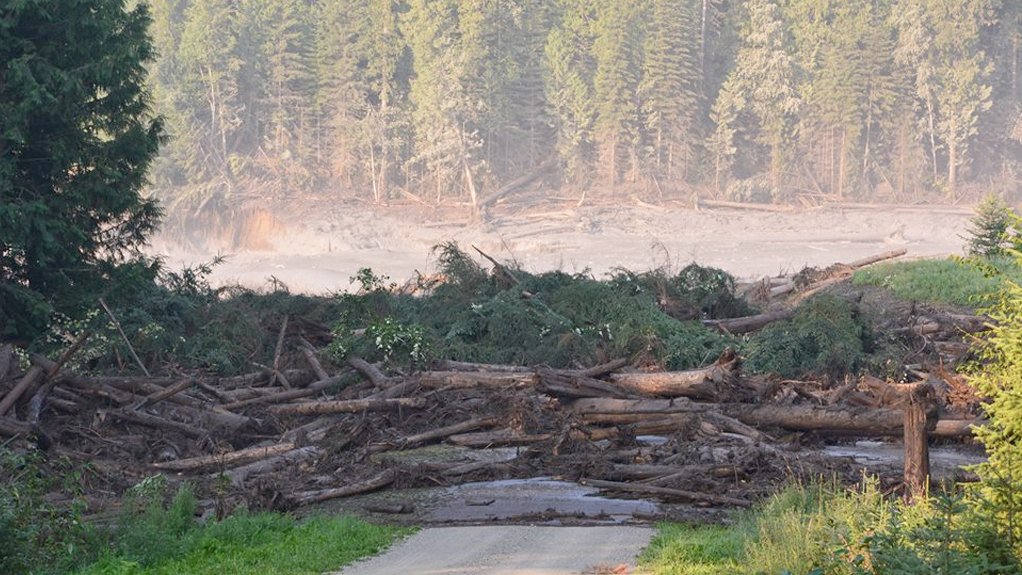
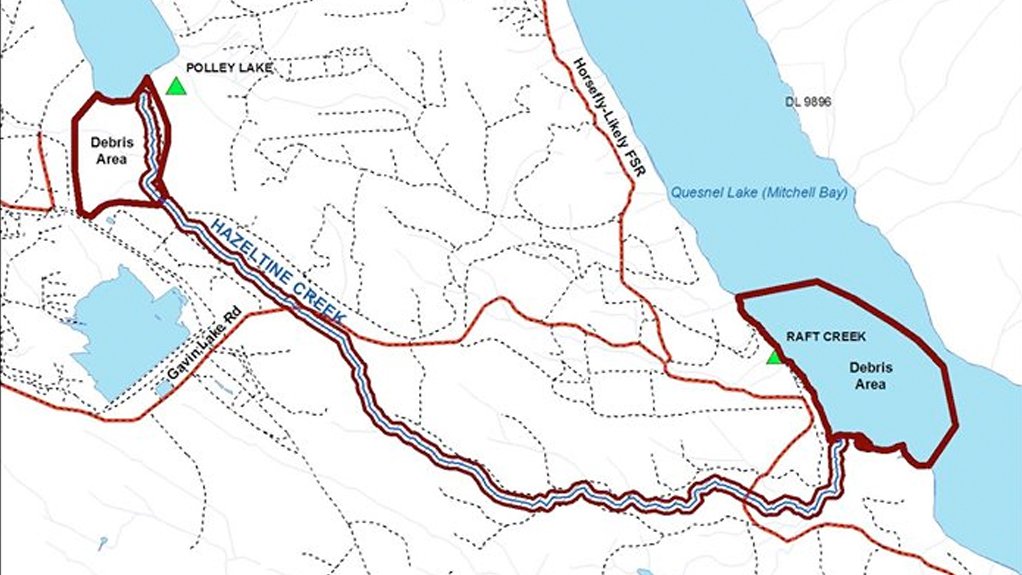
Photo by Cariboo Regional District Emergency Operations Centre
Photo by Cariboo Regional District Emergency Operations Centre


TORONTO (miningweekly.com) – The Cariboo Regional District (CRD), located in British Columbia’s Central Interior, on Saturday issued a legal order to restrict access to the Mount Polley mine area following the tailings pond failing last Monday, which sent millions of litres of mine sludge flooding into the rivers and tributaries in the Cariboo region during the peak salmon spawning season.
The CRD said the order would remain in effect until further notice and had been put in place to ensure public safety, after the incident drew many curious onlookers.
Points that help define this area were located at the north end of Polley Lake, on the Bootjack forest service road, on Gavin Lake road and two points on the Horsefly Likely road (Ditch road).
An area on Quesnel Lake near the mouth of the Hazeltine Creek was also restricted.
The regional municipality, which comprises 12 electoral areas and four incorporated member municipalities, including Quesnel, Williams Lake, 100 Mile House, and Wells, and serves a population of about 65 659 residents, according to the 2001 population census, said that check points and/or gates would be established on all boundaries.
The breach released about ten-million cubic metres of effluent into Polley Lake and Quesnel Lake, resulting in a drinking water ban and state of emergency in that area. The provincial ministry of environment issued a pollution abatement order on Tuesday to the Mount Polley Mine Corporation and would oversee the implementation of an action plan to ensure the information meets the ministry's needs for assessing potential environmental impacts and monitoring ecosystem recovery.
The ministry on Sunday reported that the flow out of the breach had decreased dramatically, but had not completely stopped. Imperial Metals was building a temporary dike to stop flow out of the pond.
POND FAILURE
Meanwhile, international consulting engineering firm Knight Piésold broke its silence late Friday afternoon, saying that, despite it being responsible for designing and building the tailings impoundment retaining walls, it had informed owner Imperial Metals that it would not continue as the engineer of record for the Mount Polley mine on February 10, 2011, and subsequently ceased to perform that role.
During the time the consultancy acted as engineer of record, the tailings storage facility at Mount Polley operated safely and as it was designed. A third-party review panel provided an independent review of the tailings impoundment design during initial construction and permitting during 1995 to 1997.
In 2006, an independent third-party dam safety review by AMEC Earth and Environmental confirmed that the three embankments were well-designed and well-constructed entities from a dam safety perspective.
Since February 10, 2011, Knight Piésold affirmed that it had not had any responsibility or knowledge of any aspects of the design, modifications or performance monitoring of the tailings storage facility.
“The original engineering done by Knight Piésold accommodated a significantly lower water volume than the tailings storage facility reportedly held at the time of the breach. Significant engineering and design changes were made subsequent to our involvement, such that the tailings storage facility can no longer be considered a Knight Piésold design,” the firm said in a statement.
The engineering firm said that, upon completing all assignments as the engineer of record in 2010, Knight Piésold wrote to Mount Polley Mining Corp and to the British Columbia government’s chief inspector of mines and stated that "the embankments and the overall tailings impoundment were getting large and it is extremely important that they be monitored, constructed and operated properly to prevent problems in the future."
A formal handover of design, construction and monitoring responsibilities was conducted on March 8, 2011 when AMEC Earth and Environmental was acknowledged as the new engineer of record for all future work at the Mount Polley tailings storage facility.
“Knight Piésold was not familiar with, and therefore cannot comment on, the details of the incident, or on the design, construction, operations, water management practices or any other aspects of the Mount Polley tailings storage facility," the firm said.
AMEC Earth and Environmental had on Monday morning not yet commented on the incident.
MAJOR INDUSTRY CONCERN
The Mining Association of Canada (MAC) on Friday also weighed in on the incident, labelling the breach as “a major industry concern”.
"The mining industry in Canada operates on the basis of public confidence in sound public policy, effective regulation and responsible management practices by companies. The confidence of the public in what we do and how we do it is essential.
“Incidents such as this are very rare, but it is the goal of MAC members that they never occur, and we have been working hard for many years to achieve this goal. Clearly, we still have work to do," MAC president and CEO Pierre Gratton said.
Imperial Metals had been a member of the MAC for the past two years and is in the early stages of implementing the Towards Sustainable Mining (TSM) initiative, a significant component of which includes commitments to ensure the safe operation and management of tailings.
In fact, one of the main drivers behind the development of TSM in the late 1990s was to prevent incidents such as this. Through MAC's tailings guides, initially published in 1998 and considered the global standard for tailings management, and through TSM, the industry had made steady improvement in this area, the association said.
The last similar event occurred at a closed site in 1991 and did not have any off-site impact. Every day, there are more than 200 mines operating in Canada, and MAC members had "invested great effort" in building a record of the safe management of tailings facilities over recent decades.
“MAC and its members, through MAC's tailings working group, comprising many of the best professionals in the field, would review this incident to assess what can be learned and implemented to further ensure these incidents do not occur,” the MAC said.
ENVIRONMENTAL IMPACT
Fortunately, the incident did not result in injuries, and the tailings from the Mount Polley mine were non-acid generating. However, the company recognised that there had been a significant environmental impact that would have to be dealt with.
Results of preliminary water tests, released on Thursday, showed that the water remained within drinking-quality guidelines and that no impact on aquatic life and fish was expected. The provincial government was undertaking further testing.
However, the Secwepemc First Nations on Saturday issued a statement alleging that their salmon fishing had been devastated by what they billed as “the worst mining disaster in British Columbia history”.
The First Nation said it refused to catch the salmon they rely on at this time of year because of water contamination fears from the impact of the Mount Polley tailings pond breach.
It complained that, despite its members finding dead fish in the debris field, the Department of Fisheries and Oceans was insisting that any salmon caught in Musqueam waters before they headed further up the water system must be counted against Musqueam's quota.
"We don't believe the British Columbia government's water tests and have reviewed the list of toxic heavy metals that were released from the tailings dam earlier this week. The provincial and federal governments seem to be taking the position that the water tests are fine so no harm is done.
“They are doing their best to stand up for the mining industry and leave us in the background to suffer the consequences. Governments should not be apologists for the reckless acts of industry but should work to reassure and support the Elders' need for salmon,” Chief Bev Sellars from the Xatsull First Nation said.
Imperial Metals also owns the Red Chris mine, near Iskut, that was due to open later this year. Project development had been the subject of impact benefit agreement (IBA) negotiations and discussions in recent months and years. The Tahltan Central Council last week said that, to date, no IBA had been signed and the mine did not have all the required permits to open.
"This latest news obviously means we have new questions and concerns that we must discuss with Imperial Metals about the tailings ponds at Red Chris. Right now, we know that the priority for Imperial Metals is dealing with urgent issues regarding Mount Polley mine, and we will give them the time they need to address this," Tahltan Central Coucil president Chad Norman Day said in a statement.
Article Enquiry
Email Article
Save Article
Feedback
To advertise email advertising@creamermedia.co.za or click here
Research Reports

Projects


Latest Multimedia


Latest News


Showroom

The Aluminium Federation of South Africa (AFSA), is the voice of the South African aluminium industry.
VISIT SHOWROOM
Leading condition monitoring specialists, WearCheck, help boost machinery lifespan and reduce catastrophic component failure through the scientific...
VISIT SHOWROOM



Press Office
Announcements
What's On
Subscribe to improve your user experience...
Option 1 (equivalent of R125 a month):
Receive a weekly copy of Creamer Media's Engineering News & Mining Weekly magazine
(print copy for those in South Africa and e-magazine for those outside of South Africa)
Receive daily email newsletters
Access to full search results
Access archive of magazine back copies
Access to Projects in Progress
Access to ONE Research Report of your choice in PDF format
Option 2 (equivalent of R375 a month):
All benefits from Option 1
PLUS
Access to Creamer Media's Research Channel Africa for ALL Research Reports, in PDF format, on various industrial and mining sectors
including Electricity; Water; Energy Transition; Hydrogen; Roads, Rail and Ports; Coal; Gold; Platinum; Battery Metals; etc.
Already a subscriber?
Forgotten your password?
Receive weekly copy of Creamer Media's Engineering News & Mining Weekly magazine (print copy for those in South Africa and e-magazine for those outside of South Africa)
➕
Recieve daily email newsletters
➕
Access to full search results
➕
Access archive of magazine back copies
➕
Access to Projects in Progress
➕
Access to ONE Research Report of your choice in PDF format
RESEARCH CHANNEL AFRICA
R4500 (equivalent of R375 a month)
SUBSCRIBEAll benefits from Option 1
➕
Access to Creamer Media's Research Channel Africa for ALL Research Reports on various industrial and mining sectors, in PDF format, including on:
Electricity
➕
Water
➕
Energy Transition
➕
Hydrogen
➕
Roads, Rail and Ports
➕
Coal
➕
Gold
➕
Platinum
➕
Battery Metals
➕
etc.
Receive all benefits from Option 1 or Option 2 delivered to numerous people at your company
➕
Multiple User names and Passwords for simultaneous log-ins
➕
Intranet integration access to all in your organisation
