



Business weighs in on public wage bill saying downward adjustments now urgent to avoid debt crisis



Organised business has made an aggressive intervention into the highly sensitive debate on South Africa’s public sector wage bill, arguing that payroll costs are too high, rising too quickly and are not being supported by commensurate productivity gains.
Business is, thus, calling for an urgent downward adjustment to government’s payroll in order to avoid a fiscal debt crisis, which it argues has the potential to trigger a full-blown financial crisis.
The intervention has been made in the form of a research report commissioned by Business Unity South Africa (Busa) and conducted by Intellidex.
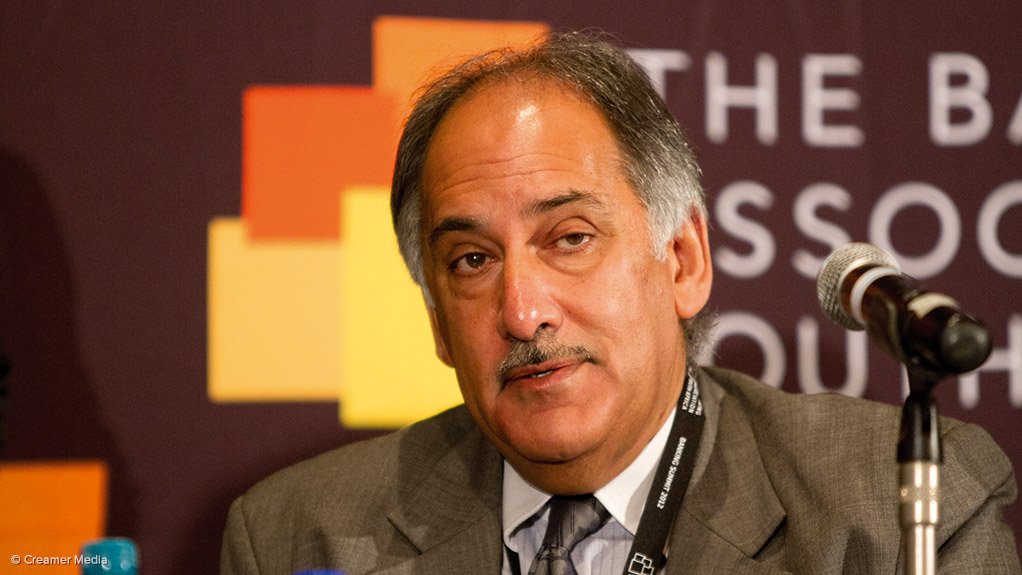
Busa CEO Cas Coovadia said the research had been undertaken in an effort to stimulate a data-driven debate on the matter, which Finance Minister Tito Mboweni described in his recent Medium-Term Budget Policy Statement speech as an area in need of a “new consensus”.
“Over the past five years, public sector employee compensation grew by 7.2% a year on average – well above inflation. Over the next five years, it will need to grow much, much slower,” Mboweni averred.
Government is proposing growth in the public-service wage bill of 1.8% in the current year and average yearly growth of 0.8% for the coming three years. To achieve the target, government has, controversially, not implemented the third year of the 2018 wage agreement and was proposing a wage freeze for the next three years.
Public sector unions are strongly opposing government’s attempts at not implementing the final year of the wage agreement and some have described the proposed wage freeze as a “declaration of war”.
The Busa-commissioned report calculates that compensation spending increased from R154-billion in 2006/7 to R518-billion in 2018/19.
“This is a 78% inflation-adjusted increase, while increases in headcount went up by 22%. Payroll costs have increased by a compound average of 10.5% since 2006/7, compared to average growth of nominal gross domestic product (GDP) of 8.2%.”
The report also asserts that the average remuneration of public servants in South Africa is high by international standards and when compared to private sector employees and per capita GDP.
Its global comparison is based on an International Monetary Fund assessment of 46 countries, which shows that wages for ‘general government’ employees accounted for an average of 9.4% of GDP. “The figure for South Africa, for 2017, was 11.6%. This was in the top quarter of reported countries and is nearly 25% larger than the international average.”
The Busa-commissioned report argues that downward adjustments to the payroll can be made either by reducing wages, reducing headcount, or doing both.
It suggests, too, that South Africa needs a ‘social compact’ relating to the trajectory of public payroll costs with the aim of lowering these costs by 10.5% by 2025/26.
The report includes no offer from business to moderate executive remuneration during the period, a quid pro quo typically raised when wages are debated among the social partners.
Coovadia stressed that trade-offs from all social partners would be necessary to support the economic recovery, but stressed that business would be ready and willing to invest and create jobs once long-standing policy uncertainties had been fully addressed.
In the absence of “tough decisions”, including a decision to reduce the public sector wage bill to shore up fiscal sustainability, the prospects for an economic recovery would continue to be undermined.
He was strongly supported by Business Leadership South Africa CEO Busi Mavuso who argued that South Africa’s economic sovereignty was at stake.
“If we lose that [our sovereignty] it affects all social partners alike. If business doesn’t weigh in on this, unfortunately the investment drive that we are on is going to continue being illusive and definitely the economic growth that we want to attain as a country is going to continue being illusive, and that means that the jobs crisis that we are trying to solve as a country is not going to be attained,” Mavuso argued.
Article Enquiry
Email Article
Save Article
Feedback
To advertise email advertising@creamermedia.co.za or click here
Research Reports

Projects


Latest Multimedia


Latest News

Showroom

AirNox (Pty) Ltd is a level 1 BBBEE manufacturer of complete AdBlue® solutions for operators of SCR diesel engines and AUS40 across South Africa...
VISIT SHOWROOM
Electrifying the world in a safe, smart, and sustainable way, ABB Electrification is a global technology leader in electrical distribution and...
VISIT SHOWROOM



Press Office
Announcements
What's On
Subscribe to improve your user experience...
Option 1 (equivalent of R125 a month):
Receive a weekly copy of Creamer Media's Engineering News & Mining Weekly magazine
(print copy for those in South Africa and e-magazine for those outside of South Africa)
Receive daily email newsletters
Access to full search results
Access archive of magazine back copies
Access to Projects in Progress
Access to ONE Research Report of your choice in PDF format
Option 2 (equivalent of R375 a month):
All benefits from Option 1
PLUS
Access to Creamer Media's Research Channel Africa for ALL Research Reports, in PDF format, on various industrial and mining sectors
including Electricity; Water; Energy Transition; Hydrogen; Roads, Rail and Ports; Coal; Gold; Platinum; Battery Metals; etc.
Already a subscriber?
Forgotten your password?
Receive weekly copy of Creamer Media's Engineering News & Mining Weekly magazine (print copy for those in South Africa and e-magazine for those outside of South Africa)
➕
Recieve daily email newsletters
➕
Access to full search results
➕
Access archive of magazine back copies
➕
Access to Projects in Progress
➕
Access to ONE Research Report of your choice in PDF format
RESEARCH CHANNEL AFRICA
R4500 (equivalent of R375 a month)
SUBSCRIBEAll benefits from Option 1
➕
Access to Creamer Media's Research Channel Africa for ALL Research Reports on various industrial and mining sectors, in PDF format, including on:
Electricity
➕
Water
➕
Energy Transition
➕
Hydrogen
➕
Roads, Rail and Ports
➕
Coal
➕
Gold
➕
Platinum
➕
Battery Metals
➕
etc.
Receive all benefits from Option 1 or Option 2 delivered to numerous people at your company
➕
Multiple User names and Passwords for simultaneous log-ins
➕
Intranet integration access to all in your organisation
