



R17bn new varsities project taking on concrete form, with phased scale-up planned

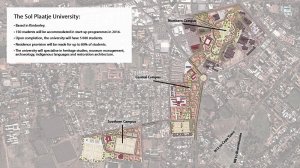
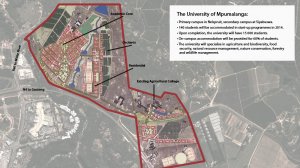


With the naming of South Africa’s two new planned universities in Mpumalanga and the Northern Cape, late last month, President Jacob Zuma has legally constituted the envisaged institutions, mobilising the development of what will become the first State-sanctioned universities to be constructed in the country since the end of Apartheid.
The Sol Plaatje University, in Kimberley, and the University of Mpumalanga, in Nelspruit, will become the first universities to be established in their respective provinces, narrowing the tertiary education gap and responding to what Zuma describes as a “hunger” by the South African youth.
“All successful countries prospered because they invested in education and skills development. Our young people are hungry for education and the development of these new institutions is designed to respond to this,” says Zuma.
Establishing these universities will also go some way towards contributing to the National Development Plan goal of achieving an increase in higher education enrolments from 17.9% in 2012 to 25% by 2030.
The President told a media briefing at the Union Buildings last month that a “modest” group of 290 students will, in 2014, attend lectures for start-up programmes at the two universities, which will boast specialised academic departments that do not exist or are underrepresented in the country.
“Our target is to expand each university over a ten-year development period to accommodate 15 000 full-time students at the main campus, in Nelspruit, and 5 000 at the main campus, in Kimberley,” says Zuma.
As construction of the infrastructure and buildings is only expected to start following the outcome of architectural design competitions for each university in October, existing infrastructure will be used during the 2014 start-up programmes.
The Department of Higher Education and Training’s (DHET’s) New Universities Project Management Team is reviewing submissions for the design of the new universities, with tenders evaluated on the basis of their financial offer, preference and quality.
Heritage studies and environmental and economic impact assessment studies are also currently under way.
In addition, the interim councils of each university – which comprise elected representatives from business academia and the provincial legislature – will appoint management and academic staff in September, while the first newly constructed academic buildings are expected to be completed by the 2015 academic year.
Until then, in the Northern Cape, lectures will primarily be delivered at the National Institute for Higher Education, in Kimberley, while programmes in Mpumalanga will be presented at the Siyabuswa Campus, the Mpumalanga Regional Training Hotel Academy, in Kanyamazane, and the Lowveld College of Architecture, in Nelspruit.
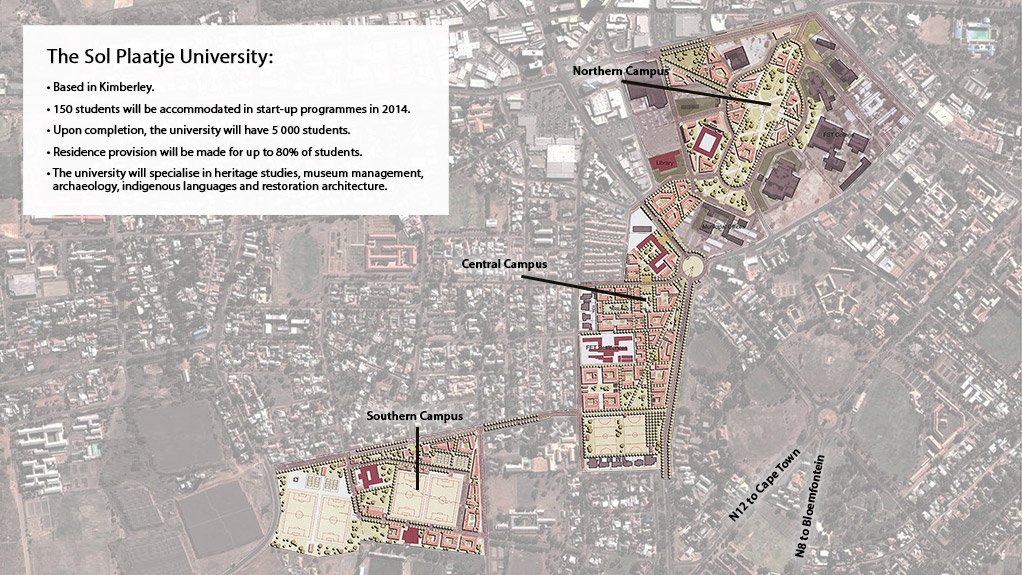
The Sol Plaatje University
During the small-scale start-up of the Kimberley-based university next year, 150 successful applicants will be offered courses in a select number of programmes, including a Diploma in Information Communication Technology, a Diploma in Retail Business Management and a Bachelor of Education specialising in Maths, Science and Technology.
Zuma says that, given the historical significance of the university’s location, it will specialise in heritage studies, including interconnected academic fields, such as museum management, archaeology, indigenous languages and restoration architecture, when operating at full capacity.
In addition, based on the provincial growth and development strategy, consultations with stakeholders during feasibility and early discussions with academic experts, the following areas have also been identified as pertinent to the university:
• information technology and computer sciences, with possible areas of specialisation in systems administration, networking and web management;
• engineering and applied sciences, with a possible focus on manufacturing, diamond technology, renewable and alternative energy;
• agriculture, with a focus on agroprocessing, agricultural business technology, agricultural mechanisation and food science;
• management studies, with a possible focus on business, hospitality and tourism management; and
• health sciences, with an initial focus on nursing.
These areas of specialisation will be offered through a combination programme that includes technical, vocational, professional and academic disciplines, with qualifications including Higher Certificates, Advanced Certificates, Diplomas and Bachelor degrees.
Further, at least two postgraduate centres of excellence will be established, with primary consideration given to the physical sciences, astronomy and the applied sciences.
Residence provision will be made for up to 80% of the planned student enrolment at the inner-city campus, in Kimberley.
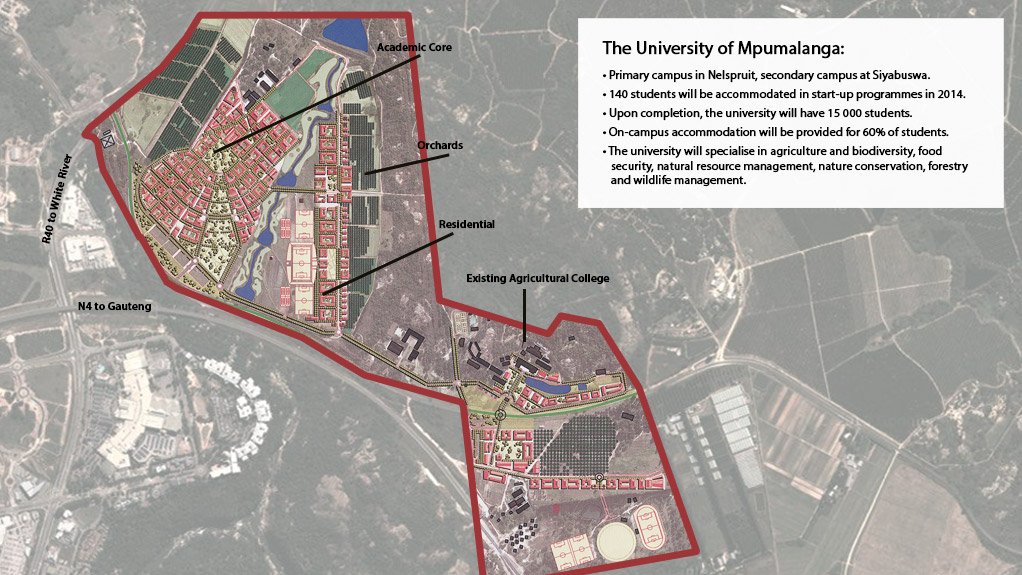
University of Mpumalanga
In contrast, the Nelspruit-based University of Mpumalanga will leverage its location in one of the country’s most agriculturally productive provinces by specialising in agriculture and biodiversity programmes, which will be linked to food security, natural resource management, nature conservation, plant and animal sciences, forestry and wood sciences, technology and wildlife management.
“These initial areas of specialisation will be given greater definition as the new interim councils of each university take up their duties,” Zuma notes.
In addition to its agriculture focus, preliminary investigations suggest that the University of Mpumalanga will prioritise:
• engineering, specialising in industrial and manufacturing, agricultural, chemical and computer systems engineering;
• health sciences and related clinical sciences, with a strong link to nursing and other health professions;
• computer science, focusing on programming, information science, data processing and business systems analysis;
• management, economics and the finance fields, with areas of specialisation in logistics management and local government; and
• teacher education, with an initial focus on foundation phase teaching.
The institution will also be required to establish two specialist postgraduate departments, with consideration given to applied science, agricultural sciences, human development, family studies and rural development.
Envisaged to provide on-campus accom- modation for 60% of its registered students on completion is the main seat and primary campus of the institution, which will be developed on the current site of the Lowveld College of Agriculture, overlooking Nelspruit and in close proximity to the new provincial Parliament.
The agriculture college will be incorpor- ated into the university in its totality as development progresses, while a small secondary campus will be developed at Siyabuswa, about 300 km from Nelspruit.
Funding Streams
Commenting on the source of capital required for development, Higher Education Minister Blade Nzimande, who has spearheaded the New Universities Project since its inception, says that State funds, in the form of earmarked grants and subsidies, will be the main source of funding during the universities’ ten-year development programme, but adds that additional investment will be required.
Following the submission of feasibility studies for each university in November 2012, the National Treasury has confirmed an allocation of more than R2-billion over the 2013/14 to 2015/16 Medium-Term Expenditure Framework period.
“This funding, committed to the start-up capital process, is in addition to the funds set aside for the 23 universities in the country, as the full development of these two institutions requires significant further investment over the ten-year period,” he comments.
Total capital and operational costs are estimated at R6.6-billion for the Sol Plaatje University and R10.3-billion for the University of Mpumalanga.
Nzimande notes that the DHET is aware of the need for private-sector involvement in the phased development and longevity of the new universities and adds that the department is currently in discussions with private-sector representatives regarding possible funding support.
“We are engaging with several private businesses to partner with these universities at various levels. It is particularly important for those businesses that have benefited from the province to become involved,” he comments.
Great Strides?
Remarking on government interventions in education, Zuma says that “great strides” have been made in improving the level and quality of education in South Africa.
Referring to the South African National Census 2011, he notes that the proportion of children with no schooling halved from 1996 to 2011 and that there was a “huge” increase in the enrolment of children from preprimary level to tertiary level.
“In the last decade, we have witnessed an increase of over more than 50% in the number of enrolments. Numbers grew from 603 000 enrolled students in 2001 to 935 000 in 2012,” he comments.
Zuma’s comments came as political party Agang SA leader and academic Dr Mamphela Ramphele delivered harsh criticism of South Africa’s education system last month at the seventh African Education Week, in Sandton.
She asserted that, of all African countries, South Africa had experienced on a “massive” scale the worst failure of a public education system.
“Sixty-six per cent of students who enrolled in Grade 1 as six-year-olds in 2001 did not make it to or did not pass the matric exams in 2012 and today’s Grade 6 learners average only 43% in literacy tests and 27% in numeracy tests,” she noted.
Ramphele also averred that only 10% of 2012’s born-free cohort were eligible for studies at tertiary level.
“South Africa, with the highest proportion of its gross domestic product (GDP) spent on education, at R234-billion a year, has the worst performance of all African countries in maths and science in a recent World Economic Forum report” she said, pointing out that the country ranks 143rd out of 144 countries, outranking only the conflict-ridden Middle East State, Yemen.
Article Enquiry
Email Article
Save Article
Feedback
To advertise email advertising@creamermedia.co.za or click here
Research Reports

Projects


Latest Multimedia


Latest News
Showroom

We supply customers with practical affordable solutions for their testing needs. Our products include benchtop, portable, in-line process control...
VISIT SHOWROOM
We at Hawk High Pressure Pumps specialise in industrial pumps and pumping systems. Our high pressure washing equipment is locally manufactured and...
VISIT SHOWROOM



Announcements
What's On
Subscribe to improve your user experience...
Option 1 (equivalent of R125 a month):
Receive a weekly copy of Creamer Media's Engineering News & Mining Weekly magazine
(print copy for those in South Africa and e-magazine for those outside of South Africa)
Receive daily email newsletters
Access to full search results
Access archive of magazine back copies
Access to Projects in Progress
Access to ONE Research Report of your choice in PDF format
Option 2 (equivalent of R375 a month):
All benefits from Option 1
PLUS
Access to Creamer Media's Research Channel Africa for ALL Research Reports, in PDF format, on various industrial and mining sectors
including Electricity; Water; Energy Transition; Hydrogen; Roads, Rail and Ports; Coal; Gold; Platinum; Battery Metals; etc.
Already a subscriber?
Forgotten your password?
Receive weekly copy of Creamer Media's Engineering News & Mining Weekly magazine (print copy for those in South Africa and e-magazine for those outside of South Africa)
➕
Recieve daily email newsletters
➕
Access to full search results
➕
Access archive of magazine back copies
➕
Access to Projects in Progress
➕
Access to ONE Research Report of your choice in PDF format
RESEARCH CHANNEL AFRICA
R4500 (equivalent of R375 a month)
SUBSCRIBEAll benefits from Option 1
➕
Access to Creamer Media's Research Channel Africa for ALL Research Reports on various industrial and mining sectors, in PDF format, including on:
Electricity
➕
Water
➕
Energy Transition
➕
Hydrogen
➕
Roads, Rail and Ports
➕
Coal
➕
Gold
➕
Platinum
➕
Battery Metals
➕
etc.
Receive all benefits from Option 1 or Option 2 delivered to numerous people at your company
➕
Multiple User names and Passwords for simultaneous log-ins
➕
Intranet integration access to all in your organisation
