


Breaking down the gender gap – balance is the key


This article has been supplied.
By Kate Mollett, Senior Regional Director at Commvault, Africa
The fact that there is a gender gap problem at an international level is by now well-known and unfortunately too often accepted. Specifically, in South Africa, according to a recent statement by UASA, it is estimated that the average difference in pay between men and women in South Africa is between 23% and 25%. It is not only a question of pay, however, as the presence of women in companies is still much smaller compared to that of men.
In the world of technology, the low presence of women has a long history and stems from a different approach to education. The habit of following old established patterns plays its part, because the number of girls choosing a scientific education is still lower compared to boys. This is another reason why effectively tackling the gender gap requires a broad and systemic approach. It must be understood that one of the discriminating factors is individual inclination combined with personal talent. With gender equality at school level on the rise, a better balance can certainly be achieved in the world of work.
In the world of work, balance is the magic word. Balance between professional and private life, so that women are not forced to choose one against the other. This is where businesses can do a lot, by offering flexible and personalised career paths, but also a more balanced management of resources. The concept of work-life balance is already well-known, but it must continue to be the mainstay of personnel policies in companies. And it is not just a matter of making things easier for the staff, because employees with a more satisfactory balance, who are therefore better able to manage private and personal priorities, will be more motivated and productive.
The pandemic has done a lot to raise awareness of this issue, effectively forcing companies to adopt flexible working models. One might wonder why they were not adopted earlier, although the important thing in this return to normality is to make sure that we do not equally return to pre-pandemic rigidity.
So, what role can institutions play in this evolution? Certainly, they can simplify the bureaucratic component when it comes to smart working, for example. But the balance between the private and professional worlds is much more than that, and starts from further back, as mentioned above. We need to rethink the very way in which education is carried out, trying to break out of the clichés of the past and allow maximum freedom to follow one's talent and passion. And we need to bring the worlds of education and work closer together, by raising the level of skills that are created. This will align them more closely with the skills that will later be important at a professional level, thinking above all of soft skills such as flexibility, ability to concentrate and correlate. These skills should be enhanced by specific, well-structured programmes that are, above all, defined at a systemic level, rather than at an opportunistic level.
Article Enquiry
Email Article
Save Article
Feedback
To advertise email advertising@creamermedia.co.za or click here
Research Reports

Projects


Latest Multimedia


Latest News

Showroom
Sika South Africa is a trusted partner for the nation’s infrastructure, commercial, residential, and industrial sectors.
VISIT SHOWROOM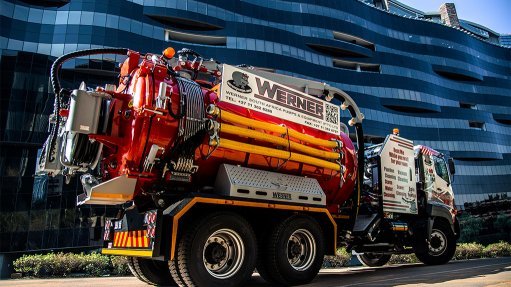
For over 30 years, Werner South Africa Pumps & Equipment (PTY) LTD has been designing, manufacturing, supplying and maintaining specialist...
VISIT SHOWROOM



Press Office
Announcements
What's On
Subscribe to improve your user experience...
Option 1 (equivalent of R125 a month):
Receive a weekly copy of Creamer Media's Engineering News & Mining Weekly magazine
(print copy for those in South Africa and e-magazine for those outside of South Africa)
Receive daily email newsletters
Access to full search results
Access archive of magazine back copies
Access to Projects in Progress
Access to ONE Research Report of your choice in PDF format
Option 2 (equivalent of R375 a month):
All benefits from Option 1
PLUS
Access to Creamer Media's Research Channel Africa for ALL Research Reports, in PDF format, on various industrial and mining sectors
including Electricity; Water; Energy Transition; Hydrogen; Roads, Rail and Ports; Coal; Gold; Platinum; Battery Metals; etc.
Already a subscriber?
Forgotten your password?
Receive weekly copy of Creamer Media's Engineering News & Mining Weekly magazine (print copy for those in South Africa and e-magazine for those outside of South Africa)
➕
Recieve daily email newsletters
➕
Access to full search results
➕
Access archive of magazine back copies
➕
Access to Projects in Progress
➕
Access to ONE Research Report of your choice in PDF format
RESEARCH CHANNEL AFRICA
R4500 (equivalent of R375 a month)
SUBSCRIBEAll benefits from Option 1
➕
Access to Creamer Media's Research Channel Africa for ALL Research Reports on various industrial and mining sectors, in PDF format, including on:
Electricity
➕
Water
➕
Energy Transition
➕
Hydrogen
➕
Roads, Rail and Ports
➕
Coal
➕
Gold
➕
Platinum
➕
Battery Metals
➕
etc.
Receive all benefits from Option 1 or Option 2 delivered to numerous people at your company
➕
Multiple User names and Passwords for simultaneous log-ins
➕
Intranet integration access to all in your organisation
