Beyond finance, bursaries should create pathways to successful STEM careers





This article has been supplied and will be available for a limited time only on this website.
By: Monica Luwes - Manager: Graduate Centre and Development Programme at Sasol
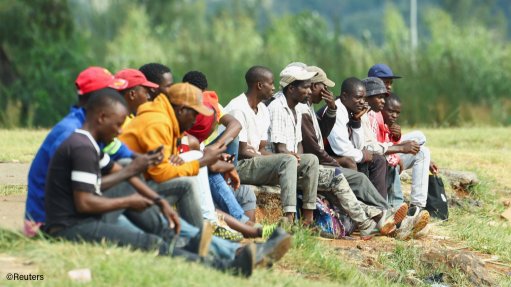
South Africa faces a critical shortage of engineers, scientists and technical specialists, while at the same time, experiencing high youth unemployment, with many graduates struggling to secure entry-level positions. Engineers are the most difficult occupation to recruit, with only 15% of South Africa’s bachelor’s degree graduates coming from science, technology, engineering and mathematics (STEM) disciplines.
While there are difficulties throughout the skills pipeline, starting from South Africa’s weaknesses in high school math and science, one of the most immediate challenges we face is ensuring that STEM students graduate and then embark on successful careers in their fields.
Bursary programmes help to make STEM studies affordable to more promising young South Africans, but they are not enough to build the pipeline of STEM skills we need to grow the economy. The country’s ambitions in the energy transition, industrialisation and digital transformation depend on a pipeline of technically skilled people who remain, develop and contribute. This underscores the need for companies to invest in structured graduate development beyond bursaries.
One of the important factors is ensuring that students complete their degrees, given South Africa’s concerning university dropout rate, with 35% of first-year students failing to progress and a 52% overall dropout rate.
Career access that starts while studying
For this reason, leading corporate employers do not frame their bursary programmes only as a financial intervention. While relieving financial stress on students, especially those from disadvantaged backgrounds is key, bursaries should also create access to professional networks, practical experience and career pathways that would otherwise remain out of reach. This should start while the bursary holder is still studying.
Vacation work, site visits and industry-linked projects allow bursary holders to build familiarity with real operating environments. This connects the dots between academic theory and workplace expectations, preparing bursary holders for their first industry job. Interactions with professionals, alumni, and fellow bursary holders help students to build relationships that support both learning and career mobility.
Haneefah Malik, Process Engineer-in-Training at Sasol Synfuels in Secunda, says the sense of community the Sasol graduate programme creates for bursars and graduates is a highlight of the initiative, along with the early exposure to the realities of the workplace. During a demanding period in her third year, a bursary workshop hosted at a hotel near the university provided an unexpected source of encouragement.
Navigating the university to workplace transition
In most cases, bursary programmes are linked to graduate placements or development programmes, which help bursary holders move into industry roles with minimal friction. For STEM graduates to transition into sustainable careers, we believe three pillars should be in place when they join their first employer:
- Exposure to practical skills: Rotational programmes, project-based assignments and cross-functional experience enable graduates to apply academic learning in a structured and practical environment.
- Mentorship: Mentors offer technical guidance and professional insight, helping young talent to navigate workplace culture, build their professional identity and manage the new demands of working life. Khanyisile Mandisa Maseko, Industrial Engineer-in-Training at Sasol, transitioned into Sasol’s 36-month graduate programme upon graduation. “Working alongside highly skilled engineers and receiving guidance from experienced mentors has created a strong support system for my professional development,” she says.
- Workplace integration: Graduates should be given meaningful responsibilities within clearly defined frameworks, enabling them to build confidence, competence and a sense of belonging.
At Sasol, we recognise that securing critical STEM skills long-term requires developing talent within an organisation’s own culture and context. This is why we have established deliberate pathways from qualification to professional practice for our bursary holders. Our Graduate Development Programme for engineers and scientists serves as both a talent pipeline and a strategic investment in the future of the business.
Article Enquiry
Email Article
Save Article
Feedback
To advertise email advertising@creamermedia.co.za or click here
Research Reports

Projects

Latest Multimedia

Latest News

Showroom

For over 15 years, Lilak Aluminium, a trusted leader in architectural extrusion supply, has delivered excellence to businesses like yours.
VISIT SHOWROOM
North Ridge Pumps is an independent manufacturer of pumps. We have a proven track record for product support and customer service throughout the...
VISIT SHOWROOM

Press Office
Announcements
What's On
Subscribe to improve your user experience...
Option 1 (equivalent of R125 a month):
Receive a weekly copy of Creamer Media's Engineering News & Mining Weekly magazine
(print copy for those in South Africa and e-magazine for those outside of South Africa)
Receive daily email newsletters
Access to full search results
Access archive of magazine back copies
Access to Projects in Progress
Access to ONE Research Report of your choice in PDF format
Option 2 (equivalent of R375 a month):
All benefits from Option 1
PLUS
Access to Creamer Media's Research Channel Africa for ALL Research Reports, in PDF format, on various industrial and mining sectors
including Electricity; Water; Energy Transition; Hydrogen; Roads, Rail and Ports; Coal; Gold; Platinum; Battery Metals; etc.
Already a subscriber?
Forgotten your password?
Receive weekly copy of Creamer Media's Engineering News & Mining Weekly magazine (print copy for those in South Africa and e-magazine for those outside of South Africa)
➕
Recieve daily email newsletters
➕
Access to full search results
➕
Access archive of magazine back copies
➕
Access to Projects in Progress
➕
Access to ONE Research Report of your choice in PDF format
RESEARCH CHANNEL AFRICA
R4500 (equivalent of R375 a month)
SUBSCRIBEAll benefits from Option 1
➕
Access to Creamer Media's Research Channel Africa for ALL Research Reports on various industrial and mining sectors, in PDF format, including on:
Electricity
➕
Water
➕
Energy Transition
➕
Hydrogen
➕
Roads, Rail and Ports
➕
Coal
➕
Gold
➕
Platinum
➕
Battery Metals
➕
etc.
Receive all benefits from Option 1 or Option 2 delivered to numerous people at your company
➕
Multiple User names and Passwords for simultaneous log-ins
➕
Intranet integration access to all in your organisation