



Beware what and how you tow, warns Thule boss


South African company owners and outdoor enthusiasts must be made aware that they cannot simply tow a load equal to a vehicle’s towing capacity as noted in the manual, says Thule Towing Systems South Africa (SA) MD Mark Gutridge.
He sends this warning in the light of increasing competitiveness among bakkie manufacturers around towing capacity.
For one, explains Gutridge, the law states that the kerb mass of the towing vehicle must be equal to or greater than the gross vehicle mass of the towed vehicle – unless the towed vehicle has a service brake.
This means a two-ton bakkie cannot tow a vehicle or trailer or caravan of more than two tons, unless these units have a service brake.
“It’s simply unsafe and illegal to do so, and severely enhances the risk of the vehicle jack-knifing,” says Gutridge.
Thule Towing Systems SA makes towing systems for several vehicle manufacturers in South Africa, as well as for the aftermarket. It has a 130 000-unit capacity plant in Pietermaritzburg, up from 60 000 units 18 months ago.
Global Thule Towing Systems production capacity is more than 1.2-million units a year.
A service brake – an air brake or hydraulic brake will also do – is similar to those found on huge truck trailers. It is a standalone, independent brake system that does not require momentum, such as an override brake normally found on a caravan.
Small trailers under 750 kg require no additional brakes.
“For a 3.1 t or 3.3 t load, for example, an override brake is not enough.
“We want consumers to understand what towing capacity means,” emphasises Gutridge.
Not all tow bars are equal, either, he adds.
A year ago a meeting at the South African Bureau of Standards (SABS) revealed that out of the 25 towbar manufacturers in South Africa, only three had all their products tested at SABS-approved laboratories, as required by legislation, says Gutridge.
“A towbar affects a vehicle’s chassis and electronics. It must comply with the required legislation.”
He adds that it is unsatisfactory that South African regulations allow a towbar maker to choose his or her own mounting points on a vehicle, as opposed to the best possible mounting points, as selected by the vehicle manufacturer – as is the case in Europe.
“You can end up with a towbar attached to the 0.75-mm-thick steel of your boot, as I have once observed,” says Gutridge.
He also notes that towbar manufacturers are required, by law, to make a towbar that takes into account the weight stipulated as that specific car’s towing capacity by the vehicle manufacturer.
However, in South Africa this weight is often lower, as tow-bar makers want to “cover themselves” in case of failure – which occurs more often that it should, as tow bars are not tested as required, notes Gutridge.
However, there is some good news. The National Regulator for Compulsory Specifications (NRCS), which acts as the enforcement body of SABS specifications, wants to charge all towbar makers and importers in South Africa a levy on all tow-bars sold locally. Towbar makers will then provide the NRCS with a list of their tested products, with this body able to visit any towbar manufacturer at any point in time, auditing their products and documentation, says Gutridge.
Consumers will also be able to ask manufacturers for their NRCS documentation before buying a towbar.
“The idea is that only tested tow bars will be sold in South Africa,” says Gutridge. “This will go a long way in ensuring a safer towing environment in the country.”
Article Enquiry
Email Article
Save Article
Feedback
To advertise email advertising@creamermedia.co.za or click here
Research Reports

Projects


Latest Multimedia

Latest News
Showroom
Columbus Stainless, based in Middelburg, Mpumalanga, is Africa’s only producer of stainless steel flat products. In addition, Columbus is the only...
VISIT SHOWROOM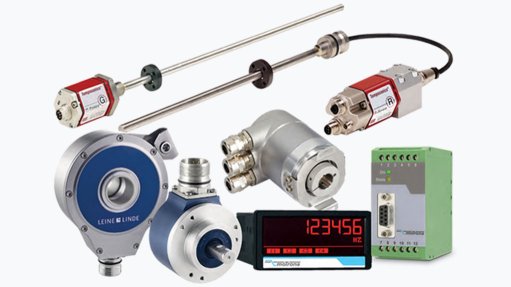
ATI systems comprises five divisions: electrical assemblies, drives and controls, feedback sensors, enclosures, and strip guiding.
VISIT SHOWROOM



Announcements
What's On
Subscribe to improve your user experience...
Option 1 (equivalent of R125 a month):
Receive a weekly copy of Creamer Media's Engineering News & Mining Weekly magazine
(print copy for those in South Africa and e-magazine for those outside of South Africa)
Receive daily email newsletters
Access to full search results
Access archive of magazine back copies
Access to Projects in Progress
Access to ONE Research Report of your choice in PDF format
Option 2 (equivalent of R375 a month):
All benefits from Option 1
PLUS
Access to Creamer Media's Research Channel Africa for ALL Research Reports, in PDF format, on various industrial and mining sectors
including Electricity; Water; Energy Transition; Hydrogen; Roads, Rail and Ports; Coal; Gold; Platinum; Battery Metals; etc.
Already a subscriber?
Forgotten your password?
Receive weekly copy of Creamer Media's Engineering News & Mining Weekly magazine (print copy for those in South Africa and e-magazine for those outside of South Africa)
➕
Recieve daily email newsletters
➕
Access to full search results
➕
Access archive of magazine back copies
➕
Access to Projects in Progress
➕
Access to ONE Research Report of your choice in PDF format
RESEARCH CHANNEL AFRICA
R4500 (equivalent of R375 a month)
SUBSCRIBEAll benefits from Option 1
➕
Access to Creamer Media's Research Channel Africa for ALL Research Reports on various industrial and mining sectors, in PDF format, including on:
Electricity
➕
Water
➕
Energy Transition
➕
Hydrogen
➕
Roads, Rail and Ports
➕
Coal
➕
Gold
➕
Platinum
➕
Battery Metals
➕
etc.
Receive all benefits from Option 1 or Option 2 delivered to numerous people at your company
➕
Multiple User names and Passwords for simultaneous log-ins
➕
Intranet integration access to all in your organisation
