



Auto industry aims to remain leading manufacturing light as disruption looms

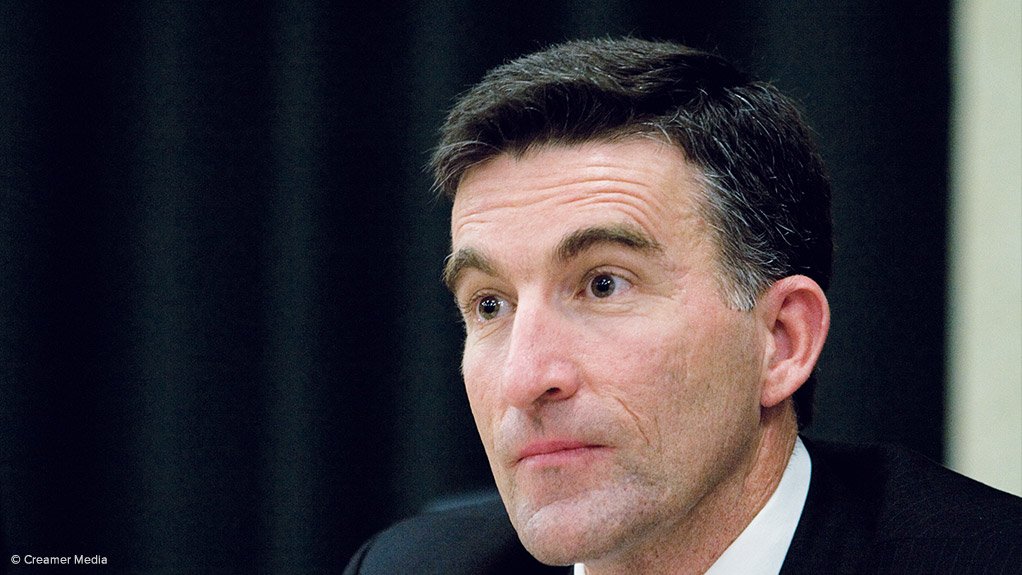
ANDREW KIRBY Without integration into Africa, South Africa won’t be able to attain a stable manufacturing state
DUAL CHALLENGE The industry must balance the need to localise with the need to empower the supply base

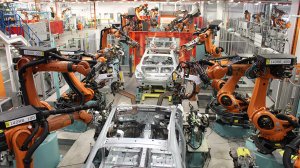


The local automotive industry will, over the next few years, experience the highest level of disruption since 1995, when the Motor Industry Development Plan was introduced, following the advent of democracy a year earlier, says National Association of Automobile Manufacturers of South Africa president Andrew Kirby.
“It’s not business as usual.”
Kirby is also the president and CEO of Toyota South Africa Motors.
Part of this “significant disruption” will stem from the rise of hybrid, fuel cell and electric vehicles (EVs), connected vehicles, automation and digitalisation, as well as growing demands for empowerment and increased local content within the domestic auto sector.
“Customer behaviour and buying patterns are changing quite dramatically. This will all impact us, but we cannot assume that this will have the same impact as in other countries. South Africa is a little bit different from some [of the] other international markets,” says Kirby.
“In the South African business environment, we are going through a period of uncertainty,” he notes.
“We’ll be producing in a new regulatory environment in January 2021 and we have to achieve a black economic empowerment scorecard rating of Level 4. All of that between now and 2021 will structurally change our automotive industry.”
Government and industry have been partnering in developing a policy masterplan for the South African automotive industry, which will provide guidance once government’s current support programme, the Automotive Production and Development Programme, comes to an end in 2020.
The Automotive Masterplan aims to grow domestic production volumes, increase domestic sales, improve access to the African market, increase local parts content on South African-made vehicles to 60% and completely transform the industry.
Some of this may be easier said than done, however.
Kirby says there are five challenges facing government and the South African automotive industry as it gears up to introduce this new masterplan.
1. Responding to the Market
South Africa has a motorisation level of 176 vehicles per 1 000 people, compared with 206 in Brazil and 679 in Italy.
In the rest of Africa, it is about 50.
Kirby says, if South Africa could reach Brazil’s level in the next five to ten years, it would add another 100 000 new-vehicle sales a year to South Africa’s market tally.
Looking ahead, he says, the biggest portion of growth in the domestic market will come from buyers seeking affordable, practical vehicles with good functionality.
When considering EVs and other forms of alternative propulsion, South Africa is swimming upstream, even though “we know that electrification is going to come”, notes Kirby.
Hybrids and EVs make up 0.8% of local sales at the moment, having dropped by 39% from 2016 to 2017. In the same period, EV sales grew by 70% in Italy and 45% in the European Union.
“Our challenge is that South Africa is currently bucking the trend. How do we turn that around?” asks Kirby.
Another challenge in responding to the market is that the vehicle retail environment is changing rapidly, with customers, for example, demanding a more digital experience, or moving towards shared mobility rather than owning a car.
The good news, however, says Kirby, is that Afrilennials – as opposed to Millennials – still want to own a vehicle.
“They are first-generation middle class that are actively in asset catch-up mode.”
2. Optimising Regional Integration
New-vehicle sales in Africa could reach two-million units a year in the next five to ten years, up from the 1.16-million recorded in 2017.
“Without integration into Africa, South Africa won’t be able to get into a stable manufacturing state,” says Kirby.
“We need to get to that million-unit-a-year production mark and Africa is a key component to that.”
Current production in South Africa is about 600 000 units a year.
Kirby says South Africa has the geographic advantage to capture the African market.
“We understand Africa. Our vision is to become the base of manufacturing and supply of vehicles into Africa.”
While South Africa is part of a number of Africa free-trade agreements, none of these are, however, automotive specific.
Kirby warns that the local automotive industry has to be aware that there is “massive foreign investment in Africa”, and that it is not coming from South Africa.
China pushed $36.1-billion into Africa in 2016, which gave it a 39% share of the investment market.
“The influence of world powers in Africa is much bigger than that of South Africa, says Kirby.
He adds that used-car imports remain a big challenge in growing Africa’s new-vehicle market.
“We need to encourage African countries to create the industrial policy to support automotive industries.”
He also notes that Morocco saw a 31% increase in vehicle production from 2015 to 2017.
“In fact, the number of vehicles made there increased [ninefold] between 2010 and 2017.
“We are competing with the North African countries, which are very close to Europe. If we want to achieve the masterplan, how do we compete with other emerging markets in Africa?”
3. Infrastructure
Another challenge South Africa faces in reaching the goals of the Automotive Masterplan is the uncertainty about when clean fuels will finally be introduced in South Africa, following repeated delays by government in enforcing its local production and distribution.
The global fuel quality level is above Euro 3, while the level in South Africa and the rest of Africa is below Euro 3 – which means the continent is forced to use old vehicle technology able to operate on dirty petrol and diesel.
“We need a regulatory framework for fuel,” says Kirby. “It is difficult to introduce higher levels of technology when you have this fuel in South Africa.”
The country will, at some point, also need to participate in the steady move towards EVs. This will require infrastructure.
“The global standard for charging stations around the world is [one] charging station for every 2.5 cars parked at your place of work. In retail, you would need a charging station for every 20 vehicles at your mall, and you need charging stations at every 50 km to 120 km along the road.
“We know the EV is where the market is moving. We need to talk to government about creating affordable infrastructure and opportunities to sell EVs in South Africa.”
Also, notes Kirby, an increase in the production, export and sale of vehicles in South Africa, as envisaged by the masterplan, would require further enhancements to the country’s port and rail infrastructure, despite the gains made in the last three to five years.
4. Global Competitiveness
Local component content is “absolutely crucial to global competitiveness”, says Kirby.
“We need to increase our local content, but the question is how?”
In Thailand, 70% of all components suppliers are Tier 2 and 3. In South Africa, these smaller tiers make up only 28% of the supply chain.
“If we could do that, we could – without selling one more vehicle – make a dramatic impact on our competitiveness, and our contribution to employment and investment,” says Kirby.
He says vehicle manufacturers in the past focused on developing the large Tier 1 suppliers, and “Tier 1 suppliers find it much easier to work with Tier 1 suppliers”.
“We need to change our mindset. If we want to localise to be globally competitive, we need to make sure we have good licensing agreements in place to bring technology to South Africa. We also need to break through some global sourcing barriers.
“We need to collaborate. We need to say what materials we are going to focus on – steel, plastics – and then ask how do we do that? At what timing?”
Another challenge the industry faces is to balance the need to localise with the need to transform and empower the supply base.
5. Transformed Value Chain
South Africa’s automotive industry must become more empowered.
“We need to create an inclusive and transformed value chain in its entirety,” says Kirby.
This includes not only parts supply but also the import, distribution and retail environments.
“We need to achieve Level 4,” says Kirby.
The industry is currently at Level 8.
“It is a moral and business imperative. It is something we need to commit to. It will not happen by itself.”
As the vehicle manufacturers and Tier 1 components suppliers are largely multinationals not willing to consider anything less than 100% ownership, the industry would have to work harder than some other local industries to increase its empowerment level.
Article Enquiry
Email Article
Save Article
Feedback
To advertise email advertising@creamermedia.co.za or click here
Research Reports

Projects


Latest Multimedia


Latest News


Showroom
At Airshrink - CiP, we surpass customer expectations with innovative MV and LV cable accessories, including heat shrink joints, terminations,...
VISIT SHOWROOM
AirNox (Pty) Ltd is a level 1 BBBEE manufacturer of complete AdBlue® solutions for operators of SCR diesel engines and AUS40 across South Africa...
VISIT SHOWROOM



Press Office
Announcements
What's On
Subscribe to improve your user experience...
Option 1 (equivalent of R125 a month):
Receive a weekly copy of Creamer Media's Engineering News & Mining Weekly magazine
(print copy for those in South Africa and e-magazine for those outside of South Africa)
Receive daily email newsletters
Access to full search results
Access archive of magazine back copies
Access to Projects in Progress
Access to ONE Research Report of your choice in PDF format
Option 2 (equivalent of R375 a month):
All benefits from Option 1
PLUS
Access to Creamer Media's Research Channel Africa for ALL Research Reports, in PDF format, on various industrial and mining sectors
including Electricity; Water; Energy Transition; Hydrogen; Roads, Rail and Ports; Coal; Gold; Platinum; Battery Metals; etc.
Already a subscriber?
Forgotten your password?
Receive weekly copy of Creamer Media's Engineering News & Mining Weekly magazine (print copy for those in South Africa and e-magazine for those outside of South Africa)
➕
Recieve daily email newsletters
➕
Access to full search results
➕
Access archive of magazine back copies
➕
Access to Projects in Progress
➕
Access to ONE Research Report of your choice in PDF format
RESEARCH CHANNEL AFRICA
R4500 (equivalent of R375 a month)
SUBSCRIBEAll benefits from Option 1
➕
Access to Creamer Media's Research Channel Africa for ALL Research Reports on various industrial and mining sectors, in PDF format, including on:
Electricity
➕
Water
➕
Energy Transition
➕
Hydrogen
➕
Roads, Rail and Ports
➕
Coal
➕
Gold
➕
Platinum
➕
Battery Metals
➕
etc.
Receive all benefits from Option 1 or Option 2 delivered to numerous people at your company
➕
Multiple User names and Passwords for simultaneous log-ins
➕
Intranet integration access to all in your organisation
