



Australia’s resources investment decreases, mining profits fall

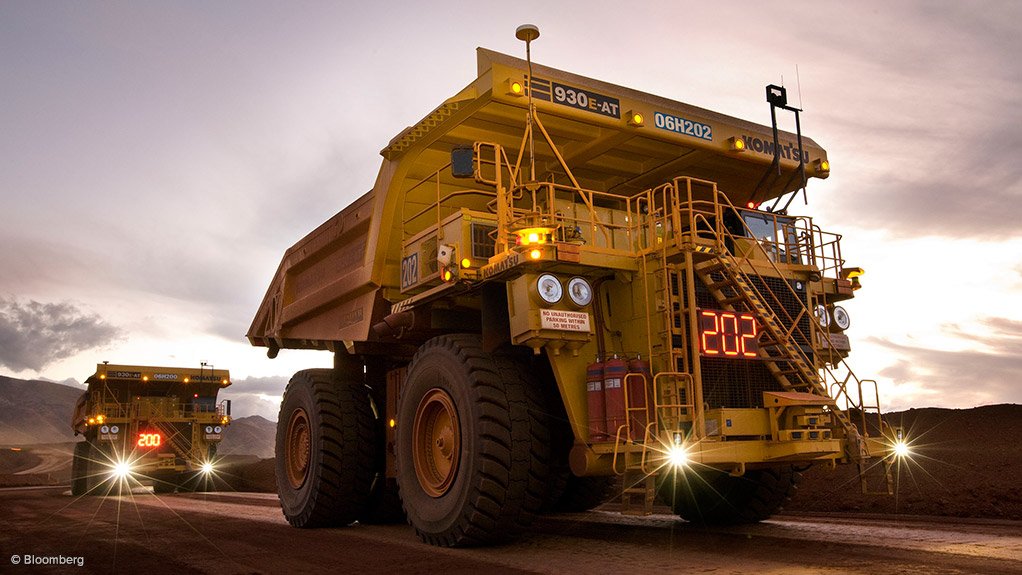


PERTH (miningweekly.com) – Investment in the resources sector has declined by 21.2% in the 12 months to the end of June, reflecting lower commodity prices and a curtailment on the flow of capital into new projects, as well as reduced capital expenditure on existing projects.
Data by the Bureau of Resources and Energy Economics (BREE) indicated that the June quarter had been the sixth consecutive quarter of lower profits in the mining sector.
In addition to mining investment declining, exploration expenditure had also declined as companies sought opportunities to cut costs and increase productivity.
The Australian Bureau of Statistics (ABS) this week also released figures documenting the decline in resource investment, noting that the contribution of mining investment to gross domestic product (GDP) increased sharply from 1.2% in September 2000 to 7.9% in June 2012.
Two significant periods of growth in mining investment were recorded; the first between December 2004 and December 2008, where the level of mining investment more than tripled from A$3.9-billion to A$14.1-billion.
The second peak happened between March 2010 and the peak of mining investment at A$29.7-billion in December 2012.
The ABS noted that average compound growth in this period was 8.5% a quarter.
Mining investment has since decreased to A$18.2-billion in September 2015, and now contributed only 4.5% to GDP, half the contribution of non-mining investment (9.7%).
The ABS noted that oil and gas extraction had been the largest contributor to mining investment over the last five years.
Oil and gas extraction peaked in December 2013 at A$18.2-billion in original current price terms, with several large liquefied natural gas (LNG) mines under construction.
The ABS noted that investment in oil and gas extraction had fallen in recent quarters as some of these projects neared completion or were completed and no new projects took their place.
The growth in mining investment between December 2004 and December 2008, was driven equally by metal ore mining contributing 2.9% and oil and gas extraction contributing 2.8% to the 8.3% compound quarterly growth.
Investment between March 2010 and December 2012, was predominately oil and gas extraction, which contributed 4.6% to the 8.5% compound quarterly growth.
Investment by the metal ore mining and coal mining subdivisions both reached their peaks in June 2012 at A$10.2-billion and A$4.4-billion respectively, but had also fallen since then as large iron-ore and coal mine construction projects were completed.
Investment into other mining, which did not include either metal ore, coal or oil and gas, peaked in September 2007 at A$3.4-billion, but had also fallen in recent quarters driven by a slowdown in mineral and petroleum exploration.
Meanwhile, BREE reported that in contrast to investment in the mining sector, mining exports had rapidly increased as the high volume of investment over the past decade had begun to translate into new production capacity.
Mining output increased by 7.6% in 2014/15 and the industry was the largest contributor to GDP growth, adding 0.6 percentage points.
Although exports of iron-ore, thermal coal and metallurgical coal increased over this period, iron-ore exports exhibited the strongest growth.
BREE has projected that the value of Australia’s resources and energy exports will increase by around 50% by 2019/20.
However, despite the largely positive outlook for resource exports, BREE warned that Australia’s LNG sector could face increasing uncertainty, saying that the trajectory for demand was uncertain beyond the medium term, particularly given the falling prices for oil and the strong competition from domestic and pipeline substitutes in markets such as China and Europe.
Global liquefaction capacity was projected to expand by 655 over the next five years to about 170-million tonnes, as projects in Australia and the US were completed, BREE said. The combination of excess supply and a vigorous spot market was expected to put pressure on prices and slow investment in new projects.
Article Enquiry
Email Article
Save Article
Feedback
To advertise email advertising@creamermedia.co.za or click here
Research Reports

Projects


Latest Multimedia



Showroom
Rentech provides renewable energy products and services to the local and selected African markets. Supplying inverters, lithium and lead-acid...
VISIT SHOWROOM
For over 60 years, VEGA has provided industry-leading products for the measurement of level, density, weight and pressure. As the inventor of the...
VISIT SHOWROOM



Press Office
Announcements
What's On
Subscribe to improve your user experience...
Option 1 (equivalent of R125 a month):
Receive a weekly copy of Creamer Media's Engineering News & Mining Weekly magazine
(print copy for those in South Africa and e-magazine for those outside of South Africa)
Receive daily email newsletters
Access to full search results
Access archive of magazine back copies
Access to Projects in Progress
Access to ONE Research Report of your choice in PDF format
Option 2 (equivalent of R375 a month):
All benefits from Option 1
PLUS
Access to Creamer Media's Research Channel Africa for ALL Research Reports, in PDF format, on various industrial and mining sectors
including Electricity; Water; Energy Transition; Hydrogen; Roads, Rail and Ports; Coal; Gold; Platinum; Battery Metals; etc.
Already a subscriber?
Forgotten your password?
Receive weekly copy of Creamer Media's Engineering News & Mining Weekly magazine (print copy for those in South Africa and e-magazine for those outside of South Africa)
➕
Recieve daily email newsletters
➕
Access to full search results
➕
Access archive of magazine back copies
➕
Access to Projects in Progress
➕
Access to ONE Research Report of your choice in PDF format
RESEARCH CHANNEL AFRICA
R4500 (equivalent of R375 a month)
SUBSCRIBEAll benefits from Option 1
➕
Access to Creamer Media's Research Channel Africa for ALL Research Reports on various industrial and mining sectors, in PDF format, including on:
Electricity
➕
Water
➕
Energy Transition
➕
Hydrogen
➕
Roads, Rail and Ports
➕
Coal
➕
Gold
➕
Platinum
➕
Battery Metals
➕
etc.
Receive all benefits from Option 1 or Option 2 delivered to numerous people at your company
➕
Multiple User names and Passwords for simultaneous log-ins
➕
Intranet integration access to all in your organisation
