



Astrapak attributes ‘poor’ FY results to fire, transport strike, underperformance



Packaging firm Astrapak has posted weakened full-year financial results, following a fire at its East Rand Plastics (ERP) operation in January, protracted transport strikes in September and October last year and historic organisational inefficiencies.
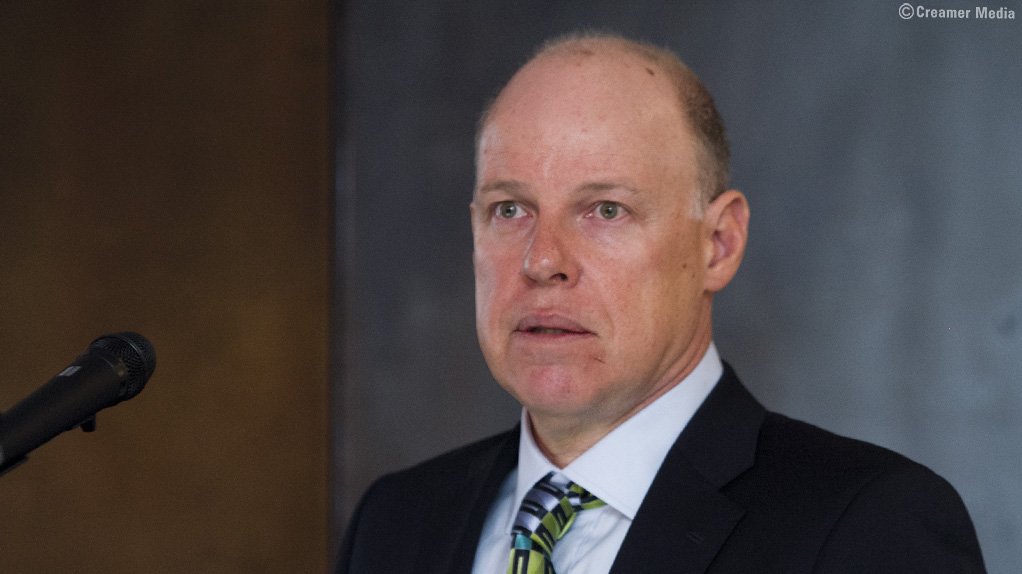
“However, we hope that facing the music over the poor financial results demonstrates our intention to be accountable to our shareholders, investors, suppliers and customers,” CEO Robin Moore emphasised at the company’s results presentation on Wednesday.
The company saw a significant 67.6% year-on-year drop in headline earning a share, from 55.5c in 2012, to 18c for the year ended February 28, 2013, as headline earnings fell by the same margin to R21.68-million.
Revenue increased by 3.9% to R2.6-billion, mainly as a result of a 4.2% increase in volumes sold over the prior year, while a decline in the gross profit percentage from 20.5% in the comparative period to 17.4% was reflective of continued challenges faced by the business to recover its increasing cost base through increased selling prices in a highly competitive market.
The financial results continued to reflect the increased cost of operations, primarily related to raw materials, energy, labour and distribution costs.
In addition, the fire at ERP impacted on the company’s entire flexible division, affecting the divisional turnover and compelling the manufacturer to declare a force majeure in certain markets supplied by the division.
“The insurance assessment process has now been completed, with all the relevant insurers having admitted liability in respect of the claim. We have received about R144-million thus far in this respect,” said Group MD Manley Diedloff.
Meanwhile, the transport strike towards the end of 2012 resulted in some R30-million lost revenue for the company as customers ran down stocks in their pipeline before reordering.
“The turnover levels in this respect only started to recover in March as clients began to order again,” he said.
The company did not declare a dividend for the period, owing to low levels of sustainable earnings.
Trading
Diedloff added that the trading environment itself posed several challenges for the rigids division, most notably in the form of pricing pressures owing to customer procurement strategies, which included the use of multinational tenders and international benchmarking as tools.
Shifting consumer patterns further affected the mix of business, and thus margin, while the company saw aggressive competitor activity, most notably in the thermoforming and moulding fields.
Meanwhile, the flexible division’s trading environment was described as “cut throat”, with relatively low barriers to entry, unlike the rigids division.
“Despite increasing competitiveness in the industry, we remain well-positioned in the market, with established operations and a substantial market share,” commented Diedloff.
The company currently boasted 10% share of the total South African plastics market and 5% of the total packaging market.
Operational Discipline
Following historically “haphazard” cost management by the company, as well as a “lack of common discipline”, Moore reiterated that the new management team was eager to restore the business to the success of the past.
“We realised that we needed to change the course of business and to institute operational discipline, employ the right people in the right positions and meet our customers as equal partners on fair and sustainable terms,” he said.
Astrapak had already embarked on an extensive restructuring drive, which Moore believed would position the company for long-term sustainable growth and enable re-energised teams to focus on core competence, innovation and improved customer service.
Aside from a recruitment programme to strengthen its senior management team, the company had created five focused divisions, each given critical mass through the merging of previously independently run operations, and completed the transformation from Astrapak’s previous regional-based structure to a divisional structure.
These divisions were moulding, polyethylene terephthalate, thermoforming, flexible and development.
Moore believed the consolidation of the business units would eliminate the challenge of isolated operating segments, which had each operated independently.
“We are completely eliminating slackness in the organisation,” he stated.
The company expected to start seeing the results of its restructuring in the 2014 financial year.
Article Enquiry
Email Article
Save Article
Feedback
To advertise email advertising@creamermedia.co.za or click here
Research Reports

Projects
Latest Multimedia
Latest News

Showroom
Multotec, recognised industry leaders in metallurgy and process engineering help mining houses across the world process minerals more efficiently,...
VISIT SHOWROOM
Iritron delivers advanced automation, control, and optimisation solutions to the Mining, Minerals & Metals, Consumer Package Goods and...
VISIT SHOWROOM


Announcements
What's On
Subscribe to improve your user experience...
Option 1 (equivalent of R125 a month):
Receive a weekly copy of Creamer Media's Engineering News & Mining Weekly magazine
(print copy for those in South Africa and e-magazine for those outside of South Africa)
Receive daily email newsletters
Access to full search results
Access archive of magazine back copies
Access to Projects in Progress
Access to ONE Research Report of your choice in PDF format
Option 2 (equivalent of R375 a month):
All benefits from Option 1
PLUS
Access to Creamer Media's Research Channel Africa for ALL Research Reports, in PDF format, on various industrial and mining sectors
including Electricity; Water; Energy Transition; Hydrogen; Roads, Rail and Ports; Coal; Gold; Platinum; Battery Metals; etc.
Already a subscriber?
Forgotten your password?
Receive weekly copy of Creamer Media's Engineering News & Mining Weekly magazine (print copy for those in South Africa and e-magazine for those outside of South Africa)
➕
Recieve daily email newsletters
➕
Access to full search results
➕
Access archive of magazine back copies
➕
Access to Projects in Progress
➕
Access to ONE Research Report of your choice in PDF format
RESEARCH CHANNEL AFRICA
R4500 (equivalent of R375 a month)
SUBSCRIBEAll benefits from Option 1
➕
Access to Creamer Media's Research Channel Africa for ALL Research Reports on various industrial and mining sectors, in PDF format, including on:
Electricity
➕
Water
➕
Energy Transition
➕
Hydrogen
➕
Roads, Rail and Ports
➕
Coal
➕
Gold
➕
Platinum
➕
Battery Metals
➕
etc.
Receive all benefits from Option 1 or Option 2 delivered to numerous people at your company
➕
Multiple User names and Passwords for simultaneous log-ins
➕
Intranet integration access to all in your organisation
