



ArcelorMittal, BHP and Mitsubishi partner on initiative to reduce blast furnace emissions



Diversified resources group BHP has joined forces with steel major ArcelorMittal and Mitsubishi Heavy Industries Engineering (MHIENG) to collaborate on a multiyear trial of MHIENG’s carbon capture technology with ArcelorMittal, following the signing of a funding agreement between the parties.
The companies will also conduct a feasibility and design study to support progress to full-scale deployment.
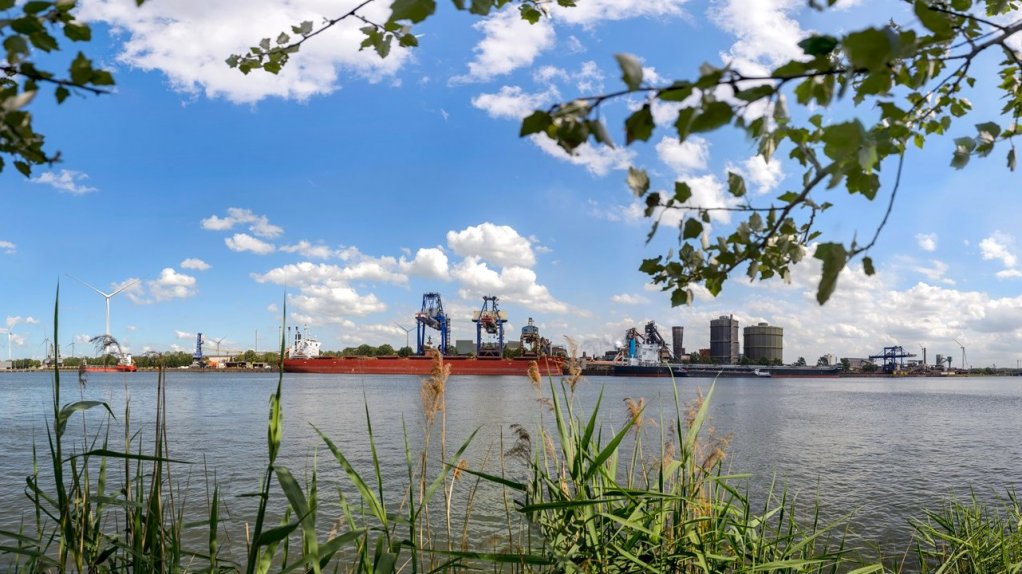
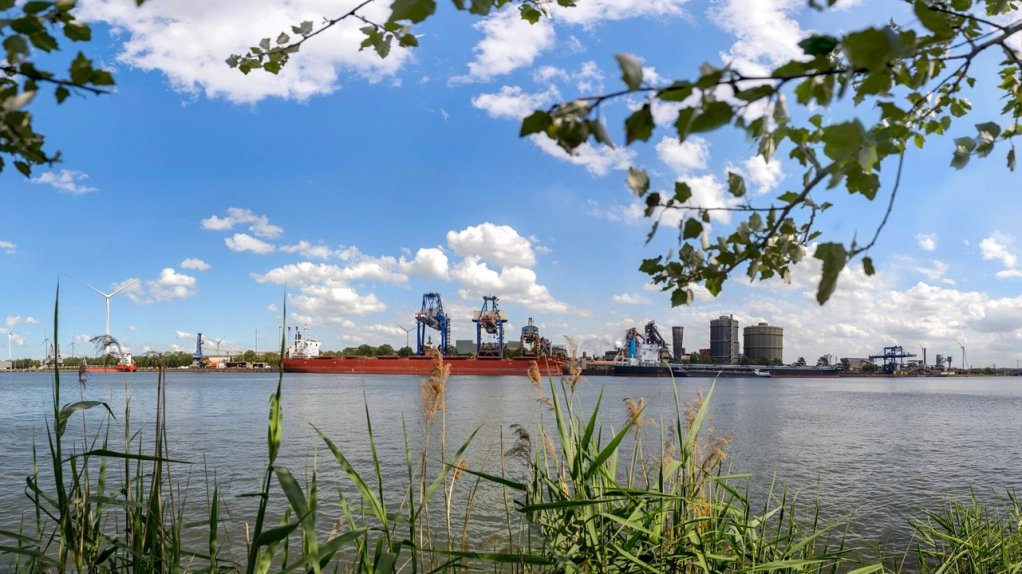
The agreement, which involves a trial at ArcelorMittal’s steel plant in Gent, in Belgium, and at another site in North America, brings together the expertise of the various partners in identifying ways to enhance carbon capture, utilisation and/or storage (CCUS) technologies in the hard-to-abate steelmaking industry.
The industry is estimated to account for 7% to 9% of global greenhouse-gas (GHG) emissions, and CCUS has the potential to be a key technology for reducing emissions from existing global blast furnaces, which are anticipated to remain a significant portion of steel production over the coming decades.
The International Energy Agency estimates CCUS technology needs to be applied to more than 53% of primary steel production by 2050, equivalent to 700-mllion tonnes a year of carbon dioxide (CO2), for the net-zero emissions aspiration to be achieved.
In a joint statement, the companies noted that there were no full-scale operational CCUS facilities in blast furnace steelmaking operations at present, with only a limited number of small CCU pilots under way or in the planning phases globally. However, later this year ArcelorMittal Gent will commission its Steelanol project, a scale demonstration plant that will capture carbon-rich process gases from the blast furnace and convert them into ethanol.
To further understand how carbon capture technology can be incorporated into existing steel plants, ArcelorMittal is facilitating the trial at its five-million-tonne-a-year steel plant in Belgium, and at another location in North America, with MHIENG supplying its proprietary technology and supporting the engineering studies. BHP and Mitsubishi Development, as key suppliers of high-quality steelmaking raw materials to ArcelorMittal’s European operations, will fund the trial that is anticipated to run for multiple years.
In Gent, the trial will have two phases. The first involves separating and capturing the CO2 top gas from the blast furnace at a rate of around 300 kg/d of CO2, a technical challenge, owing to the differing levels of contaminants in the top gas. The second phase involves testing the separating and capture of CO2 from the offgases in the hot strip mill reheating furnace, which burns a mixture of industrial gases, including coke gas, blast furnace gases and natural gas.
The parties plan to install the mobile test unit in one of ArcelorMittal’s North American direct reduced iron (DRI) plants, to test MHIENG’s technology in this steelmaking route.
“The decarbonisation of the steel industry is a huge challenge that we cannot solve alone; it is through pan-industry partnerships and collaboration that we will achieve ArcelorMittal’s climate goals of reducing CO2 emissions by 35% by 2030 in Europe, and by 30% by 2030 worldwide,” ArcelorMittal Belgium CEO Manfred Van Vlierberghe said.
“Alongside our continued energy efficiency improvements, we are developing two routes to decarbonise steelmaking: Smart Carbon and Innovative-DRI. Both routes will contribute in our journey to deliver carbon-neutral steelmaking. The Smart Carbon route also allows us to integrate carbon capture and re-use (CCU) or storage (CCS) technologies, capturing carbon emitted during the steelmaking process. We are therefore proud to be working with BHP, Mitsubishi Development and MHIENG on this pioneering carbon capturing pilot project in ArcelorMittal Gent.”
Carbon capture activities are the biggest cost component of the CCUS value chain and represent roughly two-thirds of the total capital cost and are the greatest consumer of additional energy, Van Vlierberghe said, noting that improved understanding of carbon capture technology performance, cost, risk and sustainability outcomes is essential to determine its role in efforts to decarbonise the steel industry.
This latest collaboration marks a critical milestone in BHP’s strategy to support decarbonisation efforts in steelmaking, which aims to achieve coverage of geographically diverse customer markets and potential technology pathways and follows partnerships in recent years with other global majors, including POSCO, China Baowu, JFE Steel, HBIS Group and Tatal Steel. Collectively, with ArcelorMittal, these companies account for more than 17% of reported global steel production.
“There is currently no certain or single pathway to net zero for steelmaking. CCUS is one of the key abatement technologies with potential to support the development of some of those pathways, so, working with industry leaders like ArcelorMittal, Mitsubishi Development and MHIENG, we hope to arrive at scalable solutions more quickly to help reduce carbon emissions in steelmaking,” BHP chief commercial officer Vandita Pant said.
“Steel is a critical product for the world to develop and decarbonise, and we must work hard, together, to enable lower GHG emissions steel, support the reduction of carbon intensity in the blast furnace and test new technologies for steel production,” she added.
Mitsubishi Development MD and CEO Sadahiko Haneji said the company would continue to fulfil its responsibility as an active player in relevant industries to contribute towards achieving a carbon-neutral society.
“Mitsubishi Development recognises that as an industry we have to collaborate to establish carbon capture trials that can be used as a stepping stone to progress technological advancement and build the industry’s confidence to reduce carbon emissions,” said Haneji.
“By participating in these trials, we are demonstrating a commitment to growing climate technologies and reducing our carbon footprint in ways that will not compromise our
Article Enquiry
Email Article
Save Article
Feedback
To advertise email advertising@creamermedia.co.za or click here
Research Reports

Projects


Latest Multimedia


Latest News

Showroom
Astore Keymak is one of South Africa’s leading suppliers of high-quality Thermoplastic Pipeline Systems, with branches in the major provinces.
VISIT SHOWROOM




Press Office
Announcements
What's On
Subscribe to improve your user experience...
Option 1 (equivalent of R125 a month):
Receive a weekly copy of Creamer Media's Engineering News & Mining Weekly magazine
(print copy for those in South Africa and e-magazine for those outside of South Africa)
Receive daily email newsletters
Access to full search results
Access archive of magazine back copies
Access to Projects in Progress
Access to ONE Research Report of your choice in PDF format
Option 2 (equivalent of R375 a month):
All benefits from Option 1
PLUS
Access to Creamer Media's Research Channel Africa for ALL Research Reports, in PDF format, on various industrial and mining sectors
including Electricity; Water; Energy Transition; Hydrogen; Roads, Rail and Ports; Coal; Gold; Platinum; Battery Metals; etc.
Already a subscriber?
Forgotten your password?
Receive weekly copy of Creamer Media's Engineering News & Mining Weekly magazine (print copy for those in South Africa and e-magazine for those outside of South Africa)
➕
Recieve daily email newsletters
➕
Access to full search results
➕
Access archive of magazine back copies
➕
Access to Projects in Progress
➕
Access to ONE Research Report of your choice in PDF format
RESEARCH CHANNEL AFRICA
R4500 (equivalent of R375 a month)
SUBSCRIBEAll benefits from Option 1
➕
Access to Creamer Media's Research Channel Africa for ALL Research Reports on various industrial and mining sectors, in PDF format, including on:
Electricity
➕
Water
➕
Energy Transition
➕
Hydrogen
➕
Roads, Rail and Ports
➕
Coal
➕
Gold
➕
Platinum
➕
Battery Metals
➕
etc.
Receive all benefits from Option 1 or Option 2 delivered to numerous people at your company
➕
Multiple User names and Passwords for simultaneous log-ins
➕
Intranet integration access to all in your organisation
