



Aquarius posts marginal FY revenue dip on subdued prices

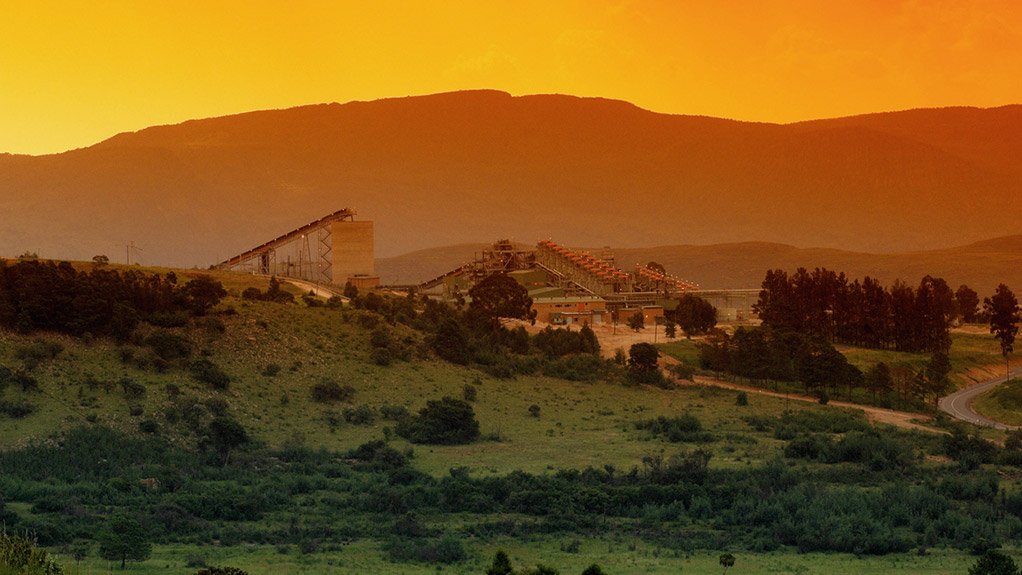


JOHANNESBURG (miningweekly.com) – Bermuda-registered and headquartered Aquarius Platinum said on Thursday that subdued global platinum prices had dented its full-year income, narrowing revenue for the Southern Africa-focused miner by 2% to $233-million for the twelve months ended June 30.
The group reported a net loss of $13-million, or 1.38c a share, while profitability at mine level, or on-mine earnings before interest, tax, depreciation and amortisation, was $30-million.
This was down 14% compared with the $35-million posted in the prior year and was largely owing to the impact of strikes at the Platinum Mile (PlatMile) operation, on Rustenburg’s platinum belt, as well as the inclusion of the development shaft at the nearby Kroondal mine for the first time.
“The result reflects continued improvement of operational performance at all operating mines in a difficult and lower platinum-group metals (PGM) price environment,” Aquarius noted.
The PGM basket price achieved for the year of $1 164/oz was down 5% from the 2013 fiscal period and, while gross margins improved at Kroondal on higher production and a weaker rand, the lower prices narrowed margins at its 50%-owned Mimosa mine, in Zimbabwe.
Meanwhile, the total cash cost of production of $202-million was down $7-million despite a 2% increase in production at Kroondal and PlatMile.
“Significantly, Kroondal recorded its seventh consecutive above-100 000 oz production quarter – a record for the mine. This is particularly pleasing given the ongoing difficulties prevailing in the sector,” noted CEO Jean Nel.
Dollar unit costs in South Africa decreased 7% to $870/oz but increased 9% in rand terms owing to the inclusion of Kroondal’s K6 development shaft – in operation for the first time – while the unit cost for the mature Kroondal shafts increased by only 3%.
In Zimbabwe, the cash costs came in at $878/oz, a 1% increase, inclusive of the completion of a voluntary labour rationalisation programme at a one-off cost of $5.5-million.
“Operating costs were well within inflationary targets and will continue to be a point of focus, particularly in the ongoing low metal price environment,” the group outlined.
Meanwhile, exchange rate movements continued to have a volatile effect on earnings.
The rand weakened significantly to average R10.37 to the dollar compared with R8.80 in the prior year.
During the year, Aquarius recorded net foreign exchange gains of $2-million, comprising gains on sales adjustments and revaluations of cash, intercompany loans and pipeline debtors.
Administration costs of $7-million were substantially lower following the implementation of cost reduction initiatives.
Group cash at the end of the year was $137-million, up $59-million from June 2013 and largely attributed to $226-million in proceeds from the conclusion of a rights issue to fund the repurchase of convertible bonds with a nominal value of $173-million.
“With overwhelming support from shareholders, Aquarius completed the rights offer and bond tender offer, resulting in a substantially strengthened balance sheet, with net cash even before the potential cash inflow from the sale of noncore assets,” said Nel.
In addition, the group paid $28-million to fund its capital expenditure programme, paid $13-million in interest and received $22-million of dividends from 50%-owned Mimosa Investments.
“A key indicator to the improved performance of Aquarius' South African assets is the $41-million turnaround in net cash flows from operating activities, from a deficit of $20-million in the prior year to a surplus of $21-million in the period under review,” the group noted.
OPERATING REVIEW
Looking to the group’s operational performance, group attributable production increased 2% to 331 642 oz as the flagship Kroondal mine continued to produce at capacity levels, entering its sixth consecutive quarter above guidance.
“Safety, production and cost performance at both Kroondal and Mimosa improved substantially. Kroondal produced in excess of 430 000 oz for the first time since 2008, while at the same time improving its safety performance substantially,” Nel commented.
At Kroondal, PGM production increased 6% to 430 743 oz, while volumes processed increased to 7.2-million tonnes and head grade deteriorated slightly to 2.39 g/t.
Mining cash costs increased 7% to R547/t – making Kroondal the most efficient underground platinum mine in South Africa on a rand-a-tonne basis, the platinum miner stated.
“The Kroondal operations were stable throughout the five-month strike that gripped the rest of the industry in the Rustenburg area. This, in itself, is a significant achievement and credit to our employees, organised labour representatives and management,” said the company.
Aquarius last month concluded a three-year wage agreement with its workforce at Kroondal, agreeing to an increase slightly above inflation.
The group added that, given the continuing low PGM basket price, the nearby Marikana operation, as well as the Everest mine, in Mpumalanga, would remain on care and maintenance until further notice.
Meanwhile, production from the miner’s Zimbabwe-based Mimosa operation increased 2% to 221 358 oz, while cash costs increased to $878/oz, excluding retrenchment costs.
“The Mimosa mine operated very well during the year, enjoying cordial industrial relations and meeting most of its production targets. However, the Zimbabwean political and regulatory environment remained challenging for all mining companies operating in the country,” the company noted.
During the course of the year, the mine had frequent interaction with the Ministry of Indigenisation over indigenisation legislation and continued to work towards a sustainable solution.
“To date, no agreements or definitive terms have been agreed between the parties,” said the company.
Aquarius’ tailings operation, PlatMile, was meanwhile “severely” impacted by strike action at Anglo American Platinum’s operations in the Rustenburg area, decreasing material processed 29% to 2.41-million tonnes.
Similarly, production decreased 56% to 5 590 oz.
The coarse grinding expansion at the operation was, meanwhile, successfully electromechanically commissioned at a capital cost of R26-million, with the benefits of this expansion on production yields expected to become evident in the 2015 financial year.
Article Enquiry
Email Article
Save Article
Feedback
To advertise email advertising@creamermedia.co.za or click here
Research Reports

Projects
Latest Multimedia
Showroom
Design, Construction and Maintenance of Site Erected, Welded Bulk Storage Tanks for the Petrochemical, LNG, Ammonia and Sustainable fuel Sectors.
VISIT SHOWROOM
Sika South Africa is a trusted partner for the nation’s infrastructure, commercial, residential, and industrial sectors.
VISIT SHOWROOM

Press Office
Announcements
What's On
Subscribe to improve your user experience...
Option 1 (equivalent of R125 a month):
Receive a weekly copy of Creamer Media's Engineering News & Mining Weekly magazine
(print copy for those in South Africa and e-magazine for those outside of South Africa)
Receive daily email newsletters
Access to full search results
Access archive of magazine back copies
Access to Projects in Progress
Access to ONE Research Report of your choice in PDF format
Option 2 (equivalent of R375 a month):
All benefits from Option 1
PLUS
Access to Creamer Media's Research Channel Africa for ALL Research Reports, in PDF format, on various industrial and mining sectors
including Electricity; Water; Energy Transition; Hydrogen; Roads, Rail and Ports; Coal; Gold; Platinum; Battery Metals; etc.
Already a subscriber?
Forgotten your password?
Receive weekly copy of Creamer Media's Engineering News & Mining Weekly magazine (print copy for those in South Africa and e-magazine for those outside of South Africa)
➕
Recieve daily email newsletters
➕
Access to full search results
➕
Access archive of magazine back copies
➕
Access to Projects in Progress
➕
Access to ONE Research Report of your choice in PDF format
RESEARCH CHANNEL AFRICA
R4500 (equivalent of R375 a month)
SUBSCRIBEAll benefits from Option 1
➕
Access to Creamer Media's Research Channel Africa for ALL Research Reports on various industrial and mining sectors, in PDF format, including on:
Electricity
➕
Water
➕
Energy Transition
➕
Hydrogen
➕
Roads, Rail and Ports
➕
Coal
➕
Gold
➕
Platinum
➕
Battery Metals
➕
etc.
Receive all benefits from Option 1 or Option 2 delivered to numerous people at your company
➕
Multiple User names and Passwords for simultaneous log-ins
➕
Intranet integration access to all in your organisation
