



ANC-EFF coalition would have broadly negative impact – BMI



Fitch solutions company BMI noted that while any potential coalition groupings will pose headwinds to policymaking and negatively impact investor sentiment, an African National Congress-Economic Freedom Fighters (ANC-EFF) coalition would likely result in a significantly adverse market reaction, negatively impacting bond yields and the rand.
The BMI is of the view that the ruling ANC will lose its majority after the general elections on May 29, with a voter share of around 45%, but will remain the main policy driver by forming a coalition with smaller parties.
“…however, ideological differences, particularly on key issues such as reforms to the power sector, land reform, labour regulations and the National Health Insurance Bill, would hamper policymaking,” the company said.
It noted that this was reflected in South Africa’s “chequered recent history of coalitions” at the municipal level, including in Johannesburg and Ekurhuleni – despite more successful early national coalitions in 1994 and 1999 – which saw a high turnover of city mayors and a decline in service delivery as parties struggled to overcome ideological differences.
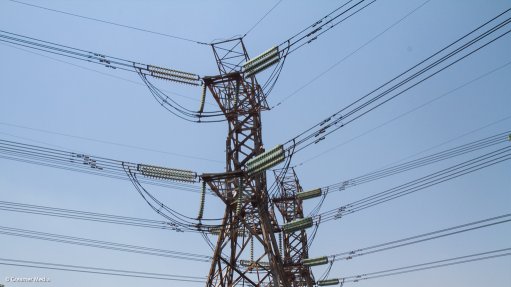
BMI senior analyst sub-Saharan Africa country risk Lara Wolfe explained that an ANC-EFF coalition presented downside risks to private-sector participation in the power sector and would likely hinder grid investments and the growth of renewables.
Similarly, for mining, there was a prediction of muted mining activity post-election, although an ANC-EFF coalition would result in high mining regulation policy uncertainty, acting as a deterrent to mining investment and further weighing on BMI’s outlook for the mining sector, said Wolfe.
According to its manifesto, the EFF will likely push for higher recurrent and capital spending, resulting in increased borrowing and a larger role of the State in the economy.
“This could prompt a revision of the government's debt target and our own public debt forecasts from current projections of 74.3% of GDP in 2024 and 76.5% in 2025,” she said.
She noted that while it was unlikely that the EFF would successfully push for the nationalisation of mines, land and banks, its influence would probably result in increased funding for existing State-owned enterprises (SOEs) - consistent with its manifesto pledges to expand Eskom's role and bolster SOE support.
She explained that challenges in curtailing the burgeoning public sector wage bill and high social transfers would persist, especially with the EFF's call for higher minimum wages and expanded public sector employment, as well as a doubling of all social grants.
Wolfe highlighted that under an ANC-EFF coalition, pressure from the EFF to increase social transfers would provide moderate support for household spending, although South Africa’s persistently high unemployment rates would continue to suppress private consumption growth.
“We would expect a reduction in fixed investment as government capital expenditure is likely to be overshadowed by elevated recurrent spending demands. Additionally, a decline in business confidence could dampen private investment,” said BMI.
BMI highlighted that should the coalitions between the ANC and the Democratic Alliance (DA) manage to pass policy, fiscal deficit would likely narrow more than currently expected and would also result in stronger economic growth and currency performance as well as better US-South Africa relations.
“This coalition might initially create uncertainty among investors due to potential policymaking slowdowns. However, if the collaboration proves effective, we could see the rand outperform our current expectations as DA-led reforms to streamline business regulation (such as pushing to reform the Labour Relations Act and reducing racial quotas) could attract more private investment. Nonetheless, such reforms might spur social unrest, leading to increased volatility of the rand,” it said.
BMI noted that South Africa’s proportional representation style of politics resulted in the existence of many small parties which only hold one seat in Parliament.
“If a party is close to attaining a majority, this would empower these smaller parties to play ‘kingmaker’. While we expect the ANC to lose its slim majorities in the two largest provinces of Gauteng (accounting for 23.6% of voters) and KwaZulu-Natal (20.7% of voters), we expect that it will remain the largest party in the 400-member National Assembly,” it said.
The company further highlighted that should the ANC form a coalition with a small national party such as the Inkatha Freedom Party (IFP) or uMkhonto weSizwe (MK) Party, South Africa could expect relatively high levels of policy continuity at a national level.
The IFP increased its national vote share from 10.2% in 2014 to 14.6% in 2019 and has won 17 by-elections in the last 12 months, compared with 11 by the ANC and one by the main opposition DA.
MK Party has garnered significant support in KwaZulu-Natal, according to recent polling data, since former president Jacob Zuma (2009-2018) announced his support for the party in December 2023. KwaZulu-Natal is Zuma’s home province.
“We expect these two parties to do particularly well among KwaZulu-Natal’s large isiZulu-speaking demographic, siphoning off considerable votes from the ANC,” BMI said.
Article Enquiry
Email Article
Save Article
Feedback
To advertise email advertising@creamermedia.co.za or click here
Research Reports

Projects


Latest Multimedia

Latest News
Showroom

Astore Keymak is one of South Africa’s leading suppliers of high-quality Thermoplastic Pipeline Systems, with branches in the major provinces.
VISIT SHOWROOM
We at Hawk High Pressure Pumps specialise in industrial pumps and pumping systems. Our high pressure washing equipment is locally manufactured and...
VISIT SHOWROOM



Press Office
Announcements
What's On
Subscribe to improve your user experience...
Option 1 (equivalent of R125 a month):
Receive a weekly copy of Creamer Media's Engineering News & Mining Weekly magazine
(print copy for those in South Africa and e-magazine for those outside of South Africa)
Receive daily email newsletters
Access to full search results
Access archive of magazine back copies
Access to Projects in Progress
Access to ONE Research Report of your choice in PDF format
Option 2 (equivalent of R375 a month):
All benefits from Option 1
PLUS
Access to Creamer Media's Research Channel Africa for ALL Research Reports, in PDF format, on various industrial and mining sectors
including Electricity; Water; Energy Transition; Hydrogen; Roads, Rail and Ports; Coal; Gold; Platinum; Battery Metals; etc.
Already a subscriber?
Forgotten your password?
Receive weekly copy of Creamer Media's Engineering News & Mining Weekly magazine (print copy for those in South Africa and e-magazine for those outside of South Africa)
➕
Recieve daily email newsletters
➕
Access to full search results
➕
Access archive of magazine back copies
➕
Access to Projects in Progress
➕
Access to ONE Research Report of your choice in PDF format
RESEARCH CHANNEL AFRICA
R4500 (equivalent of R375 a month)
SUBSCRIBEAll benefits from Option 1
➕
Access to Creamer Media's Research Channel Africa for ALL Research Reports on various industrial and mining sectors, in PDF format, including on:
Electricity
➕
Water
➕
Energy Transition
➕
Hydrogen
➕
Roads, Rail and Ports
➕
Coal
➕
Gold
➕
Platinum
➕
Battery Metals
➕
etc.
Receive all benefits from Option 1 or Option 2 delivered to numerous people at your company
➕
Multiple User names and Passwords for simultaneous log-ins
➕
Intranet integration access to all in your organisation
