



Amid confidence slump, Sacci economist notes key differences between SA and Greece



With Greece’s economy under pressure, many sceptics are wondering if South Africa is on the same path towards economic collapse.
While the country’s business confidence reached a 16-year low in June, it had not reached the Grecian tipping-point just yet.
The South African Chamber of Commerce and Industry’s (Sacci’s) Business Confidence Index fell by 2.3 index points to 84.6 in June – 5.1 points lower than in June 2014 and the lowest level since January 1999, when the index stood at 83.9.
Sacci chief economist Richard Downing on Tuesday pointed out that South Africa’s economy was bigger than Greece’s.
“Our gross domestic product (GDP) is about $340-million, while Greece, which is an advanced economy, [has a GDP of] only about $160-million. However, the per capita income for Greece is $14 616 a year, while South Africa’s is about $5 925 a year,” he noted.
Downing said that, while a lot of the blame for Greece’s financial crisis was passed onto other European countries, it was the Greek government that borrowed from other markets and it was the Greek economy that did not perform, as it should.
“It was not necessarily the last government that caused all these problems; it was a process that came over the years, where politicians, perhaps in the past, promised anything to people; public servants were employed all over the place, bonuses [were paid out] three times a year, pensions were misused.
“The economy just wasn't working and whether you call [the Greek economy] Marxist or socialist, or sociodemocratic, if you overexpand your economy in terms of what people could expect out of it, without putting something into it, this is the result that we see,” he added.
Meanwhile, Downing said that the local economy was facing a downward slope in growth performance, which did not bode well. “It doesn't look like there is a light at the end of the tunnel; if there is a light, it’s that of an oncoming train.
“In terms of fixed investments we can see in the public and private sectors that public sector real gross fixed investment are a little bit positive, with about 3% to 4% year-on-year change; however, investor confidence is not doing very well.
“You can see that private sector real gross fixed investment is actually declining; not by much, but still lower than a year ago. This is a worrying factor; it is perhaps more worrying than business confidence as such,” he added.
Downing highlighted that there was a glimmer of hope in public construction investment, which rose about 15% year-on-year with “a lot of infrastructure spending going on”; however, equipment and transport investment was waning into negative territory, with an almost 4% year-on-year change. Residential building was also lower, declining by about 6% year-on-year.
“The picture of investment on the base of economic growth does not look good at the moment,” Downing said, adding that most of the foreign direct investment in South Africa came from the UK, which contributed 40%, while the US was responsible for 26%, China only added 2%, and the rest of the continent added 3%.
“It is very important to [know] who our investment partners [are] and who our friends [are] in terms of investment . . . because you can see what happened to the Greeks when they started negotiating and they couldn't service their debt properly, or could not even pay.”
Meanwhile, he said that South Africans’ savings did not meet the levels needed to finance government’s debt.
“This gap should be filled by the foreign investor, through fixed investments and not just through the market in terms of portfolio investments and such. That’s why confidence levels are so important,” he highlighted.
He noted that with regards to the inflow of capital, which was about 2.2% of GDP, there was a shortage building up, with a deficit of about 5% in the first quarter of this year, adding, “This is a worrying factor. This is a reflection of how other countries view the country or how they view the future of the country and this is something that needs to be addressed.
“Of course, luckily, we differ from Greece in the fact that we have a currency that will shock the system into the right direction. In Greece, they didn’t have that luxury as they are bound to the euro,” Downing said.
Article Enquiry
Email Article
Save Article
Feedback
To advertise email advertising@creamermedia.co.za or click here
Research Reports

Projects


Latest Multimedia


Latest News

Showroom
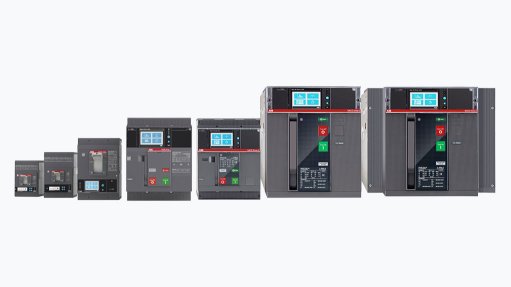
Electrifying the world in a safe, smart, and sustainable way, ABB Electrification is a global technology leader in electrical distribution and...
VISIT SHOWROOM
Established in 1933, EKATO is the world leader in agitation technology, supplying agitators for processes and applications such as chemicals and...
VISIT SHOWROOM



Press Office
Announcements
What's On
Subscribe to improve your user experience...
Option 1 (equivalent of R125 a month):
Receive a weekly copy of Creamer Media's Engineering News & Mining Weekly magazine
(print copy for those in South Africa and e-magazine for those outside of South Africa)
Receive daily email newsletters
Access to full search results
Access archive of magazine back copies
Access to Projects in Progress
Access to ONE Research Report of your choice in PDF format
Option 2 (equivalent of R375 a month):
All benefits from Option 1
PLUS
Access to Creamer Media's Research Channel Africa for ALL Research Reports, in PDF format, on various industrial and mining sectors
including Electricity; Water; Energy Transition; Hydrogen; Roads, Rail and Ports; Coal; Gold; Platinum; Battery Metals; etc.
Already a subscriber?
Forgotten your password?
Receive weekly copy of Creamer Media's Engineering News & Mining Weekly magazine (print copy for those in South Africa and e-magazine for those outside of South Africa)
➕
Recieve daily email newsletters
➕
Access to full search results
➕
Access archive of magazine back copies
➕
Access to Projects in Progress
➕
Access to ONE Research Report of your choice in PDF format
RESEARCH CHANNEL AFRICA
R4500 (equivalent of R375 a month)
SUBSCRIBEAll benefits from Option 1
➕
Access to Creamer Media's Research Channel Africa for ALL Research Reports on various industrial and mining sectors, in PDF format, including on:
Electricity
➕
Water
➕
Energy Transition
➕
Hydrogen
➕
Roads, Rail and Ports
➕
Coal
➕
Gold
➕
Platinum
➕
Battery Metals
➕
etc.
Receive all benefits from Option 1 or Option 2 delivered to numerous people at your company
➕
Multiple User names and Passwords for simultaneous log-ins
➕
Intranet integration access to all in your organisation
