



Almas mine, Brazil

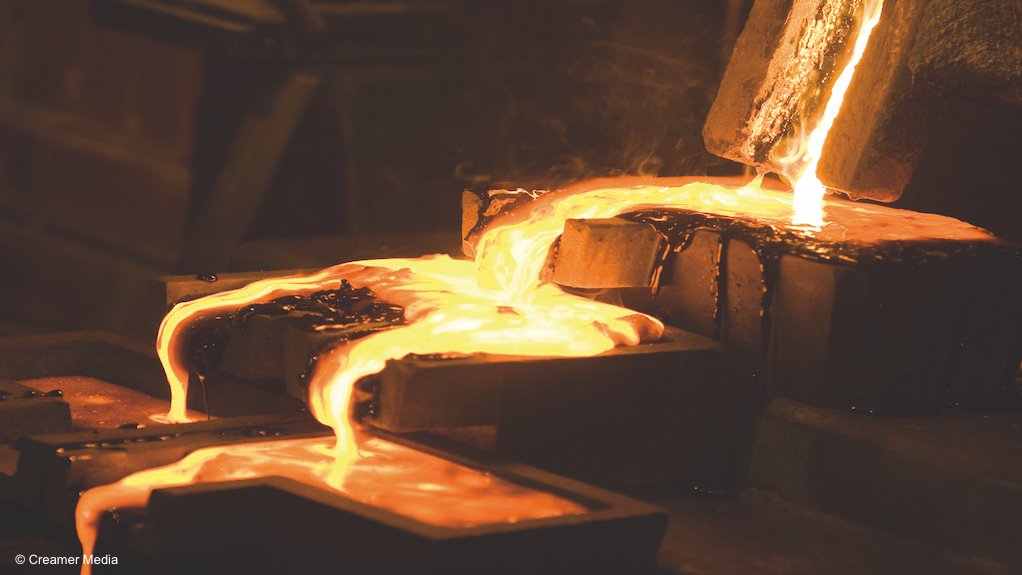


Name of the Mine
Almas mine.
Location
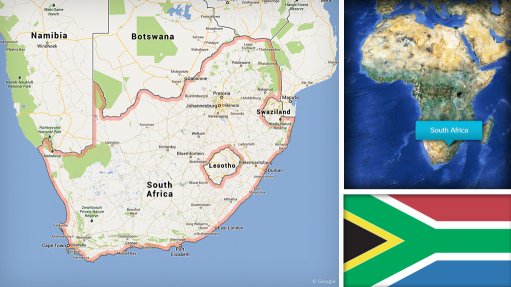
Tocantins state, Brazil, south of the town of Almas. The mine's deposits are distributed along a 15 km segment of the Almas Greenstone Belt.
Mine Owner/s
Midtier copper/gold producer Aura Minerals. Aura acquired the project through its merger with Rio Novo Mineraçã in 2018.
Brief Description
The Almas operation comprises three openpit mines – Paiol, Vira Saia, Cata Funda – and one underground mine under development.
The Paiol openpit is currently the sole ore source.
Underground development at Paiol started in 2025, with initial underground production planned for 2028. Mining at the Vira Saia openpit is planned for 2027, followed by Cata Funda in 2030. Existing heap leach reserves and low grade stockpiles are also incorporated into the life-of-mine plan.
Brief History
Exploration in the Almas area dates back to 1977, when Vale identified prospective ground in the greenstone belts around Almas. The Paiol deposit was discovered in 1987. Vale operated Paiol from 1996 to 2001, producing 86 000 oz of gold.
In 2013, Paiol and Cata Funda received approval from the Brazilian mining authority to resume mining activities. Rio Novo later advanced the project and, in 2018, Aura acquired Rio Novo through a merger.
Aura started construction activities at Paiol in February 2021. The operating licence for Paiol was granted in early 2023 and production started in the fourth quarter of 2023.
Primary Metals/Minerals
Gold.
Secondary Metals/Minerals
None stated.
Geology/Mineralisation
The Almas project area is situated within the Almas-Dianópolis Greenstone Belt of Archean to Paleoproterozoic age. The main deposits are classified as orogenic, shear-hosted mesothermal gold deposits.
Mineralisation occurs in the cores of hydrothermal alteration zones and is generally associated with quartz, carbonate, albite, sericite and sulphide minerals.
At Paiol and Cata Funda, mineralisation is linked to hydrothermal shear zones within basic to intermediate volcanic rocks. At Vira Saia, gold is associated with sulphides and quartz-sericite mylonite formed in shear zones within granodiorite. The main Paiol mineralised body extends about 650 m down dip, 1 250 m along strike and averages 30 m in thickness. Cata Funda extends about 240 m down dip and 230 m along strike with an average thickness of 10 m, while Vira Saia extends about 200 m down dip and 350 m along strike with an average thickness of 15 m.
Reserves
As at December 31, 2025, proven and probable mineral reserves for Almas totalled 29.54-million tonnes at an average grade of 0.94 g/t gold containing about 892 000 oz of gold. This comprises Paiol openpit reserves of 17.527-million tonnes at 0.74 g/t gold for 418 000 oz; Paiol underground reserves of 4.817-million tonnes at 1.16 g/t gold for 180 000 oz; Cata Funda reserves of 2.109-million tonnes at 1.19 g/t gold for 81 000 oz; Vira Saia reserves of 5.087-million tonnes at 0.83 g/t gold for 135 000 oz; and heap-leach and low-grade stockpile reserves of 4.338-million tonnes at 0.55 g/t gold for 77 000 oz.
Resources
As at December 31, 2025, exclusive measured and indicated mineral resources for Almas totalled 6.55-million tonnes at an average grade of 0.6 g/t gold containing about 128 000 oz of gold. This includes Paiol openpit resources of 2.790-million tonnes at 0.38 g/t gold for 34 000 oz; Paiol underground indicated resources of 2.227-million tonnes at 0.88 g/t gold for 63 000 oz; Cata Funda resources of 362 000 t at 0.61 g/t gold for 7 000 oz; and Vira Saia resources of 1.171-million tonnes at 0.63 g/t gold for 24 000 oz.
Exclusive inferred mineral resources total 6.815-million tonnes at an average grade of about 0.71 g/t gold containing about 156 000 oz of gold. Of this, openpit inferred resources amounted to 3.071-million tonnes at 0.76 g/t gold for 75 000 oz, while underground inferred resources amounted to 3.744-million tonnes at 0.67 g/t gold for 81 000 oz.
Type of Mine
Openpit and later underground.
Mining Method
The Paiol operation uses conventional openpit mining. Mining is undertaken on 10 m and 20 m benches, with 5 m benches used in some areas to improve selectivity along ore/waste contacts. Accesses and ramps are 15 m wide, double-lane and designed with a maximum gradient of 10%.
The Paiol underground mine will be developed primarily using transverse sublevel stoping, with localised longitudinal stopes. Primary stopes will be filled with cemented rockfill and secondary stopes with rockfill.
Major Infrastructure/Equipment
The Almas plant has a nominal processing capacity of 5 479 t/d, or two-million tonnes a year.
Mining is conducted using 4.5 m³ hydraulic excavators, front-end loaders and 35 t haul trucks operated by contractors.
The flowsheet comprises primary crushing, ball mill grinding, a gravity circuit, thickening, cyanide leaching, carbon-in-leach, carbon elution, gold electrowinning and smelting, producing gold doré bars.
Tailings are conveyed by gravity to a detoxification unit for cyanide destruction and then pumped to the tailings storage facility.
Electrical power is sourced from the national grid.
Site infrastructure includes access roads, water management systems, waste handling facilities, warehouses, maintenance workshops, an assay laboratory, administrative offices, a cafeteria, a change room, a first-aid room and a compressor room. Aura also maintains a camp in the town of Almas for visitors and temporary needs.
Prospects
Aura views the Almas district as a high potential gold camp and continues, in parallel, to advance earlier stage regional targets within the broader Almas area.
Aura advanced an intensive infill drilling programme at the Paiol underground in 2025, completing 32 diamond drill holes totalling 11 435.4 m, complemented by eight directional drill holes totalling 3 109.8 m. The drilling confirmed the continuity of high grade underground mineralisation below the current openpit, supporting the development of a scalable underground operation.
Contact Details
Aura Minerals
Email info@auraminerals.com
Website https://www.auraminerals.com/
Article Enquiry
Email Article
Save Article
Feedback
To advertise email advertising@creamermedia.co.za or click here
Research Reports

Projects

Latest Multimedia
Showroom
Rio Carb is an OEM (Original Equipment Manufacturer) of R-C700 Chromium Carbide (CrC) alloy clad wear plates and pipes used for heavy materials...
VISIT SHOWROOM
Industrial Nozzles & Systems (Pty) Ltd (Est. 2000) exclusive representative in Southern Africa for LECHLER GmbH (Est. 1879) - Europe's leading...
VISIT SHOWROOM

Press Office
Announcements
What's On
Subscribe to improve your user experience...
Option 1 (equivalent of R125 a month):
Receive a weekly copy of Creamer Media's Engineering News & Mining Weekly magazine
(print copy for those in South Africa and e-magazine for those outside of South Africa)
Receive daily email newsletters
Access to full search results
Access archive of magazine back copies
Access to Projects in Progress
Access to ONE Research Report of your choice in PDF format
Option 2 (equivalent of R375 a month):
All benefits from Option 1
PLUS
Access to Creamer Media's Research Channel Africa for ALL Research Reports, in PDF format, on various industrial and mining sectors
including Electricity; Water; Energy Transition; Hydrogen; Roads, Rail and Ports; Coal; Gold; Platinum; Battery Metals; etc.
Already a subscriber?
Forgotten your password?
Receive weekly copy of Creamer Media's Engineering News & Mining Weekly magazine (print copy for those in South Africa and e-magazine for those outside of South Africa)
➕
Recieve daily email newsletters
➕
Access to full search results
➕
Access archive of magazine back copies
➕
Access to Projects in Progress
➕
Access to ONE Research Report of your choice in PDF format
RESEARCH CHANNEL AFRICA
R4500 (equivalent of R375 a month)
SUBSCRIBEAll benefits from Option 1
➕
Access to Creamer Media's Research Channel Africa for ALL Research Reports on various industrial and mining sectors, in PDF format, including on:
Electricity
➕
Water
➕
Energy Transition
➕
Hydrogen
➕
Roads, Rail and Ports
➕
Coal
➕
Gold
➕
Platinum
➕
Battery Metals
➕
etc.
Receive all benefits from Option 1 or Option 2 delivered to numerous people at your company
➕
Multiple User names and Passwords for simultaneous log-ins
➕
Intranet integration access to all in your organisation
